Editorial Technical Reference

High-Frequency Electrosurgical Electrode

This page explains how High-Frequency Electrosurgical Electrode is classified within Manufacture of Irradiation, Electromedical and Electrotherapeutic Equipment. Technical values and manufacturer relationships are research references; confirm the current specification and supplier evidence for each order.

Technical Definition & Core Assembly

Disposable or reusable conductive tip for precise tissue cutting and coagulation in electrosurgery.

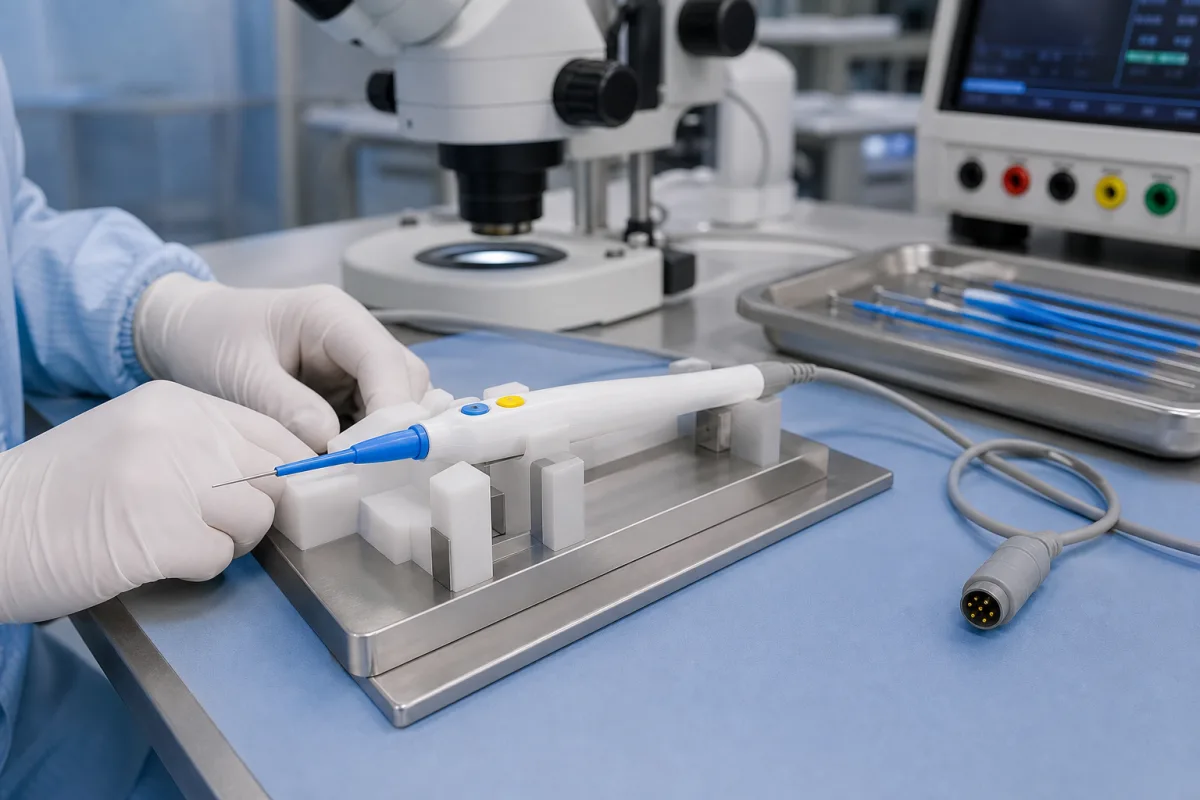
High-Frequency Electrosurgical Electrode in a manufacturing environment
Representative product image. Confirm appearance and specifications with the manufacturer.

Product Specifications

Technical details and manufacturing context for High-Frequency Electrosurgical Electrode

Definition
A high-frequency electrosurgical electrode is a critical consumable component in electrosurgical generators, designed to deliver controlled radiofrequency energy to biological tissue. It serves as the interface between the electrosurgical unit and the patient, enabling precise cutting, coagulation, and desiccation during surgical procedures. In B2B medical device supply chains, these electrodes are manufactured to strict specifications for compatibility with specific generator models and surgical applications, ensuring reliable performance and patient safety. They are essential for procedures in general surgery, dermatology, gynecology, and orthopedics. The electrode is available in disposable or reusable configurations, with materials including stainless steel 316L, tungsten, and insulative ceramic coating. Key parameters include an operating frequency of 300–500 MHz, tip diameter of 0.3–3.0 mm, insulation resistance of ≥100 MΩ at 500V DC per IEC 60601, maximum RMS voltage of 1000–5000 V per IEC 60601, shaft length of 100–300 cm, and a 3-pin connector per IEC 60154. Additional specifications include operating temperature of 10–40 °C, sterilization methods (ETO, Gamma) per ISO 11135 for reusable types, tensile strength ≥500 MPa per ASTM E8, and packaging of 1 piece per sterile pouch per ISO 11607. These values are reference ranges; actual specifications must be confirmed with the legal manufacturer for the specific model and application. The electrode's performance is influenced by generator settings, tissue type, and surgical technique. Proper selection requires matching the electrode to the generator's connector type and output characteristics. Verification of compliance with relevant standards is essential during procurement. Maintenance signals include visible wear, coating damage, or inconsistent performance. Failure boundaries include exceeding voltage limits or improper sterilization, which can compromise safety and efficacy.
Working Principle
The electrode conducts high-frequency alternating current from the electrosurgical generator to the tissue. When the tip contacts the tissue, the concentrated current density causes rapid resistive heating, vaporizing cellular water for cutting or denaturing proteins for coagulation, depending on the waveform and power setting. The operating frequency of 300–500 MHz ensures effective tissue interaction. The tip diameter influences current density and precision. Insulation resistance of ≥100 MΩ prevents unintended current leakage. The maximum RMS voltage of 1000–5000 V defines the safe operating envelope. The shaft length of 100–300 cm allows access to surgical sites. The 3-pin connector ensures standardized interface with compatible generators. Proper grounding and generator settings are critical for safe and effective use.
Common Materials
Stainless Steel 316L, Tungsten, Insulative Ceramic Coating
Technical Parameters
ParameterTypical rangeNotes & selection driver
Operating FrequencyRequired300–500 MHzRadiofrequency range for effective tissue interaction
Tip DiameterRequired0.3–3.0 mmDiameter of the active electrode contact surface
Insulation ResistanceRequired≥100 Electrical resistance of the insulated shaft at 500V DCIEC 60601
Maximum RMS VoltageRequired1000–5000 VMaximum root mean square voltage the electrode can withstandIEC 60601
Shaft LengthRequired100–300 cmTotal length from handle connector to tip
Connector TypeRequired3-pin N/AStandardized interface for generator connection (e.g., DIN, proprietary)IEC 60154
MaterialStainless Steel 304Corrosion resistantASTM A240
Operating Temperature10–40 °CSterilization may affect
Sterilization MethodETO, GammaFor reusable typesISO 11135
Tensile Strength≥500 MPaFor shaft integrityASTM E8
Packaging1 piece/sterile pouchSterile barrierISO 11607

Ranges are indicative industry figures for RFQ preparation, not a supplier commitment. Confirm every value and standard with the legal manufacturer before ordering.

Components / BOM
  • Active Electrode Tip Part
    Delivers concentrated RF energy to tissue for cutting/coagulation
    Material: Stainless Steel or Tungsten
  • Insulated Shaft Part
    Provides electrical insulation and mechanical support between handle and tip
    Material: PTFE or Ceramic-Coated Metal
  • Handle Connector
    Standardized electrical and mechanical interface to electrosurgical pencil or cable
    Material: Medical-Grade Plastic with Metal Contacts
  • Tip Guard/Cap Optional Part
    Protective cover for sterile storage and handling safety
    Material: Medical-Grade Plastic

Industry Taxonomies & Aliases

Commonly used trade names and technical identifiers for High-Frequency Electrosurgical Electrode.

Industrial Ecosystem & Supply Chain Structure

Complementary Systems
Downstream Applications
Specialized Tooling

Application Fit & Sizing Matrix

Operational Limits
pressure: Atmospheric to 1.5 bar
other spec: Frequency: 300 kHz - 3 MHz, Power: 10-300 W, Voltage: 100-5000 V peak-to-peak
temperature: 20-40°C (operating), 0-50°C (storage)
Media Compatibility
✓ Human tissue (soft/hard) ✓ Surgical saline irrigation ✓ Sterile surgical drapes
Unsuitable: Flammable/explosive atmospheres (oxygen-rich environments)
Sizing Data Required
  • Target tissue type and thickness
  • Required cutting/coagulation power setting
  • Surgical procedure type and access geometry

Reliability & Engineering Risk Analysis

Failure Mode & Root Cause
Insulation breakdown
Cause: Thermal degradation from repeated high-frequency current cycling, leading to carbonization and dielectric failure of insulating materials.
Electrode tip erosion
Cause: Arcing and localized overheating during tissue contact, causing material vaporization and pitting that reduces cutting precision.
Maintenance Indicators
  • Visible carbon tracking or discoloration on insulation surfaces
  • Audible arcing or erratic power delivery during activation
Engineering Tips
  • Implement regular impedance testing to detect early insulation degradation before catastrophic failure
  • Establish strict electrode cleaning protocols using manufacturer-approved solutions to prevent biofilm buildup that accelerates erosion

Indicative industry ranges for design and RFQ preparation. Confirm the exact figures and applicable standard with the manufacturer before specifying.

Compliance & Manufacturing Standards

Applicable Standards
ISO 15223-1:2021 Medical devices - Symbols to be used with medical device labels, labelling and information to be supplied ANSI/AAMI ES60601-1:2005 Medical electrical equipment - Part 1: General requirements for basic safety and essential performance DIN EN 60601-2-2:2017 Medical electrical equipment - Part 2-2: Particular requirements for the basic safety and essential performance of high frequency surgical equipment

Quoted from the published standard.

Manufacturing Precision
  • Electrode tip diameter: +/-0.05mm
  • Insulation thickness uniformity: +/-0.1mm
Quality Inspection
  • High-voltage dielectric withstand test
  • Biocompatibility testing per ISO 10993-1

Manufacturers of High-Frequency Electrosurgical Electrode

1 company lists this product among what they make. Company figures are quoted from each company's own website; every card states where the relationship came from.

Cathay Manufacturing Corp.
Shanghai, CN
Listed on the company's own website · profile compiled by CNFX from public sources
Listed there as: “Electrosurgical Tips”
View source page ↗ cathaymanufacturing.com · checked 2026-09-04

Manufacturer listings support early research and capability understanding. They are not certification, ranking, or transaction guarantees.

Share this page
Technical documentation
Request current drawings, revision history, and a signed specification sheet.
Manufacturing capability
Verify equipment lists, process limits, capacity, and representative production evidence.
Inspection readiness
Confirm test methods, calibrated equipment, sampling plans, and traceable reports.
Supplier transparency
Check the legal entity, factory address, ownership, certifications, and direct contacts.

CNFX does not score or rank suppliers. Buyers must verify all claims and documents with the legal manufacturer before ordering.

Frequently Asked Questions

What is the operating frequency range of this electrode?

The operating frequency is 300–500 MHz, as listed in the directory. This range is for effective tissue interaction. Confirm the exact frequency for your specific model with the manufacturer.

What materials are used in this electrode?

Materials on file include stainless steel 316L, tungsten, and insulative ceramic coating. These are reference materials; the actual composition may vary by model and should be verified with the supplier.

What standards are referenced for this electrode?

Referenced standards include IEC 60601 for insulation resistance and maximum RMS voltage, IEC 60154 for connector type, ISO 11135 for sterilization methods, ASTM E8 for tensile strength, and ISO 11607 for packaging. These are verification references, not proof of certification.

Is this electrode disposable or reusable?

The directory lists both disposable and reusable types. For reusable types, sterilization methods include ETO and Gamma per ISO 11135. Always follow the manufacturer's instructions for reprocessing.

Data Basis

Editorial classification, named public sources where available, and source-reviewed manufacturer records.

Preliminary Technical Classification
This page supports structured research, RFQ preparation, and supplier evaluation. It does not replace buyer-led supplier qualification, standards review, or technical approval.
Buyer enquiry

Request manufacturing insight for High-Frequency Electrosurgical Electrode

Ask for use case, specification boundaries, supplier type, and RFQ preparation information for this product.

Where it goes
Straight to the CNFX editorial desk, and to the manufacturer if this product is linked to a claimed profile. Nothing is broadcast to a supplier list.
Your details stay here
We do not sell or rent enquiry data, and we do not add you to a mailing list. Used only to answer this request.
No commission, no middleman
CNFX is a directory. We take no cut of any order and never negotiate on a supplier's behalf.
What we don't claim
A listing is not an endorsement. Qualify every supplier and verify every figure yourself before ordering.

Your business information is used only to process this request.

Thank you! Your message has been sent. We'll respond within 1–3 business days.
Sorry, we couldn't send your message. Please try again, or email us at [email protected].

Need to Manufacture High-Frequency Electrosurgical Electrode?

Compare manufacturer profiles with relevant product and process capability.

Previous Product
Medical X-Ray Tube Cathode Assembly
Last Product
Get QuotesChat