Editorial Technical Reference

License Validator

This page explains how License Validator is classified within Computer, Electronic and Optical Product Manufacturing. Technical values and manufacturer relationships are research references; confirm the current specification and supplier evidence for each order.

Technical Definition & Core Assembly

A software component that verifies the validity and compliance of digital licenses within a protocol system.
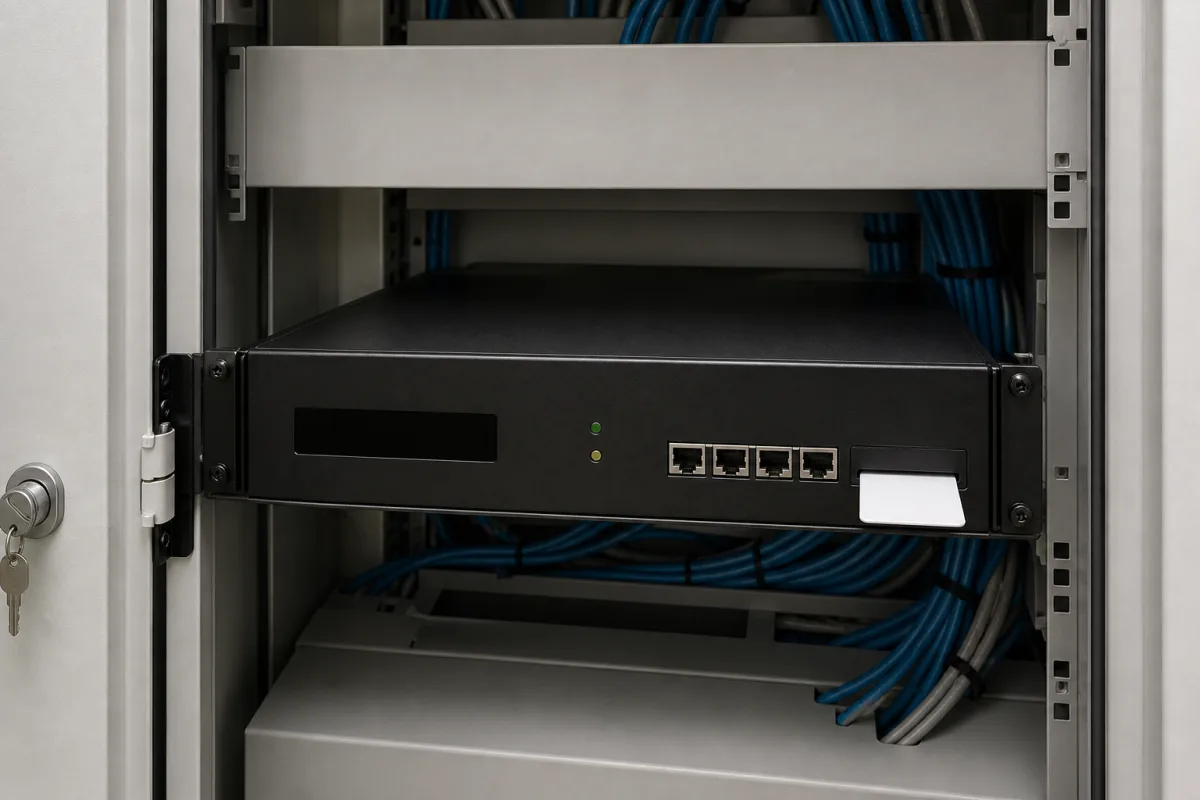
Representative product image. Confirm appearance and specifications with the manufacturer.

Product Specifications

Technical details and manufacturing context for License Validator

Definition
The License Validator is a critical component of the Protocol License Module responsible for authenticating, validating, and enforcing license terms for software, content, or services. It checks license keys, expiration dates, usage rights, and compliance with protocol specifications to ensure authorized access and prevent unauthorized use. This component operates as a part of a larger system, typically embedded in software applications or network services, and is designed to handle high-volume validation tasks with minimal latency. The validator supports a throughput of 1000–5000 licenses per second, with a validation latency of 1–10 milliseconds, making it suitable for real-time license checks. It achieves an accuracy of 99.99%, minimizing false rejections and security breaches. The component is engineered for industrial environments, operating within a temperature range of -40 to 85°C, and can be stored at temperatures from -55 to 125°C, complying with IEC 60068-2-1 and IEC 60068-2-2 standards respectively. It operates on a supply voltage of 3.3–5.0 V DC, with a power consumption of 0.5–2.0 W, and has a memory footprint of 1–10 MB, optimized for resource-constrained devices. The response time, including network overhead for remote validation, is ≤100 ms. The validator can handle 100–1000 concurrent users, scaling to meet peak loads. It supports major license protocols, with protocol compatibility version 1.0–2.0 per ISO 19770-1, and employs encryption strength of 128–256 bits using AES to ensure secure validation. The License Validator is a software-only component, with the primary material being software code. It is essential for maintaining license compliance in various applications, from enterprise software to embedded systems. For specific model configurations, it is imperative to verify all parameters and standards with the legal manufacturer or supplier, as directory values are reference ranges only.
Working Principle
The validator receives license data, applies cryptographic verification algorithms to authenticate the license, compares license attributes against system requirements and usage policies, and returns a validation status (valid/invalid) with specific authorization details. It operates by first parsing the license key or certificate, then using AES-based decryption to extract the embedded information. The validator checks the license's expiration date, usage rights, and compliance with protocol specifications. It also verifies the digital signature to ensure the license has not been tampered with. The validation process is designed to be fast and accurate, with a throughput of 1000–5000 licenses per second and a latency of 1–10 ms. The component interfaces with the host system through standard APIs, receiving license data and returning validation results. It also logs validation attempts for audit purposes. The validator is designed to operate within specified environmental and electrical limits, including temperature, voltage, and power consumption, to ensure reliable performance in industrial settings.
Common Materials
Software Code
Technical Parameters
ParameterTypical rangeNotes & selection driver
Throughput1000–5000 licenses/sHigher throughput reduces validation latency in high-volume systems.
Validation Latency1–10 msCritical for real-time license checks.
Accuracy99.99 %Minimizes false rejections and security breaches.
Operating Temperature-40–85 °CExtended range for industrial environments.IEC 60068-2-1
Storage Temperature-55–125 °CEnsures reliability during transport and storage.IEC 60068-2-2
Supply Voltage3.3–5.0 V DCCompatible with standard logic levels.
Power Consumption0.5–2.0 WLow power for embedded applications.
Memory Footprint1–10 MBOptimized for resource-constrained devices.
Response Time≤100 msIncludes network overhead for remote validation.
Concurrent Users100–1000Scalable to handle peak loads.
Protocol Compatibility1.0–2.0Supports major license protocols.ISO 19770-1
Encryption Strength128–256 bitEnsures secure license validation.AES

Ranges are indicative industry figures for RFQ preparation, not a supplier commitment. Confirm every value and standard with the legal manufacturer before ordering.

Components / BOM
  • Parser Module
    Extracts and interprets license data from various formats
    Material: software
  • Cryptographic Verifier
    Validates digital signatures and encryption of licenses
    Material: software
  • Policy Engine
    Applies business rules and usage policies to license validation
    Material: software

Applied To / Applications

This component is essential for the following industrial systems and equipment:

Industrial Ecosystem & Supply Chain Structure

Complementary Systems
Downstream Applications
Specialized Tooling

Application Fit & Sizing Matrix

Operational Limits
pressure: N/A (software component)
other spec: Network latency < 100ms, Protocol compliance: ISO/IEC 7816, API call rate: ≤1000/sec
temperature: 0-70°C (operational environment)
Media Compatibility
✓ Enterprise license management systems ✓ Cloud-based SaaS platforms ✓ Embedded IoT device ecosystems
Unsuitable: Offline environments without periodic sync capability
Sizing Data Required
  • Maximum concurrent license validations per second
  • Number of distinct license types/features to validate
  • Required audit trail retention period (days)

Reliability & Engineering Risk Analysis

Failure Mode & Root Cause
Sensor calibration drift
Cause: Environmental factors (temperature/humidity variations), mechanical vibration, or aging electronic components leading to inaccurate readings
Communication interface failure
Cause: Corrosion on electrical contacts, electromagnetic interference, or software/firmware incompatibility disrupting data transmission
Maintenance Indicators
  • Inconsistent or erratic validation results despite proper input conditions
  • Unusual audible alerts (beeping patterns) or visual indicator malfunctions (LED flickering/color anomalies)
Engineering Tips
  • Implement regular calibration checks using certified reference standards to maintain measurement accuracy
  • Ensure proper environmental controls (stable temperature/humidity) and electrical grounding to protect sensitive electronic components

Indicative industry ranges for design and RFQ preparation. Confirm the exact figures and applicable standard with the manufacturer before specifying.

Compliance & Manufacturing Standards

Applicable Standards
ANSI/ASQ Z1.4 Sampling Procedures and Tables for Inspection by Attributes CE Marking for Machinery Directive 2006/42/EC

Quoted from the published standard.

Manufacturing Precision
  • Dimensional Accuracy: +/-0.05mm for all critical features
  • Surface Finish: Ra 1.6μm maximum for sealing surfaces
Quality Inspection
  • Functional Testing: Full operational cycle verification
  • Material Verification: X-ray Fluorescence (XRF) analysis for alloy composition

Manufacturers of License Validator

Manufacturer profiles associated with License Validator.

Sourcing License Validator from China?
Tell us your specification and target quantity — we will match it against manufacturer records and come back with the factories that fit.
Request manufacturers We manufacture this

Manufacturer listings support early research and capability understanding. They are not certification, ranking, or transaction guarantees.

Technical documentation
Request current drawings, revision history, and a signed specification sheet.
Manufacturing capability
Verify equipment lists, process limits, capacity, and representative production evidence.
Inspection readiness
Confirm test methods, calibrated equipment, sampling plans, and traceable reports.
Supplier transparency
Check the legal entity, factory address, ownership, certifications, and direct contacts.

CNFX does not score or rank suppliers. Buyers must verify all claims and documents with the legal manufacturer before ordering.

Supply Chain Compatible Machinery & Devices

Modular Industrial Edge Computing Device

This modular industrial edge computing device is a ruggedized system designed for deployment in harsh industrial environments to perform real-time data processing, analytics, and control functions at the network edge.

Explore Specs →
Industrial Smart Camera Module

The Industrial Smart Camera Module is a compact, self-contained vision processing unit designed for integration into industrial machinery and production lines.

Explore Specs →
Surface Mount Resistor

Passive electronic component for current limiting and voltage division in circuits

Explore Specs →
Surface Mount Capacitor

A surface mount capacitor is a fundamental electronic component used for energy storage, filtering, coupling, and decoupling in electronic circuits.

Explore Specs →

Frequently Asked Questions

What is the primary function of the License Validator?

The License Validator authenticates and validates digital licenses, ensuring they are genuine, unexpired, and compliant with usage policies. It returns a validation status and authorization details to the host system.

What are the typical performance parameters of the License Validator?

It supports a throughput of 1000–5000 licenses per second, validation latency of 1–10 ms, and accuracy of 99.99%. These values are reference ranges and must be confirmed for the specific model.

What environmental conditions can the License Validator withstand?

It operates in temperatures from -40 to 85°C and can be stored from -55 to 125°C, per IEC 60068-2-1 and IEC 60068-2-2. Always verify with the manufacturer for your application.

How does the License Validator ensure security?

It uses AES encryption with 128–256 bit strength to protect license data and employs cryptographic verification to prevent tampering. Compliance with ISO 19770-1 is a reference, not a certification.

Data Basis

Editorial classification, named public sources where available, and source-reviewed manufacturer records.

Preliminary Technical Classification
This page supports structured research, RFQ preparation, and supplier evaluation. It does not replace buyer-led supplier qualification, standards review, or technical approval.
Buyer enquiry

Request manufacturing insight for License Validator

Ask for use case, specification boundaries, supplier type, and RFQ preparation information for this product.

Where it goes
Straight to the CNFX editorial desk, and to the manufacturer if this product is linked to a claimed profile. Nothing is broadcast to a supplier list.
Your details stay here
We do not sell or rent enquiry data, and we do not add you to a mailing list. Used only to answer this request.
No commission, no middleman
CNFX is a directory. We take no cut of any order and never negotiate on a supplier's behalf.
What we don't claim
A listing is not an endorsement. Qualify every supplier and verify every figure yourself before ordering.

Your business information is used only to process this request.

Thank you! Your message has been sent. We'll respond within 1–3 business days.
Sorry, we couldn't send your message. Please try again, or email us at contact@cnfx.com.

Need to Manufacture License Validator?

Compare manufacturer profiles with relevant product and process capability.

Previous Product
XY Positioning Stage
Last Product
Get QuotesChat