Structured Manufacturing Data (2026)

Starch Slurry Pressure Control Valve

Based on aggregated insights from structured factory profiles within the CNFX directory, the standard Starch Slurry Pressure Control Valve used in the Food Manufacturing sector typically supports operational capacities ranging from standard industrial configurations to heavy-duty production requirements.

Technical Definition & Core Assembly

A canonical Starch Slurry Pressure Control Valve is characterized by the integration of Valve Body and Control Diaphragm. In industrial production environments, manufacturers listed on CNFX commonly emphasize 316L Stainless Steel construction to support stable, high-cycle operation across diverse manufacturing scenarios.

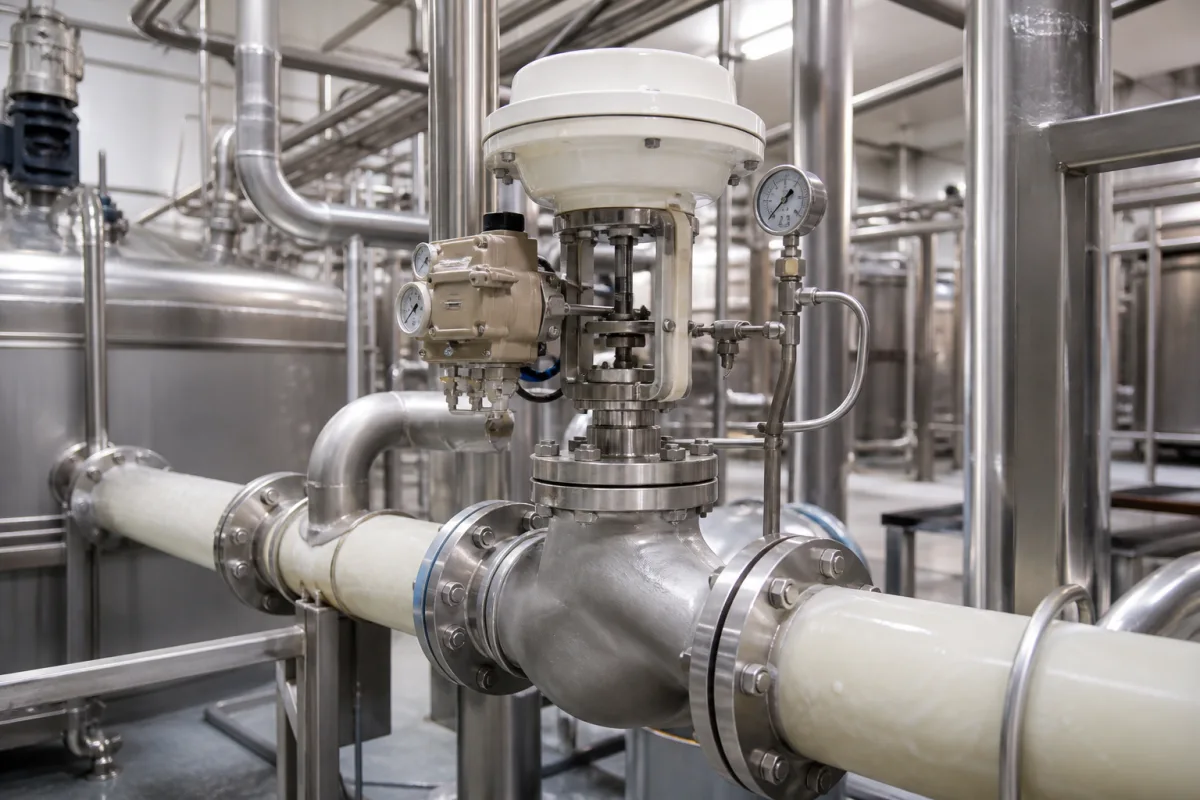
Precision valve regulating pressure in starch slurry processing pipelines.

Product Specifications

Technical details and manufacturing context for Starch Slurry Pressure Control Valve

Definition
A critical flow control component used in starch manufacturing plants to maintain precise pressure levels during slurry transport between processing stages. It ensures consistent viscosity and prevents pipeline damage from pressure fluctuations. This valve is essential for optimizing starch extraction efficiency and product quality in industrial grain milling operations. Manufacturers integrate it into automated control systems for real-time pressure management.
Working Principle
Uses a spring-loaded diaphragm or piston mechanism that responds to upstream pressure changes, automatically adjusting the orifice opening to maintain downstream pressure within set parameters.
Common Materials
316L Stainless Steel, PTFE Seals, EPDM Diaphragm
Technical Parameters
  • Maximum slurry flow rate (m³/h) Customizable
  • Operating pressure range (bar) Customizable
Components / BOM
  • Valve Body Part
    Main structural housing and flow path
    Material: 316L Stainless Steel
  • Control Diaphragm Part
    Pressure-sensitive membrane for orifice adjustment
    Material: EPDM Rubber
  • Spring Assembly Part
    Provides counterforce for pressure regulation
    Material: Stainless Steel Spring
  • Seal Ring Part
    Prevents slurry leakage at connection points
    Material: PTFE
  • Pressure Adjustment Screw Optional Part
    Manual pressure setpoint adjustment
    Material: Stainless Steel

Industry Taxonomies & Aliases

Commonly used trade names and technical identifiers for Starch Slurry Pressure Control Valve.

Industrial Ecosystem & Supply Chain Structure

Complementary Systems
Downstream Applications
Specialized Tooling

Application Fit & Sizing Matrix

Operational Limits
pressure: 0 to 10 bar (g)
flow rate: Up to 50 m³/h
temperature: 5°C to 120°C
slurry concentration: Up to 40% solids by weight
Media Compatibility
✓ Corn starch slurry ✓ Potato starch slurry ✓ Wheat starch slurry
Unsuitable: High-viscosity, non-Newtonian fluids with abrasive particles >500 microns
Sizing Data Required
  • Required flow rate (m³/h)
  • System pressure drop (bar)
  • Slurry solids concentration (% by weight)

Reliability & Engineering Risk Analysis

Failure Mode & Root Cause
Cavitation
Cause: Rapid pressure drop across valve trim causing vapor bubble formation and implosion, leading to pitting and material loss on valve internals, especially in starch slurry where viscosity changes can create localized low-pressure zones.
Abrasive wear and clogging
Cause: Starch particles in slurry acting as abrasives on valve seats, seals, and trim surfaces, combined with starch gelatinization or sedimentation causing partial or complete flow blockage, particularly in low-flow conditions or during shutdowns.
Maintenance Indicators
  • Erratic or unstable pressure control with hunting or oscillations despite stable process conditions, indicating compromised valve positioning or internal damage.
  • Visible slurry leakage from valve stem packing or body joints, or audible hissing/whistling from the valve area suggesting erosion or seal failure.
Engineering Tips
  • Implement regular valve stroking and flushing procedures during operation to prevent starch settling and buildup, using compatible cleaning agents to dissolve residues without damaging seals.
  • Specify and install hardened trim materials (e.g., tungsten carbide or ceramic coatings) for wear-prone components, and consider a valve design with streamlined flow paths to reduce turbulence and cavitation risk in slurry service.

Compliance & Manufacturing Standards

Reference Standards
ISO 5208:2015 (Industrial valves - Pressure testing of valves) ANSI/ISA 75.05.01 (Face-to-face dimensions for flanged globe-style control valves) DIN EN 12516-1 (Industrial valves - Shell design strength)
Manufacturing Precision
  • Bore diameter: +/-0.05mm
  • Seat flatness: 0.08mm maximum deviation
Quality Inspection
  • Hydrostatic pressure test (1.5x rated pressure)
  • Material composition verification via XRF analysis

Factories Producing Starch Slurry Pressure Control Valve

Manufacturer profiles with relevant production capability in China

Manufacturer listings support early research and capability understanding. They are not certification, ranking, or transaction guarantees.

Technical documentation
4/5
Manufacturing capability
4/5
Inspection readiness
5/5
Supplier transparency
3/5

These scores are example evaluation dimensions, not real customer ratings, country-specific buyer feedback, or live inquiry activity.

Supply Chain Commonly Integrated Components

Position Indicator

A visual or electronic device that displays the current open/closed position of a sanitary flow control valve.

Explore Specs →
Temperature Control Module

A precision electronic component that regulates and maintains optimal temperature conditions within fermentation vessels.

Explore Specs →
Pressure Regulation Unit

A specialized component within fermentation systems that maintains precise pressure levels during microbial growth processes.

Explore Specs →
Sensor Array Network

A network of multiple sensors distributed throughout a fermentation system to monitor and collect real-time data on critical parameters.

Explore Specs →

Frequently Asked Questions

What materials are used in this starch slurry pressure control valve?

This valve is constructed with 316L Stainless Steel for corrosion resistance, PTFE Seals for chemical compatibility, and an EPDM Diaphragm for durability in starch processing environments.

How does this valve maintain pressure accuracy in starch slurry applications?

The valve features a precision spring assembly and pressure adjustment screw that work with the control diaphragm to regulate pressure within specified accuracy percentages, ensuring consistent slurry flow in grain mill and starch manufacturing processes.

What maintenance is required for this pressure control valve?

Regular inspection of PTFE seals and EPDM diaphragm is recommended, along with occasional cleaning of the valve body to prevent starch buildup. The modular BOM design allows for easy replacement of components like seal rings when needed.

Can I contact factories directly on CNFX?

CNFX is an open directory, not a transaction platform. Each factory profile provides direct contact information and production details to help you initiate direct inquiries with Chinese suppliers.

Data Basis

CNFX manufacturer profiles, technical classification, publicly available product information, and ongoing plausibility checks.

Preliminary Technical Classification
This page supports structured research, RFQ preparation, and supplier evaluation. It does not replace buyer-led supplier qualification, standards review, or technical approval.

Request Manufacturing Insight for Starch Slurry Pressure Control Valve

Ask for use case, specification boundaries, supplier type, and RFQ preparation information for Starch Slurry Pressure Control Valve.

Your business information is used only to process this request.

Thank you! Your message has been sent. We'll respond within 1–3 business days.

Need to Manufacture Starch Slurry Pressure Control Valve?

Compare manufacturer profiles with relevant product and process capability.

Create Manufacturer Profile Contact Us
Previous Product
Starch Slurry Flow Control Orifice Plate
Next Product
Sterile Air Distribution Piping