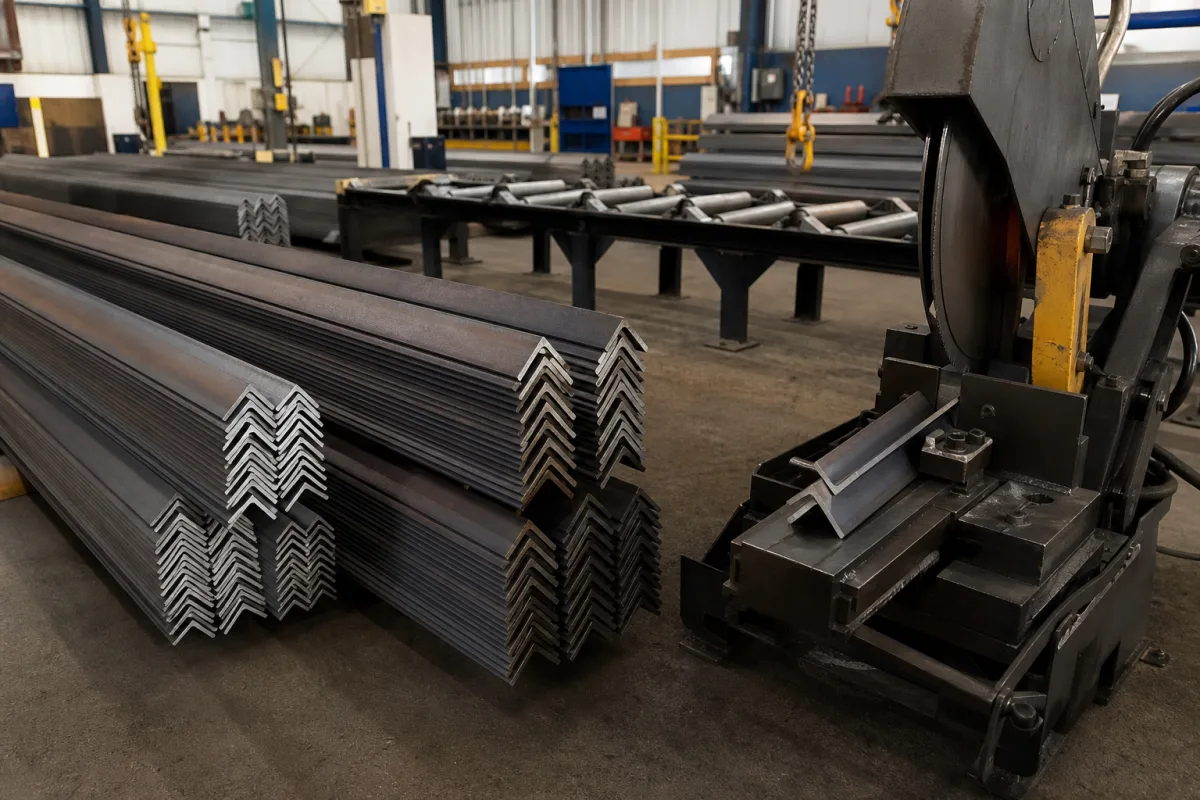
Hot-rolled structural steel angles (L-sections) · equal and unequal legs, light shapes versus structural angles, ASTM A36 carbon structural steel and A572 high-strength low-alloy grades, A6/A6M general requirements, shipbuilding grades, and cutting to length
A structural steel angle is a hot-rolled bar with an L-shaped cross-section: two legs at 90 degrees, of equal or unequal length. It is used for structural support, corner protection and fastening in construction, engineering and shipbuilding. Ask three things first: which leg sizes and thickness you need, which steel specification and grade must be certified, and what lengths, tolerances and processing (cutting, punching, galvanising) the order requires.
Hot-rolled carbon and high-strength low-alloy steel angles (equal and unequal leg) for structural and general use. Cold-formed angles, aluminium and stainless angles, and fabricated assemblies are outside this page except where compared.
CNFX editorial research · Sources checked October 12, 2026 · 6 sources
Nucor, a US steelmaker, describes a steel angle as a structural component with an L-shaped cross-section whose two legs form a 90-degree angle, with equal or unequal legs. It lists angles, channels, rounds, squares and flats among the structural shapes in its merchant bar range, and says it makes multiple sizes, including large angles. Angles are used in construction, engineering and other industries for structural support, corner protection and fastening. [1]
Nucor quotes the Steel Manufacturers Association's product classes. Light shapes are carbon and HSLA angles, channels, beams, Ts, Zs and other shapes with no dimension greater than 3 in, including shapes with one or more dimensions equal to 3 in. Structural angles and channels are carbon and HSLA angles and channels with at least one dimension greater than 3 in. [1]
Editorial calculation: 3 in is 76.2 mm. For shipbuilding, Nucor lists angle bar in ABS Grade A at 6.4 mm (0.25 in) and adds that products and grades vary by mill. [1]
Give the supplier the leg sizes and thickness (equal or unequal), the steel specification and grade, the length (stock or cut), the straightness and dimensional tolerances, the surface condition or coating (for example galvanised or primed), any punching, drilling or cutting, the quantity, and the mill certificate and inspection required.
02
Choose the steel specification and grade
ASTM A36/A36M covers carbon steel shapes, plates and bars of structural quality for riveted, bolted or welded construction of bridges and buildings and for general structural purposes. When the steel is to be welded, a welding procedure suitable for the grade and intended service is to be used. [2]
ASTM A572/A572M covers five grades of high-strength low-alloy structural steel shapes, plates, sheet piling and bars. Grades 42 [290], 50 [345] and 55 [380] are intended for riveted, bolted or welded structures. Grades 60 [415] and 65 [450] are intended for riveted or bolted bridges, or for riveted, bolted or welded construction in other applications. A588/A588M may not be substituted without agreement. [3]
ASTM A6/A6M sets the general requirements that apply to rolled structural steel bars, plates, shapes and sheet piling under product specifications such as A36, A572 and A588, unless the product specification says otherwise. [4]
Editorial calculation: 50 × 6.895 ≈ 345, so the bracketed figures are the grade numbers converted from ksi to MPa.
03
Consider higher-strength and weathering grades, and check the marking
ASTM A529/A529M covers high-strength carbon-manganese steel shapes, plates and bars of structural quality in Grade 50 [345] and Grade 55 [380]; for shapes it applies to flange or leg thicknesses up to 1½ in [40 mm], and the steel must be killed. ASTM A588/A588M covers high-strength low-alloy shapes, plates and bars with atmospheric corrosion resistance substantially better than carbon structural steels, intended for welded bridges and buildings where weight saving or durability matter, usable bare (unpainted) when properly exposed, up to 8 in [200 mm] thick. [5][6]
Under ASTM A6/A6M, which A36, A572, A529 and A588 all reference, finished products are legibly marked, bundled and tagged with the specification designation, grade, heat number, size and thickness, and the maker's name, brand or trademark; tension tests and chemical analysis confirm tensile strength, yield strength, elongation and composition. Check the tag against the mill certificate on delivery. [4][5][6]
Editorial calculation: 1½ in is 38.1 mm (ASTM rounds it to 40 mm in the metric designation), so an angle with legs thicker than that falls outside A529 and needs A572 or another specification. [5]
04
Leg lengths, leg thickness, grade, corrosion resistance and marking
Leg thickness decides grade eligibility as well as weight: ASTM A529 applies to shapes with leg thickness up to 1½ in [40 mm]. [5]
Explore company information and manufacturing capabilities, then discuss the scope of your project with a relevant supplier.
Share this page
Compiled and source-reviewed by the CNFX editorial team.
Ask for mill test certificates that show the ASTM specification and grade, heat number and the marking required by ASTM A6/A6M. How we source and review
· Page last updated 13 October 2026
Buyer questions
What is a structural steel angle?
A hot-rolled section with an L-shaped cross-section whose two legs form 90 degrees; the legs may be equal or unequal. [1]
What is the difference between light shapes and structural angles?
Under the SMA classes Nucor quotes, light shapes have no dimension over 3 in, while structural angles have at least one dimension over 3 in. [1]
Which ASTM grades are used for angles?
ASTM A36 for carbon structural steel and A572 for high-strength low-alloy grades 42, 50, 55, 60 and 65, with general requirements in A6/A6M. [2][3][4]
Which steel grade suits bare outdoor angles?
ASTM A588 weathering steel is intended for welded bridges and buildings and can be used bare when properly exposed, up to 8 in thick. [6]
Sources and what still needs a direct check
Sources checked 2026-10-12. Nucor describes its own merchant bar products. The ASTM pages are the public scope summaries of the standards; the full standards are sold by ASTM.