Editorial Technical Reference

High-Purity Industrial Adhesive Base Resin

This page explains how High-Purity Industrial Adhesive Base Resin is classified within Other Chemical Products Manufacturing. Technical values and manufacturer relationships are research references; confirm the current specification and supplier evidence for each order.

Technical Definition & Core Assembly

High-purity industrial adhesive base resin is a specialized polymer material manufactured as a semi-finished chemical product for downstream adhesive production.

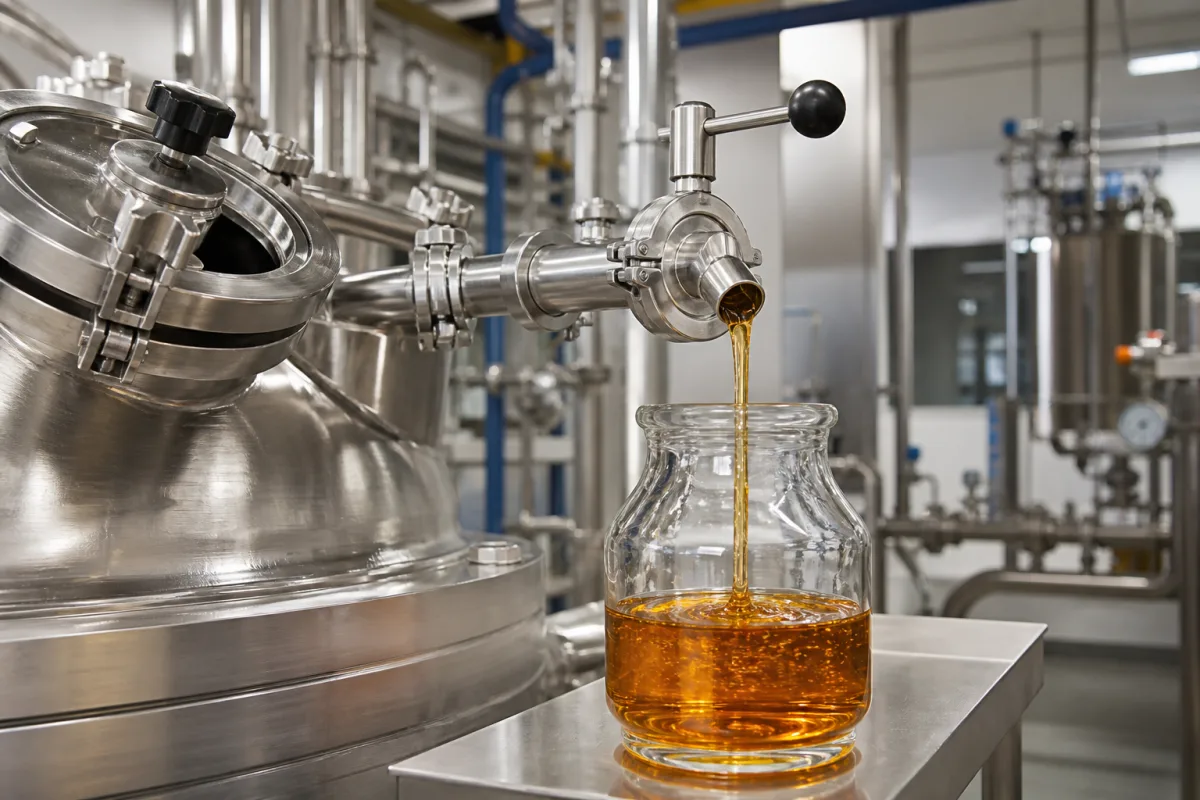
High-Purity Industrial Adhesive Base Resin in a manufacturing environment
Representative product image. Confirm appearance and specifications with the manufacturer.

Product Specifications

Technical details and manufacturing context for High-Purity Industrial Adhesive Base Resin

Definition
High-purity industrial adhesive base resin is a specialized polymer material manufactured as a semi-finished chemical product for downstream adhesive production. This material serves as the foundational component in B2B supply chains for industrial adhesive manufacturers, providing consistent chemical properties and performance characteristics. It enables formulation of structural adhesives, sealants, and bonding compounds across multiple industrial sectors. The material undergoes controlled polymerization and purification processes to ensure batch-to-batch consistency and compatibility with various curing agents and additives.

Typical applications include the production of two-part epoxy adhesives, polyurethane-based bonding agents, and acrylic structural adhesives. The resin is supplied in bulk or drum quantities to adhesive formulators who mix it with hardeners, fillers, and modifiers to achieve target performance profiles. Its high purity minimizes side reactions and ensures predictable curing behavior.

Key technical parameters, as listed in the directory, include viscosity at 25°C (8000–12000 cP), glass transition temperature (45–60°C), molecular weight (1500–2500 g/mol), epoxy equivalent weight (180–200 g/eq), volatile organic content (≤0.5%), pot life (60–90 hours), density (1.10–1.20 g/cm³), hydroxyl value (100–150 mg KOH/g), acid value (≤2 mg KOH/g), Gardner color (≤3), flash point (>200°C), and shelf life (12 months when stored sealed below 30°C). These values are reference ranges and must be verified for the specific grade and application.

Standards such as ASTM D2196, E1356, D5296, D1652, EPA Method 24, D2471, D1475, D4274, D4662, D1544, and D92 are cited as verification references. Buyers should confirm that the actual product meets their requirements and that the supplier can provide certificates of analysis. This directory listing is informational and does not imply certification or compliance.
Working Principle
The resin consists of polymer chains with reactive functional groups, such as epoxy, hydroxyl, or isocyanate groups. When mixed with a curing agent, these groups undergo crosslinking reactions, forming a three-dimensional network. The cohesive strength and adhesion arise from molecular entanglement and chemical bonding between the polymer chains and the substrate surface. The working time (pot life) is determined by the reactivity of the system and temperature. Proper curing is essential to achieve the desired mechanical and thermal properties.
Common Materials
Epoxy monomers, Acrylic monomers, Polyurethane prepolymers
Technical Parameters
ParameterTypical rangeNotes & selection driver
Viscosity at 25°CRequired8000–12000 cPDynamic viscosity measured at standard temperatureASTM D2196
Glass Transition TemperatureRequired45–60 °CTemperature at which polymer transitions from glassy to rubbery stateASTM E1356
Molecular WeightRequired1500–2500 g/molAverage molecular weight of polymer chainsASTM D5296
Epoxy Equivalent Weight180–200 g/eqMass of resin containing one equivalent of epoxy groupsASTM D1652
Volatile Organic ContentRequired≤0.5 %Percentage of volatile compounds in resinEPA Method 24
Pot Life60–90 hoursWorking time after mixing with curing agentASTM D2471
Density at 25°C1.10–1.20 g/cm³Affects formulation weightASTM D1475
Hydroxyl Value100–150 mg KOH/gIndicates reactive sitesASTM D4274
Acid Value≤2 mg KOH/gLow acidity for stabilityASTM D4662
Color (Gardner)≤3Light color for clear adhesivesASTM D1544
Flash Point>200 °CSafe handling and storageASTM D92
Shelf Life12 monthsStore in sealed container below 30°C

Ranges are indicative industry figures for RFQ preparation, not a supplier commitment. Confirm every value and standard with the legal manufacturer before ordering.

Components / BOM
  • Polymer backbone Part
    Provides structural integrity and mechanical properties
    Material: Synthetic polymer chains
  • Reactive functional groups Part
    Enable cross-linking with curing agents
    Material: Epoxy, hydroxyl, or acrylic groups
  • Stabilizer package Optional Part
    Prevents premature polymerization and degradation
    Material: Antioxidants and inhibitors
  • Rheology modifiers Optional Part
    Controls viscosity and flow characteristics
    Material: Fumed silica or thickeners

Industry Taxonomies & Aliases

Commonly used trade names and technical identifiers for High-Purity Industrial Adhesive Base Resin.

Industrial Ecosystem & Supply Chain Structure

Complementary Systems
Downstream Applications
Specialized Tooling

Application Fit & Sizing Matrix

Operational Limits
pressure: Atmospheric to 50 psi (3.4 bar) max
flow rate: 0.1-5.0 L/min for pumping applications
temperature: -40°C to 150°C continuous, 180°C peak
slurry concentration: Up to 60% solids by weight
Media Compatibility
✓ Metals (steel, aluminum, stainless) ✓ Plastics (ABS, PVC, polycarbonate) ✓ Glass and ceramics
Unsuitable: Strong oxidizing acids (e.g., concentrated nitric acid)
Sizing Data Required
  • Required bond strength (MPa or psi)
  • Substrate surface area to be bonded (m² or ft²)
  • Cure time requirements (minutes to hours)

Reliability & Engineering Risk Analysis

Failure Mode & Root Cause
Polymerization and solidification
Cause: Exposure to ambient moisture or temperature fluctuations causing premature curing, often due to inadequate storage conditions or contamination during handling.
Viscosity degradation and phase separation
Cause: Thermal cycling or prolonged storage leading to molecular breakdown or ingredient stratification, typically from improper temperature control or exceeding shelf life.
Maintenance Indicators
  • Visible crystallization, gelling, or skin formation on the resin surface indicating moisture ingress or contamination
  • Audible hissing or bubbling sounds from storage containers suggesting chemical reaction or off-gassing due to thermal runaway or contamination
Engineering Tips
  • Implement strict moisture control with nitrogen blanketing in storage tanks and use desiccant breathers to prevent atmospheric humidity from initiating premature polymerization
  • Maintain precise temperature control within ±2°C of manufacturer's specified range using jacketed vessels with automated thermal regulation to prevent viscosity changes and phase separation

Indicative industry ranges for design and RFQ preparation. Confirm the exact figures and applicable standard with the manufacturer before specifying.

Compliance & Manufacturing Standards

Applicable Standards
ISO 10993-5: Biological evaluation of medical devices - Tests for in vitro cytotoxicity ASTM D1002: Standard Test Method for Apparent Shear Strength of Single-Lap-Joint Adhesively Bonded Metal Specimens by Tension Loading (Metal-to-Metal) CE Marking: Compliance with EU Regulation (EU) 2017/745 on medical devices for adhesive applications in medical settings

Quoted from the published standard.

Manufacturing Precision
  • Viscosity: +/- 5% of specified value at 25°C
  • Moisture content: ≤ 0.1% by weight
Quality Inspection
  • Gel Permeation Chromatography (GPC) for molecular weight distribution analysis
  • Fourier Transform Infrared Spectroscopy (FTIR) for chemical composition verification

Manufacturers of High-Purity Industrial Adhesive Base Resin

Manufacturer profiles associated with High-Purity Industrial Adhesive Base Resin.

Sourcing High-Purity Industrial Adhesive Base Resin from China?
Tell us your specification and target quantity — we will match it against manufacturer records and come back with the factories that fit.
Request manufacturers We manufacture this

Manufacturer listings support early research and capability understanding. They are not certification, ranking, or transaction guarantees.

Share this page
Technical documentation
Request current drawings, revision history, and a signed specification sheet.
Manufacturing capability
Verify equipment lists, process limits, capacity, and representative production evidence.
Inspection readiness
Confirm test methods, calibrated equipment, sampling plans, and traceable reports.
Supplier transparency
Check the legal entity, factory address, ownership, certifications, and direct contacts.

CNFX does not score or rank suppliers. Buyers must verify all claims and documents with the legal manufacturer before ordering.

Frequently Asked Questions

What is the typical application of this resin?

This resin is used as a base material for formulating structural adhesives, sealants, and bonding compounds. It is supplied to adhesive manufacturers who mix it with curing agents and additives to produce final products for various industries.

How should the resin be stored?

According to the directory, the resin should be stored in a sealed container below 30°C. The shelf life is 12 months under these conditions. Always follow the manufacturer's storage instructions.

Are the listed parameters guaranteed for all batches?

The parameters are reference ranges from the directory. Actual values may vary by grade and batch. Buyers must request a certificate of analysis from the supplier to confirm the specific values for their intended application.

What standards are relevant for testing this resin?

The directory lists ASTM standards such as D2196 for viscosity, E1356 for glass transition, D1652 for epoxy equivalent weight, and others. These standards are used for verification, but compliance must be confirmed with the supplier.

Data Basis

Editorial classification, named public sources where available, and source-reviewed manufacturer records.

Preliminary Technical Classification
This page supports structured research, RFQ preparation, and supplier evaluation. It does not replace buyer-led supplier qualification, standards review, or technical approval.
Buyer enquiry

Request manufacturing insight for High-Purity Industrial Adhesive Base Resin

Ask for use case, specification boundaries, supplier type, and RFQ preparation information for this product.

Where it goes
Straight to the CNFX editorial desk, and to the manufacturer if this product is linked to a claimed profile. Nothing is broadcast to a supplier list.
Your details stay here
We do not sell or rent enquiry data, and we do not add you to a mailing list. Used only to answer this request.
No commission, no middleman
CNFX is a directory. We take no cut of any order and never negotiate on a supplier's behalf.
What we don't claim
A listing is not an endorsement. Qualify every supplier and verify every figure yourself before ordering.

Your business information is used only to process this request.

Thank you! Your message has been sent. We'll respond within 1–3 business days.
Sorry, we couldn't send your message. Please try again, or email us at [email protected].

Need to Manufacture High-Purity Industrial Adhesive Base Resin?

Compare manufacturer profiles with relevant product and process capability.

Previous Product
Industrial Rotary Drum Vacuum Filter
Last Product
Get QuotesChat