Editorial Technical Reference

Heating Element Core

This page explains how Heating Element Core is classified within Adult Wellness Products Manufacturing. Technical values and manufacturer relationships are research references; confirm the current specification and supplier evidence for each order.

Technical Definition & Core Assembly

The Heating Element Core is a standardized industrial component designed for integration into adult wellness products that require controlled thermal output.
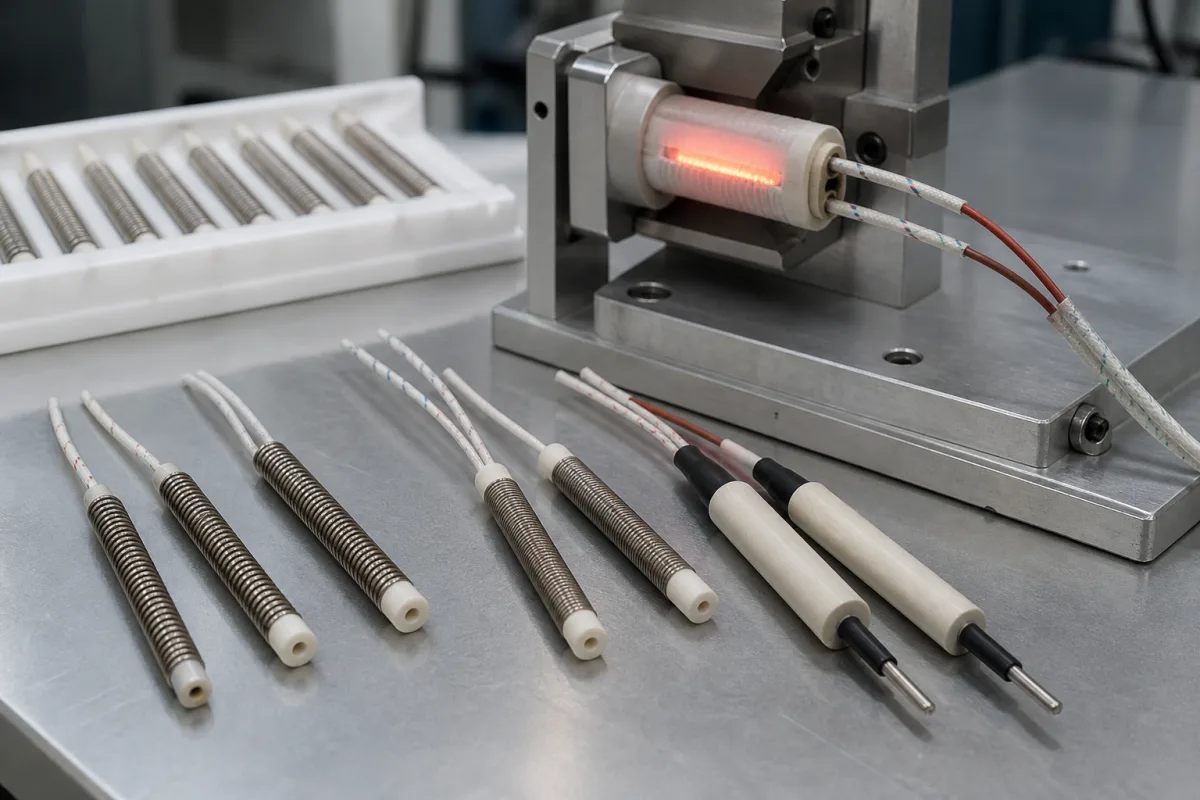
Representative product image. Confirm appearance and specifications with the manufacturer.

Product Specifications

Technical details and manufacturing context for Heating Element Core

Definition
The Heating Element Core is a standardized industrial component designed for integration into adult wellness products that require controlled thermal output. It provides reliable, consistent heating for applications such as massage devices, therapeutic tools, and personal care products. Manufacturers source these cores to build temperature-regulated assemblies that meet safety and performance specifications. The component is engineered for easy integration into various product designs while maintaining thermal efficiency.

This core converts electrical energy into thermal energy through resistive heating. When current flows through the conductive nichrome wire, it generates heat, which is transferred to the outer stainless steel casing. The ceramic insulator ensures electrical isolation and thermal stability, while copper terminals provide secure electrical connections. The stainless steel casing offers corrosion resistance and mechanical protection.

Key parameters include a rated power of 100–500 W, resistance of 10–50 Ω at 20°C, and an operating temperature range of 50–200°C. The outer diameter ranges from 8–20 mm, and the active heating length is 50–200 mm. Voltage options are 12–24 V DC. Tolerances on diameter and length are ±0.05 mm. Insulation resistance is ≥100 MΩ at 500 V DC, and dielectric strength is 1500 V AC for 1 minute. The IP rating is IP54–IP65 per IEC 60529, and the casing material is stainless steel 304/316 per ASTM A240. Weight ranges from 20–100 g depending on size.

These values are reference ranges; actual specifications must be confirmed for the specific model and application. Verify all parameters and standards with the legal manufacturer or supplier before procurement. The component is not certified or compliant solely by listing these standards; they serve as verification references. Always check the intended use and safety requirements for your product.
Working Principle
The heating element core operates on the principle of resistive heating. When an electric current passes through the nichrome wire, which has a high resistance, electrical energy is converted into heat. The heat is conducted through the ceramic insulator to the stainless steel casing, which then transfers it to the surrounding medium. The temperature is controlled by regulating the current or voltage supplied to the element. The ceramic insulator prevents electrical short circuits and ensures that the heat is directed outward. The copper terminals allow for secure electrical connections to the power source. The design ensures efficient heat transfer and uniform temperature distribution across the active heating length.
Common Materials
nichrome wire, ceramic insulator, copper terminals, stainless steel casing
Technical Parameters
ParameterTypical rangeNotes & selection driver
Rated PowerRequired100–500 WNominal heating power
ResistanceRequired10–50 ΩElectrical resistance at 20°C
Operating TemperatureRequired50–200 °CMaximum surface temperature
Diameter8–20 mmOuter casing diameter
Length50–200 mmActive heating length
Voltage12–24 V DC VAC versions available
Tolerance±0.05 mmOn diameter and length
Insulation Resistance≥100 At 500 V DC
Dielectric Strength1500 V AC VFor 1 minute
IP RatingIP54–IP65Dust and water resistanceIEC 60529
MaterialStainless Steel 304/316Corrosion resistantASTM A240
Weight20–100 gDepends on size

Ranges are indicative industry figures for RFQ preparation, not a supplier commitment. Confirm every value and standard with the legal manufacturer before ordering.

Components / BOM

Industry Taxonomies & Aliases

Commonly used trade names and technical identifiers for Heating Element Core.

Industrial Ecosystem & Supply Chain Structure

Complementary Systems
Downstream Applications
Specialized Tooling

Application Fit & Sizing Matrix

Operational Limits
pressure: 0 to 10 bar (145 psi) max operating pressure
flow rate: 0.5 to 5 L/min for liquid applications
temperature: -20°C to 250°C operational, 300°C max intermittent
slurry concentration: Not recommended for slurries >5% solids by volume
Media Compatibility
✓ Water-based fluids (hydronic systems) ✓ Thermal oils (mineral/synthetic) ✓ Clean air/gas streams
Unsuitable: Corrosive chemical environments (acids, strong alkalis, halogens)
Sizing Data Required
  • Required heat output (Watts)
  • Target fluid temperature rise (°C)
  • Available electrical supply (Voltage/Phase)

Reliability & Engineering Risk Analysis

Failure Mode & Root Cause
Thermal fatigue cracking
Cause: Repeated heating and cooling cycles causing expansion/contraction stress, leading to micro-cracks in the heating element material
Insulation breakdown
Cause: Moisture ingress, contamination, or overheating degrading the electrical insulation between the heating coil and outer sheath
Maintenance Indicators
  • Visible hotspots or discoloration on the heating element surface indicating uneven heating
  • Audible arcing or popping sounds during operation signaling electrical insulation failure
Engineering Tips
  • Implement controlled ramp-up/down procedures to minimize thermal shock and reduce thermal stress cycles
  • Maintain proper environmental controls (humidity, contaminants) and ensure adequate ventilation to prevent insulation degradation

Indicative industry ranges for design and RFQ preparation. Confirm the exact figures and applicable standard with the manufacturer before specifying.

Compliance & Manufacturing Standards

Applicable Standards
ASTM B863 - Standard Specification for Titanium and Titanium Alloy Wire IEC 60335-2-15 - Safety of Household and Similar Electrical Appliances

Quoted from the published standard.

Manufacturing Precision
  • Diameter: +/-0.05mm
  • Resistance: +/-5% of nominal value
Quality Inspection
  • Electrical Resistance Test
  • Leakage Current Test

Manufacturers of Heating Element Core

Manufacturer profiles associated with Heating Element Core.

Sourcing Heating Element Core from China?
Tell us your specification and target quantity — we will match it against manufacturer records and come back with the factories that fit.
Request manufacturers We manufacture this

Manufacturer listings support early research and capability understanding. They are not certification, ranking, or transaction guarantees.

Technical documentation
Request current drawings, revision history, and a signed specification sheet.
Manufacturing capability
Verify equipment lists, process limits, capacity, and representative production evidence.
Inspection readiness
Confirm test methods, calibrated equipment, sampling plans, and traceable reports.
Supplier transparency
Check the legal entity, factory address, ownership, certifications, and direct contacts.

CNFX does not score or rank suppliers. Buyers must verify all claims and documents with the legal manufacturer before ordering.

Frequently Asked Questions

What are the typical applications for this heating element core?

This component is designed for integration into adult wellness products that require controlled heating, such as massage devices, therapeutic tools, and personal care products. It is a standardized industrial component used by manufacturers to build temperature-regulated assemblies.

What are the key electrical specifications?

The rated power ranges from 100 to 500 W, resistance is 10 to 50 Ω at 20°C, and voltage options are 12–24 V DC. Insulation resistance is ≥100 MΩ at 500 V DC, and dielectric strength is 1500 V AC for 1 minute. Always confirm these values for the specific model.

What are the mechanical and environmental specifications?

The outer diameter is 8–20 mm, active heating length is 50–200 mm, and weight is 20–100 g. The IP rating is IP54–IP65 per IEC 60529, and the casing is stainless steel 304/316 per ASTM A240. Tolerances on diameter and length are ±0.05 mm.

How should I verify the suitability of this component for my product?

You must confirm all parameters, including power, resistance, temperature range, dimensions, and standards, with the legal manufacturer or supplier. The listed values are reference ranges and do not guarantee compliance with any specific safety or performance requirements. Always conduct your own testing and validation.

Data Basis

Editorial classification, named public sources where available, and source-reviewed manufacturer records.

Preliminary Technical Classification
This page supports structured research, RFQ preparation, and supplier evaluation. It does not replace buyer-led supplier qualification, standards review, or technical approval.
Buyer enquiry

Request manufacturing insight for Heating Element Core

Ask for use case, specification boundaries, supplier type, and RFQ preparation information for this product.

Where it goes
Straight to the CNFX editorial desk, and to the manufacturer if this product is linked to a claimed profile. Nothing is broadcast to a supplier list.
Your details stay here
We do not sell or rent enquiry data, and we do not add you to a mailing list. Used only to answer this request.
No commission, no middleman
CNFX is a directory. We take no cut of any order and never negotiate on a supplier's behalf.
What we don't claim
A listing is not an endorsement. Qualify every supplier and verify every figure yourself before ordering.

Your business information is used only to process this request.

Thank you! Your message has been sent. We'll respond within 1–3 business days.
Sorry, we couldn't send your message. Please try again, or email us at contact@cnfx.com.

Need to Manufacture Heating Element Core?

Compare manufacturer profiles with relevant product and process capability.

Get QuotesChat