This page explains how Sanitary Ball Valve Assembly is classified within Alcoholic Beverages Manufacturing. Technical values and manufacturer relationships are research references; confirm the current specification and supplier evidence for each order.
Hygienic ball valve assembly for precise flow control in beverage processing lines
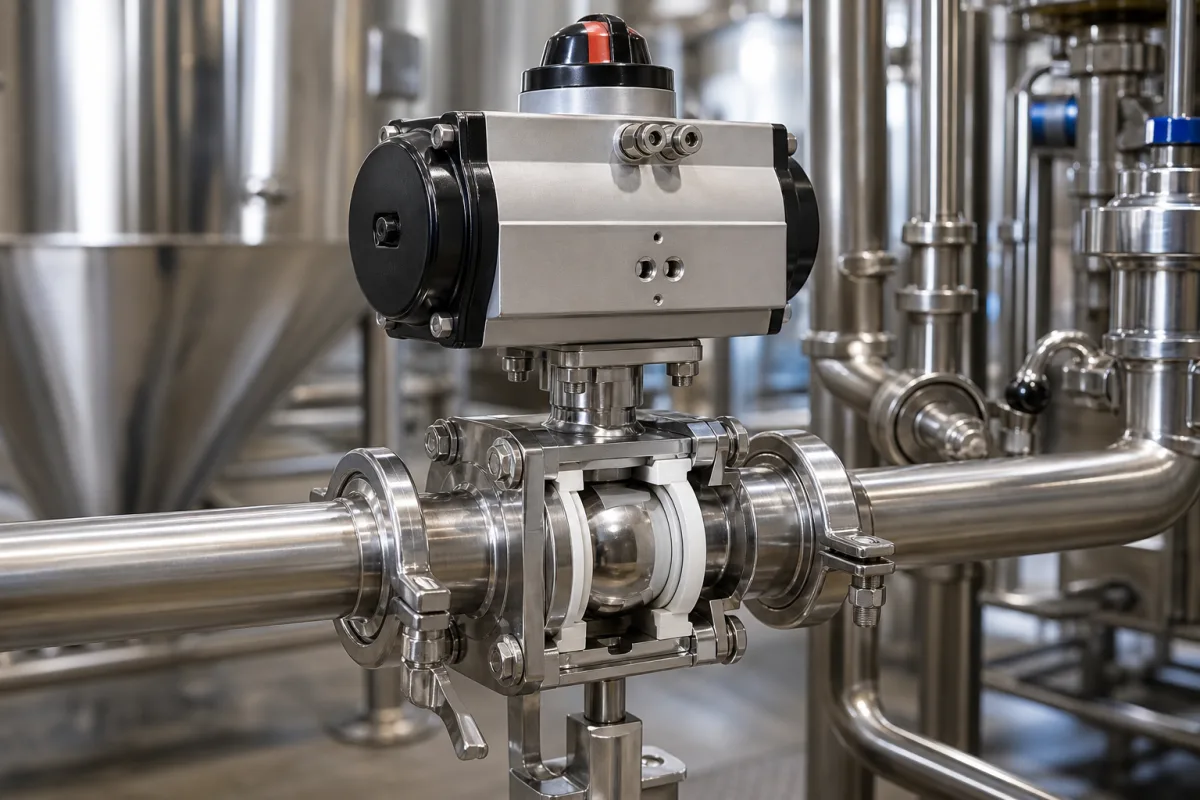
Technical details and manufacturing context for Sanitary Ball Valve Assembly
| Parameter | Typical range | Notes & selection driver |
|---|---|---|
| Port SizeRequired | 15–100 inches | Connection port diameter for pipeline integrationISO 1127 |
| Pressure RatingRequired | 1.0–1.6 PSI | Maximum operating pressure at specified temperatureISO 5208 |
| Temperature RangeRequired | -40–150 °C | Operating temperature limits for materials |
| Surface FinishRequired | 0.4–0.8 Ra | Surface roughness average for hygienic requirementsISO 4287 |
| Flow Coefficient | 10–250 US gal/min | Valve flow capacity at specified pressure drop |
| Actuation Torque | 5–50 Nm | Required torque for manual or automated operation |
| Body Material | 304/316L | 316L for corrosive mediaASTM A351 |
| Seat Material | EPDM/PTFE | EPDM for steam; PTFE for chemicals |
| Leakage Rate | 0.01 ml/min | Class VI at 6 bar airISO 5208 |
| End Connections | Clamp/Weld | Clamp for quick disconnectDIN 32676 |
| Weight | 1.5–12 kg | Depends on size and actuator |
Ranges are indicative industry figures for RFQ preparation, not a supplier commitment. Confirm every value and standard with the legal manufacturer before ordering.
Commonly used trade names and technical identifiers for Sanitary Ball Valve Assembly.
| pressure: | Up to 10 bar (145 psi) |
| flow rate: | Cv values from 0.5 to 50 (depending on valve size) |
| temperature: | -10°C to 120°C |
| slurry concentration: | Not recommended for abrasive slurries >5% solids by weight |
Indicative industry ranges for design and RFQ preparation. Confirm the exact figures and applicable standard with the manufacturer before specifying.
Quoted from the published standard.
1 company lists this product among what they make. Company figures are quoted from each company's own website; every card states where the relationship came from.
Manufacturer listings support early research and capability understanding. They are not certification, ranking, or transaction guarantees.
A practical evidence checklist for RFQ preparation and supplier evaluation.
CNFX does not score or rank suppliers. Buyers must verify all claims and documents with the legal manufacturer before ordering.
The valve body is available in 304 or 316L stainless steel per ASTM A351. Seat materials include EPDM for steam service and PTFE for chemical compatibility. The ball and stem are typically made of 316L stainless steel. Always confirm material grades with the manufacturer for your specific application.
End connections are offered in clamp or weld configurations per DIN 32676. Clamp connections allow quick disassembly for cleaning and inspection, while weld connections provide a permanent, leak-tight joint. Choose based on your piping system and maintenance requirements.
The leakage rate is rated at 0.01 ml/min, meeting Class VI at 6 bar air per ISO 5208. This ensures minimal leakage in the closed position, which is critical for hygienic processing. Verify the actual leakage performance with the manufacturer for your operating conditions.
Yes, the valve provides reliable on/off and throttling control. The quarter-turn operation allows for precise positioning, and the flow coefficient range of 10 to 250 US gal/min supports various flow rates. However, for continuous throttling, consider the actuation torque and consult the manufacturer for suitability.
Editorial classification, named public sources where available, and source-reviewed manufacturer records.
Ask for use case, specification boundaries, supplier type, and RFQ preparation information for this product.
Compare manufacturer profiles with relevant product and process capability.