This page explains how Aluminum CNC Drilling Machine is classified within Aluminum CNC Machining. Technical values and manufacturer relationships are research references; confirm the current specification and supplier evidence for each order.
The Aluminum CNC Drilling Machine is a standalone computer numerical control (CNC) drilling system engineered specifically for aluminum machining operations.
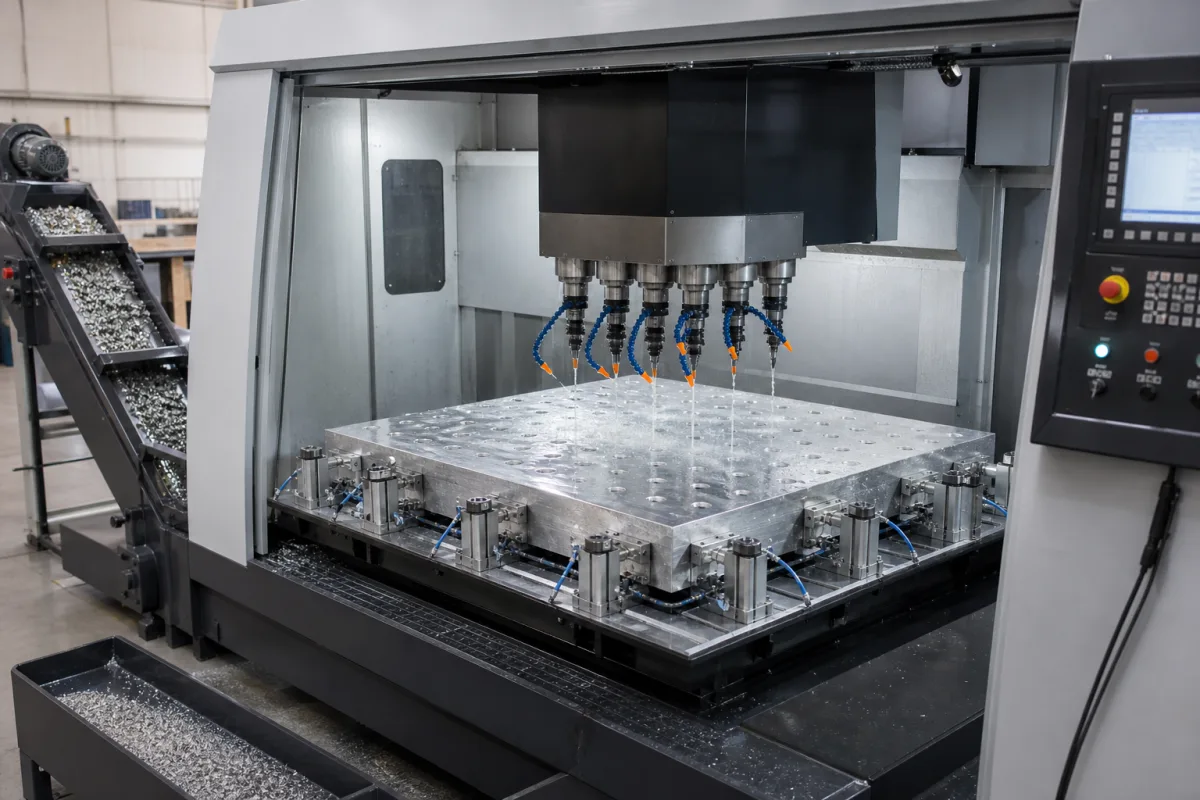
Technical details and manufacturing context for Aluminum CNC Drilling Machine
| Parameter | Typical range | Notes & selection driver |
|---|---|---|
| Spindle SpeedRequired | 3000–12000 rpm | Maximum rotational speed |
| Drilling CapacityRequired | 1–20 mm | Max drill diameter in aluminum |
| Positioning AccuracyRequired | ±0.02 mm | Axis positioning precisionISO 230-2 |
| Table SizeRequired | 1200×800 mm | Worktable dimensions |
| Spindle PowerRequired | 5.5–11 kW | Main spindle motor power |
| Number of Spindles | 1–8 pcs | Multi-spindle for high productivity. |
| Rapid Traverse Rate | 20–40 m/min | X/Y axes. |
| Spindle Taper | BT30/BT40 | Tool holder interface.ISO 7388 |
| Control System | Siemens 828D / FANUC 0i-MF | Optional; other systems available. |
| Machine Weight | 3000–5000 kg | Depends on configuration. |
| Power Supply | 380 V / 50 Hz / 3-phase | Other voltages on request.IEC 60038 |
| Air Pressure | 0.5–0.8 MPa | For tool clamping and chip removal. |
| Coolant System | 0.6–1.0 MPa | Through-spindle coolant optional. |
Ranges are indicative industry figures for RFQ preparation, not a supplier commitment. Confirm every value and standard with the legal manufacturer before ordering.
Commonly used trade names and technical identifiers for Aluminum CNC Drilling Machine.
| feed: | Confirm programmable feed range and cutting data with the tool and machine suppliers. |
| spindle: | Match speed, torque, power, taper and duty rating to the hole diameter, tool and alloy. |
| utilities: | Confirm electrical supply, compressed-air demand, coolant arrangement and extraction requirements for the delivered configuration. |
| positioning: | Specify the required accuracy and repeatability, axis travel, warm-up state and ISO 230-2 test conditions in the RFQ. |
| work envelope: | Confirm maximum workpiece dimensions and usable axis travel for the quoted model. |
Indicative industry ranges for design and RFQ preparation. Confirm the exact figures and applicable standard with the manufacturer before specifying.
Manufacturer profiles associated with Aluminum CNC Drilling Machine.
Manufacturer listings support early research and capability understanding. They are not certification, ranking, or transaction guarantees.
A practical evidence checklist for RFQ preparation and supplier evaluation.
CNFX does not score or rank suppliers. Buyers must verify all claims and documents with the legal manufacturer before ordering.
The machine is specifically engineered for aluminum workpieces. It can perform drilling, tapping, and boring on aluminum components. The construction materials include cast iron frame, steel guideways, aluminum alloy components, and ceramic bearings, which provide rigidity for aluminum machining.
A listed directory reference is ±0.02 mm, but actual positioning accuracy varies by model, axis travel, thermal condition and test setup. ISO 230-2 defines the test and evaluation method rather than a universal tolerance. Request the model-specific test report and acceptance criteria from the manufacturer.
Yes, the machine can be equipped with 1 to 8 spindles, depending on the configuration. This allows for high productivity by drilling multiple holes simultaneously. The number of spindles affects the machine's overall performance and should be selected based on production needs.
The machine may be equipped with Siemens 828D or FANUC 0i-MF control systems, as listed in the reference parameters. Other control systems may be available upon request. Confirm the control system compatibility with your programming and operation requirements with the supplier.
Editorial classification, named public sources where available, and source-reviewed manufacturer records.
Ask for use case, specification boundaries, supplier type, and RFQ preparation information for this product.
Compare manufacturer profiles with relevant product and process capability.