This page explains how Precision Casting Mold Venting Pin is classified within Foundries. Technical values and manufacturer relationships are research references; confirm the current specification and supplier evidence for each order.
Precision venting pin for casting molds to release trapped gases and prevent porosity.
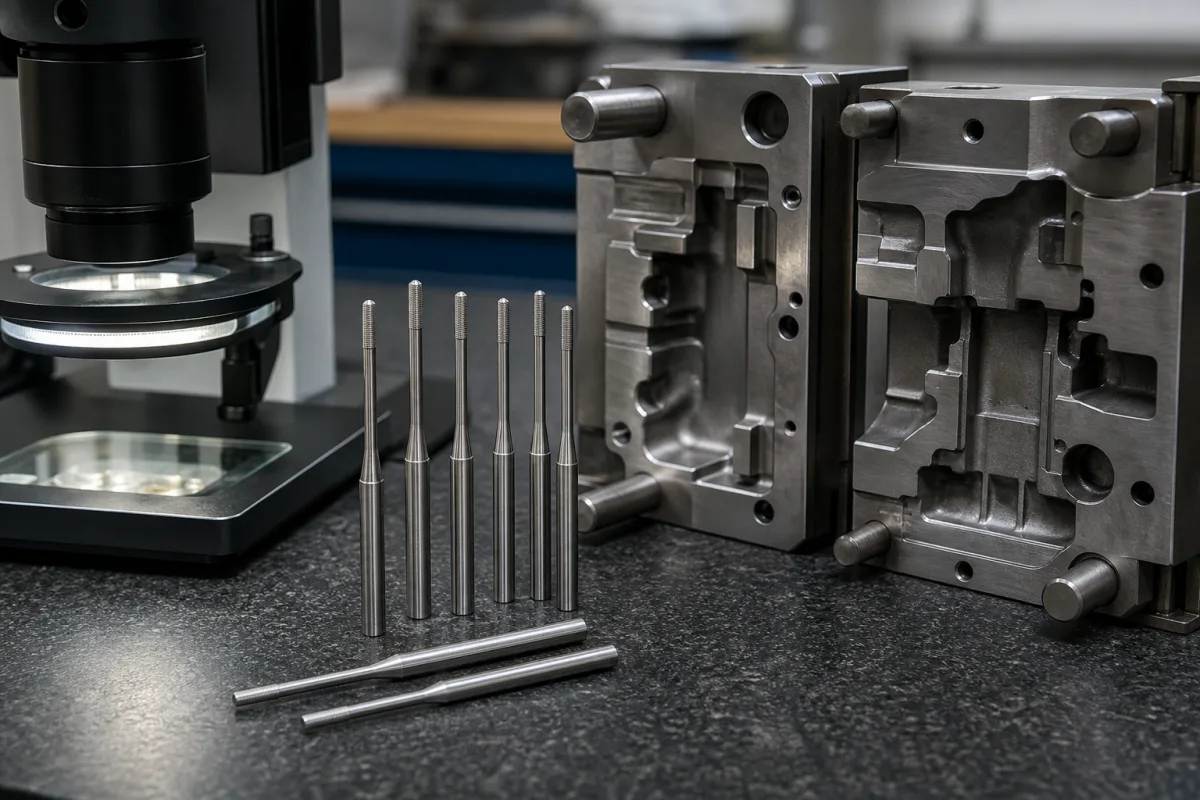
Technical details and manufacturing context for Precision Casting Mold Venting Pin
| Parameter | Typical range | Notes & selection driver |
|---|---|---|
| Pin DiameterRequired | 3–12 mm | Nominal diameter of venting pin body |
| Venting Channel SizeRequired | 0.2–0.5 μm | Size of micro-channels for gas escape |
| Operating TemperatureRequired | -20–300 °C | Maximum continuous operating temperature |
| Surface HardnessRequired | 58–62 HRC | Rockwell hardness of pin surface |
| Thermal Expansion Coefficient | 11.5–12.5 10^-6/K | Coefficient of thermal expansion at operating range |
| Material Grade | H13 | Hot-work tool steelASTM A681 |
| Tensile Strength | 1500–1800 MPa | After quenching and tempering |
| Surface Roughness | Ra 0.4–0.8 µm | Critical for venting performance |
| Straightness Tolerance | 0.01 mm | Per 100 mm length |
| Weight | 0.05–0.5 kg | Depends on diameter and length |
Ranges are indicative industry figures for RFQ preparation, not a supplier commitment. Confirm every value and standard with the legal manufacturer before ordering.
Commonly used trade names and technical identifiers for Precision Casting Mold Venting Pin.
| pressure: | Max 15 bar (217 psi) during venting cycles |
| flow rate: | 0.5-2.0 L/min gas venting capacity |
| temperature: | Up to 1200°C (2192°F) for short-term exposure, 800°C (1472°F) continuous |
| slurry concentration: | Compatible with slurries up to 70% solids by weight |
Indicative industry ranges for design and RFQ preparation. Confirm the exact figures and applicable standard with the manufacturer before specifying.
Quoted from the published standard.
Manufacturer profiles associated with Precision Casting Mold Venting Pin.
Manufacturer listings support early research and capability understanding. They are not certification, ranking, or transaction guarantees.
A practical evidence checklist for RFQ preparation and supplier evaluation.
CNFX does not score or rank suppliers. Buyers must verify all claims and documents with the legal manufacturer before ordering.
The venting pin allows trapped gases to escape from the mold cavity during pouring, preventing gas porosity defects in the cast part. It ensures that air and gases generated by the process are released while keeping molten metal from leaking out.
The pin is available in high-temperature tool steel, ceramic composite, or tungsten carbide. The choice depends on the casting temperature, thermal cycling, and required durability. Tool steel is common for many applications, while ceramic and tungsten carbide offer higher temperature resistance.
Selection depends on the mold design, casting material, and gas volume to be vented. Key parameters include pin diameter (3–12 mm), venting channel size (0.2–0.5 μm), and operating temperature range. Always consult the manufacturer or supplier to match the pin to your specific application.
Regular inspection for wear, blockage, or damage is recommended. Clean the micro-channels to ensure gas flow. Replace the pin if venting efficiency decreases or if casting defects appear. Follow the manufacturer's guidelines for maintenance intervals.
Editorial classification, named public sources where available, and source-reviewed manufacturer records.
Ask for use case, specification boundaries, supplier type, and RFQ preparation information for this product.
Compare manufacturer profiles with relevant product and process capability.