Security Controller
View system integration details
This page explains how Authentication Interface is classified within Computer, Electronic and Optical Product Manufacturing. Technical values and manufacturer relationships are research references; confirm the current specification and supplier evidence for each order.
Hardware/software interface within a Security Controller that manages user or device authentication processes.
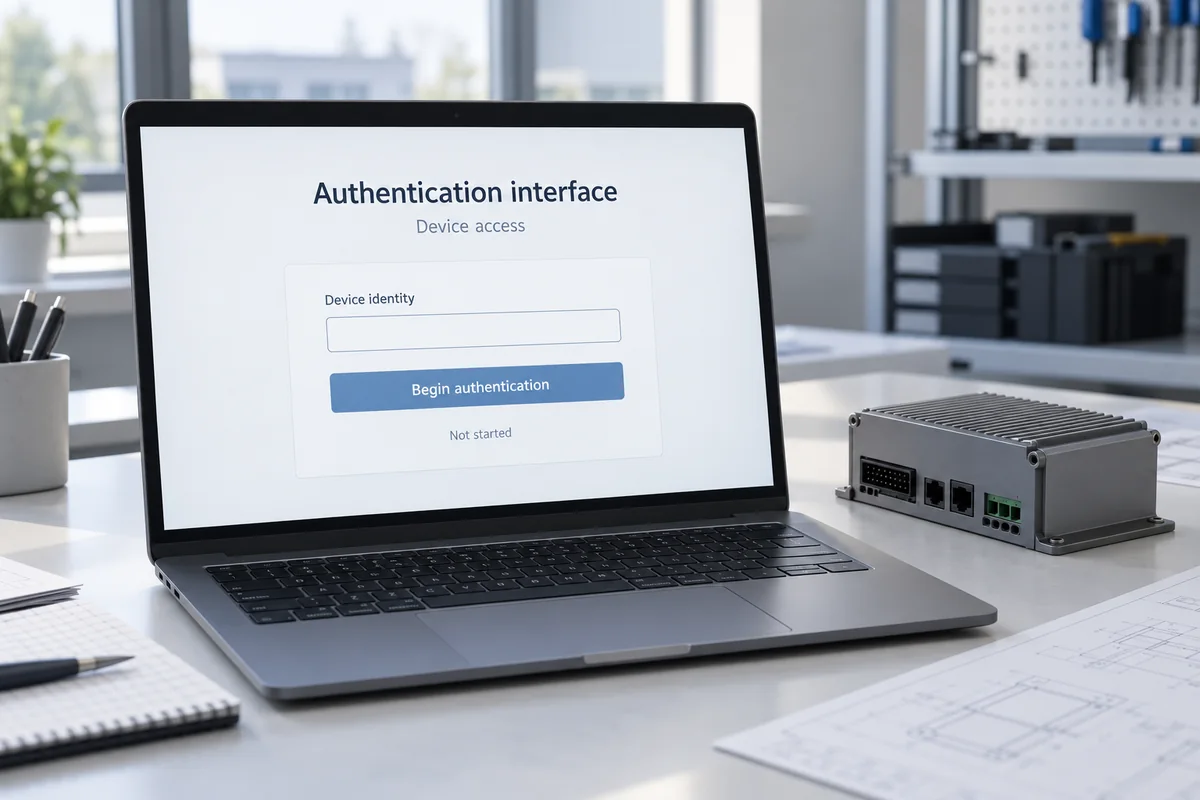
Technical details and manufacturing context for Authentication Interface
| Parameter | Typical range | Notes & selection driver |
|---|---|---|
| Operating Voltage | 3.3–5 V DC | Outside this range may cause malfunctionIEC 62368-1 |
| Operating Temperature | -40–85 °C | Exceeding limits may damage componentsIEC 60068-2-1/2 |
| Authentication Speed | 0.1–0.5 s | Faster for user convenience, slower for security |
| Authentication Accuracy | ≥99.9 % | Higher accuracy reduces false rejections |
| Interface Protocol | USB 2.0, I2C, SPI | Compatibility with host systemsUSB 2.0, I2C, SPI |
| Power Consumption | 0.5–2 W | Lower power for battery-operated devices |
| Ingress Protection | IP54–IP65 | Protects against dust and waterIEC 60529 |
| Memory Capacity | 128–1024 KB | Stores authentication credentials and logs |
| Operating Humidity | 10–90 % RH | Non-condensing; high humidity may cause corrosionIEC 60068-2-78 |
| Dimensions | 20×15×5 mm | Compact size for integration |
| Weight | 5–10 g | Lightweight for portable devices |
| Certification | CE, FCC, RoHS | Required for market accessCE, FCC, RoHS |
Ranges are indicative industry figures for RFQ preparation, not a supplier commitment. Confirm every value and standard with the legal manufacturer before ordering.
| pressure: | N/A (electronic component) |
| other spec: | Humidity: 5% to 95% non-condensing, Operating Voltage: 3.3V ±10% |
| temperature: | -40°C to +85°C |
Indicative industry ranges for design and RFQ preparation. Confirm the exact figures and applicable standard with the manufacturer before specifying.
Quoted from the published standard.
A practical evidence checklist for RFQ preparation and supplier evaluation.
Compare the published product scope and source details, then include your specifications and quantity in an enquiry.
Manufacturer profiles associated with Authentication Interface.
Explore company information and manufacturing capabilities, then discuss the scope of your project with a relevant supplier.
Ask for use case, specification boundaries, supplier type, and RFQ preparation information for this product.
It supports passwords, biometrics, tokens, and certificates, as listed in the product specifications. The exact methods available may vary by model and configuration, so verify with the supplier.
The operating voltage is 3.3–5 V DC, and the operating temperature range is -40 to 85 °C. These are reference ranges; confirm the specific model's limits with the manufacturer.
The interface supports USB 2.0, I2C, and SPI protocols. Ensure compatibility with your host system before integration.
CE, FCC, and RoHS are listed as reference standards. They are not proof of certification; verify compliance with the legal manufacturer or supplier.
This component is essential for the following industrial systems and equipment:
Editorial classification, named public sources where available, and source-reviewed manufacturer records.
Compare manufacturer profiles with relevant product and process capability.