Editorial Technical Reference

Display Module

This page explains how Display Module is classified within Computer, Electronic and Optical Product Manufacturing. Technical values and manufacturer relationships are research references; confirm the current specification and supplier evidence for each order.

Technical Definition & Core Assembly

A dedicated component that presents visual information and system status within an industrial control environment.

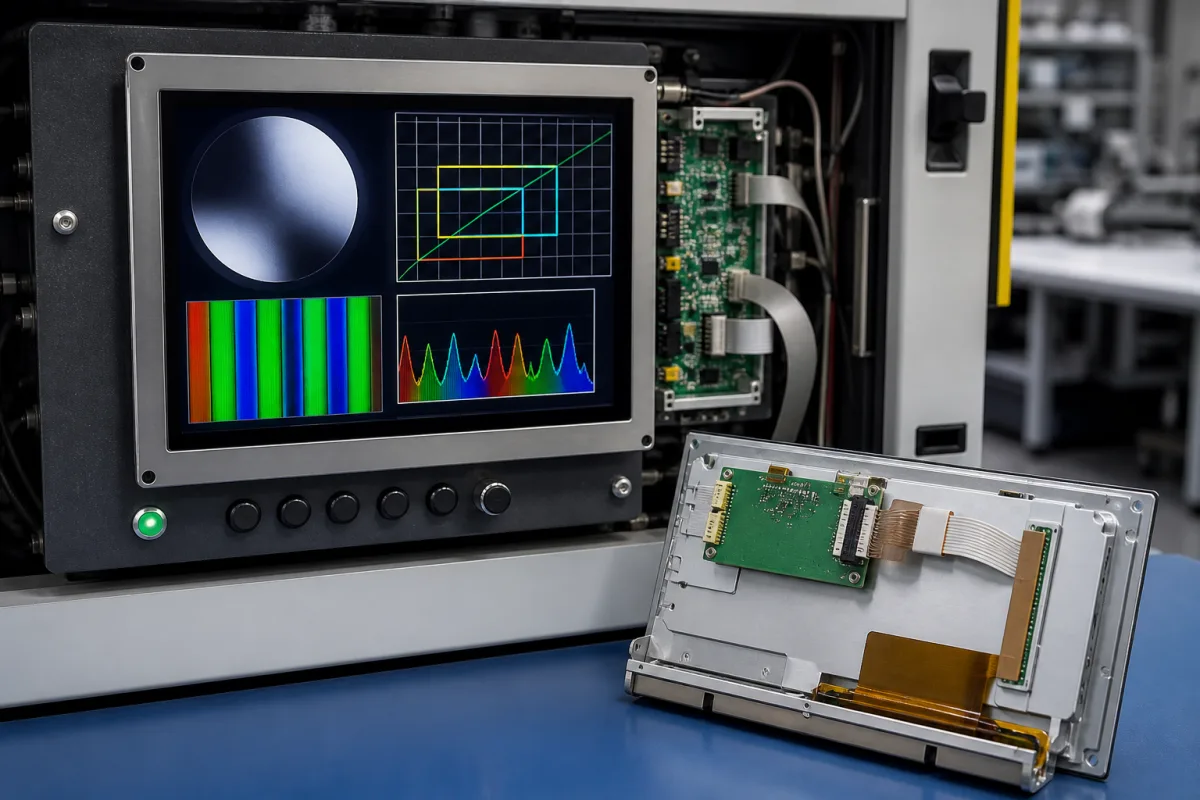
Representative product image. Confirm appearance and specifications with the manufacturer.

Product Specifications

Technical details and manufacturing context for Display Module

Definition
The Display Module is a dedicated component used as the primary human-machine interface (HMI) within an Industrial System. It provides operators with real-time data visualization, system status indicators, alarm notifications, and control feedback. This module is integral for monitoring processes, diagnosing issues, and facilitating manual overrides or parameter adjustments. It receives electrical signals containing data from the central controller or sensors, and an integrated processor interprets these signals to drive a display panel (such as an LCD or LED screen) to render graphical or alphanumeric information. User input may be captured via integrated touch sensors or physical buttons, with commands transmitted back to the system controller. The module is housed in a polycarbonate enclosure with a tempered glass screen cover, and the display panel is typically an LCD. Key parameters include display size ranging from 5.7 to 15.6 inches, resolution from 640×480 to 1920×1080 pixels, brightness from 300 to 1500 cd/m², contrast ratio from 500:1 to 2000:1, viewing angle from 120 to 178 degrees, operating temperature from -20 to 70 °C, storage temperature from -30 to 80 °C, humidity from 10 to 90% RH (non-condensing), ingress protection from IP54 to IP65, supply voltage from 9 to 36 V DC, power consumption from 5 to 25 W, interfaces including LVDS, HDMI, and VGA, and weight from 0.5 to 3.5 kg. These values are reference ranges and must be confirmed for the specific model and application. The module complies with standards such as IEC 60068-2-1/2 for temperature, IEC 60068-2-78 for humidity, and IEC 60529 for ingress protection, but these are verification references, not proof of certification. Always verify model-specific values and standards with the legal manufacturer or supplier.
Working Principle
The Display Module receives electrical signals containing data from the Industrial System's central controller or sensors. An integrated processor interprets these signals and drives a display panel (such as an LCD or LED screen) to render the corresponding graphical or alphanumeric information. User input may be captured via integrated touch sensors or physical buttons, with the resulting commands transmitted back to the system controller. The module operates within specified environmental limits, including temperature, humidity, and ingress protection, and requires a stable DC supply voltage. The display's brightness and contrast are adjustable to suit ambient lighting conditions. The module's interface (LVDS, HDMI, or VGA) determines the signal format it can accept. Proper grounding and shielding are necessary to avoid electromagnetic interference. The module's performance is verified against the listed standards, but actual compliance must be confirmed with the manufacturer.
Common Materials
Polycarbonate (housing), Tempered Glass (screen cover), LCD Panel
Technical Parameters
ParameterTypical rangeNotes & selection driver
Display Size5.7–15.6 inchDiagonal screen size
Resolution640×480–1920×1080 pixelsHigher resolution for detailed graphics
Brightness300–1500 cd/m²High brightness for sunlight readability
Contrast Ratio500:1–2000:1Higher contrast for better readability
Viewing Angle120–178 °Wide angle for industrial panels
Operating Temperature-20–70 °CExtended range for harsh environmentsIEC 60068-2-1/2
Storage Temperature-30–80 °CNon-operating survival rangeIEC 60068-2-1/2
Humidity10–90 % RHNon-condensingIEC 60068-2-78
Ingress ProtectionIP54–IP65Front panel protectionIEC 60529
Supply Voltage9–36 V DCWide input for industrial power
Power Consumption5–25 WDepends on size and brightness
InterfaceLVDS, HDMI, VGACommon industrial interfaces
Weight0.5–3.5 kgVaries with size and enclosure

Ranges are indicative industry figures for RFQ preparation, not a supplier commitment. Confirm every value and standard with the legal manufacturer before ordering.

Components / BOM
  • Display Panel Part
    The core visual output surface that renders graphics, text, and indicators.
    Material: Liquid Crystal Display (LCD) or Light-Emitting Diode (LED) matrix
  • Touch Sensor Layer Optional Part
    Detects and locates user touch input on the screen surface for interactive control.
    Material: Indium Tin Oxide (ITO) coated glass or film
  • Controller Board
    Processes incoming data signals, manages the display driver, and handles user input communication.
    Material: FR-4 PCB with embedded microprocessor and memory
  • Front Bezel / Housing Part
    Protects the internal components, provides structural integrity, and seals against environmental factors like dust and moisture.
    Material: Industrial-grade plastic (e.g., Polycarbonate) or metal alloy

Industry Taxonomies & Aliases

Commonly used trade names and technical identifiers for Display Module.

Applied To / Applications

This component is essential for the following industrial systems and equipment:

Industrial Ecosystem & Supply Chain Structure

Complementary Systems
Downstream Applications
Specialized Tooling

Application Fit & Sizing Matrix

Operational Limits
pressure: Atmospheric (non-pressurized)
other spec: IP65 ingress protection, 500-2000 cd/m² brightness
temperature: -20°C to +70°C
Media Compatibility
✓ Control room air ✓ Clean industrial environments ✓ Indoor factory settings
Unsuitable: High-pressure washdown or explosive atmospheres
Sizing Data Required
  • Required display resolution (e.g., 1920x1080)
  • Viewing distance and angle requirements
  • Panel cutout dimensions and mounting depth

Reliability & Engineering Risk Analysis

Failure Mode & Root Cause
Display Burn-in
Cause: Prolonged static image display causing permanent pixel degradation due to uneven phosphor aging in OLED/LCD panels.
Backlight Failure
Cause: LED driver circuit degradation or capacitor failure from thermal cycling and electrical stress, leading to dim or flickering display.
Maintenance Indicators
  • Persistent flickering or intermittent blackouts during operation
  • Visible dead pixels, discoloration, or image retention that doesn't clear
Engineering Tips
  • Implement screen savers with pixel-shifting algorithms and scheduled power cycling to prevent static image burn-in and extend display lifespan.
  • Maintain optimal ambient temperature (20-25°C) with proper ventilation and use surge-protected, stable power supplies to reduce thermal and electrical stress on components.

Indicative industry ranges for design and RFQ preparation. Confirm the exact figures and applicable standard with the manufacturer before specifying.

Compliance & Manufacturing Standards

Applicable Standards
ISO 13406-2 (Ergonomic requirements for work with visual displays) ANSI/UL 60950-1 (Safety of Information Technology Equipment) CE Marking (EU conformity for health, safety, and environmental protection)

Quoted from the published standard.

Manufacturing Precision
  • Pixel Pitch: +/-0.005mm
  • Surface Flatness: 0.2mm across diagonal
Quality Inspection
  • Backlight Uniformity Test (using photometer)
  • Touch Panel Accuracy Test (using coordinate measurement)

Manufacturers of Display Module

4 companies list this product among what they make. Company figures are quoted from each company's own website; every card states where the relationship came from.

HOTHMI
Guangdong, CN
Listed on the company's own website · profile compiled by CNFX from public sources
Pingyuan Jingke Hydraulic Co., Ltd.
Shandong, CN
Also makes: Hydraulic Cylinder, Hoist System, Torque Wrench and 2 more
Listed on the company's own website · profile compiled by CNFX from public sources
SZLEDWORLD
Shenzhen, Guangdong, CN
Listed on the company's own website · profile compiled by CNFX from public sources
UNIT LED
Shenzhen, Guangdong, CN
Listed on the company's own website · profile compiled by CNFX from public sources

Manufacturer listings support early research and capability understanding. They are not certification, ranking, or transaction guarantees.

Technical documentation
Request current drawings, revision history, and a signed specification sheet.
Manufacturing capability
Verify equipment lists, process limits, capacity, and representative production evidence.
Inspection readiness
Confirm test methods, calibrated equipment, sampling plans, and traceable reports.
Supplier transparency
Check the legal entity, factory address, ownership, certifications, and direct contacts.

CNFX does not score or rank suppliers. Buyers must verify all claims and documents with the legal manufacturer before ordering.

Supply Chain Commonly Integrated Components

Vision Alignment System

A computer vision-based subsystem that ensures precise alignment of components during automated chassis assembly.

Explore Specs →
Ethernet Magnetics

Passive electronic component that provides electrical isolation, signal conditioning, and EMI filtering for Ethernet interfaces

Explore Specs →
Industrial Touchscreen Display

A ruggedized touchscreen interface component designed for industrial environments, providing visual output and user input capabilities.

Explore Specs →
Protocol License Module

A software component within a network protocol analyzer that manages licensing for multiple communication protocols.

Explore Specs →

Frequently Asked Questions

What is the typical display size range for this module?

The display size ranges from 5.7 to 15.6 inches, but the exact size depends on the specific model. Always confirm with the manufacturer.

What interfaces are supported?

Common interfaces include LVDS, HDMI, and VGA. The supported interface varies by model, so verify with the supplier.

What is the operating temperature range?

The operating temperature range is -20 to 70 °C, as per IEC 60068-2-1/2. However, actual limits may vary; check the datasheet.

Is the module certified to IP65?

The ingress protection rating is IP54 to IP65, but certification must be confirmed with the manufacturer. The standard IEC 60529 is a reference.

Data Basis

Editorial classification, named public sources where available, and source-reviewed manufacturer records.

Preliminary Technical Classification
This page supports structured research, RFQ preparation, and supplier evaluation. It does not replace buyer-led supplier qualification, standards review, or technical approval.
Buyer enquiry

Request manufacturing insight for Display Module

Ask for use case, specification boundaries, supplier type, and RFQ preparation information for this product.

Where it goes
Straight to the CNFX editorial desk, and to the manufacturer if this product is linked to a claimed profile. Nothing is broadcast to a supplier list.
Your details stay here
We do not sell or rent enquiry data, and we do not add you to a mailing list. Used only to answer this request.
No commission, no middleman
CNFX is a directory. We take no cut of any order and never negotiate on a supplier's behalf.
What we don't claim
A listing is not an endorsement. Qualify every supplier and verify every figure yourself before ordering.

Your business information is used only to process this request.

Thank you! Your message has been sent. We'll respond within 1–3 business days.
Sorry, we couldn't send your message. Please try again, or email us at contact@cnfx.com.

Need to Manufacture Display Module?

Compare manufacturer profiles with relevant product and process capability.

Previous Product
XY Positioning Stage
Last Product
Get QuotesChat