Structured Manufacturing Data (2026)

Housing/Window

Based on aggregated insights from structured factory profiles within the CNFX directory, the standard Housing/Window used in the Computer, Electronic and Optical Product Manufacturing sector typically supports operational capacities ranging from standard industrial configurations to heavy-duty production requirements.

Technical Definition & Core Assembly

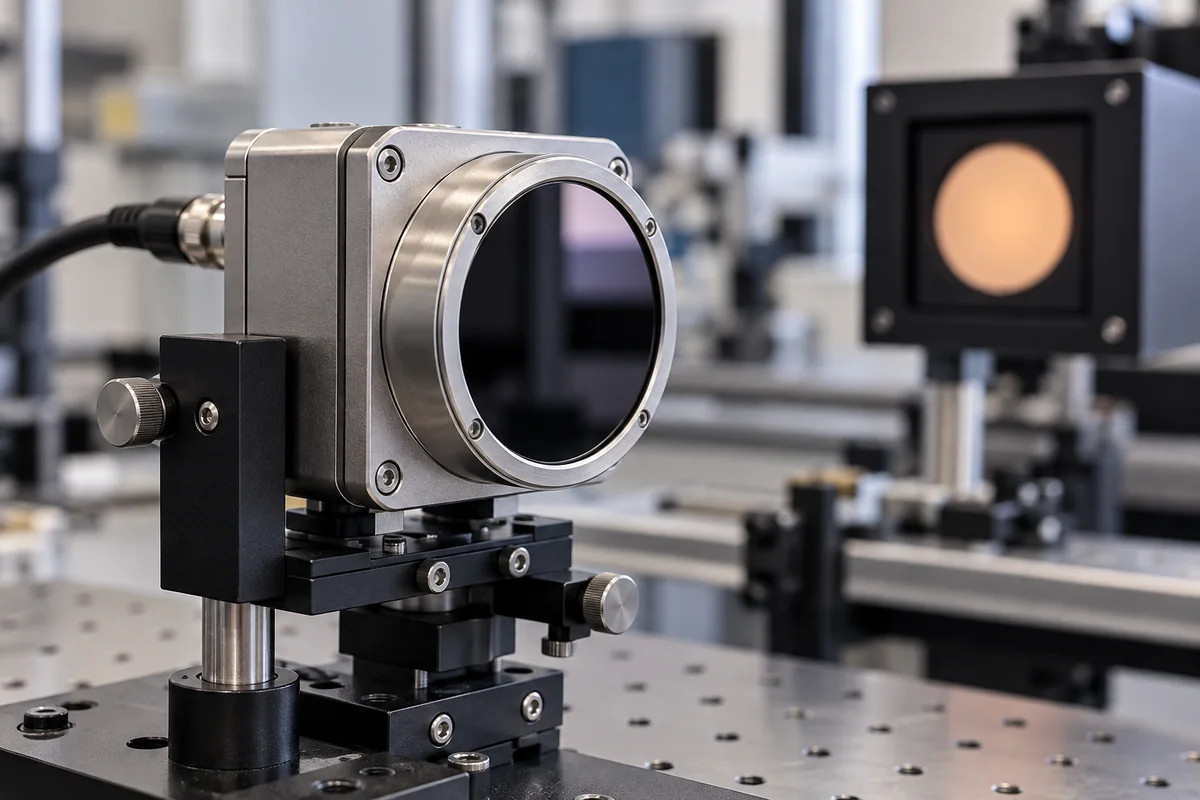
A canonical Housing/Window is characterized by the integration of Window Frame and Mounting Flange. In industrial production environments, manufacturers listed on CNFX commonly emphasize Germanium construction to support stable, high-cycle operation across diverse manufacturing scenarios.

Protective enclosure and optical interface component for infrared detectors

Product Specifications

Technical details and manufacturing context for Housing/Window

Definition
The housing/window is a critical component of infrared detectors that serves dual functions: providing a protective enclosure for sensitive internal components while featuring an optical window that allows infrared radiation to pass through to the sensor while protecting it from environmental contaminants, mechanical damage, and electromagnetic interference.
Working Principle
The housing provides structural protection and environmental sealing for the detector assembly, while the window is made of infrared-transparent material that allows specific wavelengths of infrared radiation to pass through to the sensor while blocking unwanted radiation, dust, moisture, and other contaminants.
Common Materials
Germanium, Zinc Selenide, Silicon, Aluminum alloy
Technical Parameters
  • Window diameter and thickness, housing dimensions (mm) Customizable
Components / BOM
  • Window Frame Part
    Secures and seals the infrared-transparent window material
    Material: Aluminum alloy or stainless steel
  • Mounting Flange Part
    Provides attachment points for securing the housing to the detector assembly
    Material: Aluminum alloy
  • Sealing Gasket Part
    Creates an environmental seal between window and housing components
    Material: Silicone rubber or fluorocarbon elastomer
  • Anti-Reflection Coating Part
    Reduces reflection losses and increases infrared transmission through the window
    Material: Dielectric thin films

Industry Taxonomies & Aliases

Commonly used trade names and technical identifiers for Housing/Window.

Applied To / Applications

This component is essential for the following industrial systems and equipment:

Industrial Ecosystem & Supply Chain Structure

Complementary Systems
Downstream Applications
Specialized Tooling

Application Fit & Sizing Matrix

Operational Limits
pressure: 0 to 1 bar (atmospheric)
other spec: IP67 ingress protection, optical transmission >90% in IR spectrum (typically 8-14μm)
temperature: -40°C to +85°C
Media Compatibility
✓ Indoor air monitoring ✓ Outdoor environmental sensing ✓ Industrial process gas analysis
Unsuitable: High-pressure or high-velocity fluid flow environments
Sizing Data Required
  • Detector active area diameter (mm)
  • Required field of view (degrees)
  • Mounting interface specifications (e.g., flange type, thread size)

Reliability & Engineering Risk Analysis

Failure Mode & Root Cause
Frame warping/distortion
Cause: Thermal expansion/contraction cycles, improper installation tolerances, or structural loading from building settlement causing misalignment and stress concentrations.
Sealant/weatherstripping degradation
Cause: UV exposure, ozone attack, thermal cycling, or chemical exposure leading to loss of elasticity, cracking, and failure of the weather barrier.
Maintenance Indicators
  • Visible air/water infiltration during rain or wind (indicating seal failure)
  • Audible whistling or rattling during high winds (indicating gaps or loose components)
Engineering Tips
  • Implement regular sealant inspection and replacement schedule using UV-resistant, flexible sealants compatible with frame materials.
  • Ensure proper installation with adequate expansion joints and shimming to prevent stress-induced distortion from thermal or structural movements.

Compliance & Manufacturing Standards

Reference Standards
ISO 10077-1:2017 Thermal performance of windows, doors and shutters ANSI/AAMA/WDMA 101/I.S.2/NAFS-20 North American Fenestration Standard EN 14351-1:2006+A2:2016 Windows and doors - Product standard, performance characteristics
Manufacturing Precision
  • Frame squareness: +/- 1.5mm per meter
  • Glass thickness tolerance: +/- 0.2mm
Quality Inspection
  • Air leakage test per ASTM E283
  • Water penetration resistance test per AAMA 501.1

Factories Producing Housing/Window

Manufacturer profiles with relevant production capability in China

Manufacturer listings support early research and capability understanding. They are not certification, ranking, or transaction guarantees.

Technical documentation
4/5
Manufacturing capability
4/5
Inspection readiness
5/5
Supplier transparency
3/5

These scores are example evaluation dimensions, not real customer ratings, country-specific buyer feedback, or live inquiry activity.

Supply Chain Compatible Machinery & Devices

Industrial IoT Gateway

Edge computing device connecting industrial equipment to cloud platforms.

Explore Specs →
Modular Industrial Edge Computing Device

Rugged computing platform for industrial data processing at the network edge

Explore Specs →
Industrial Smart Camera Module

Embedded vision system for industrial automation and quality inspection.

Explore Specs →
Industrial Wireless Power Transfer Module

Wireless power transfer module for industrial equipment applications

Explore Specs →

Frequently Asked Questions

What materials are available for the optical window in this housing?

Our housing/window components are available with Germanium, Zinc Selenide (ZnSe), or Silicon optical materials, each optimized for specific infrared wavelength ranges and environmental conditions.

How does the anti-reflection coating improve detector performance?

The anti-reflection coating minimizes light loss at the optical interface, increasing transmission efficiency and reducing ghost images, which enhances signal-to-noise ratio and measurement accuracy in infrared detection systems.

What sealing options are available for environmental protection?

We provide hermetic sealing with specialized gaskets and mounting flanges that protect sensitive infrared detectors from moisture, dust, and atmospheric contaminants, ensuring reliable operation in demanding industrial environments.

Can I contact factories directly on CNFX?

CNFX is an open directory, not a transaction platform. Each factory profile provides direct contact information and production details to help you initiate direct inquiries with Chinese suppliers.

Data Basis

CNFX manufacturer profiles, technical classification, publicly available product information, and ongoing plausibility checks.

Preliminary Technical Classification
This page supports structured research, RFQ preparation, and supplier evaluation. It does not replace buyer-led supplier qualification, standards review, or technical approval.

Request Manufacturing Insight for Housing/Window

Ask for use case, specification boundaries, supplier type, and RFQ preparation information for Housing/Window.

Your business information is used only to process this request.

Thank you! Your message has been sent. We'll respond within 1–3 business days.

Need to Manufacture Housing/Window?

Compare manufacturer profiles with relevant product and process capability.

Create Manufacturer Profile Contact Us
Previous Product
Housing with Cooling
Next Product
Humidity Sensor