Industry-Verified Manufacturing Data (2026)

Integrated Leather Processing System

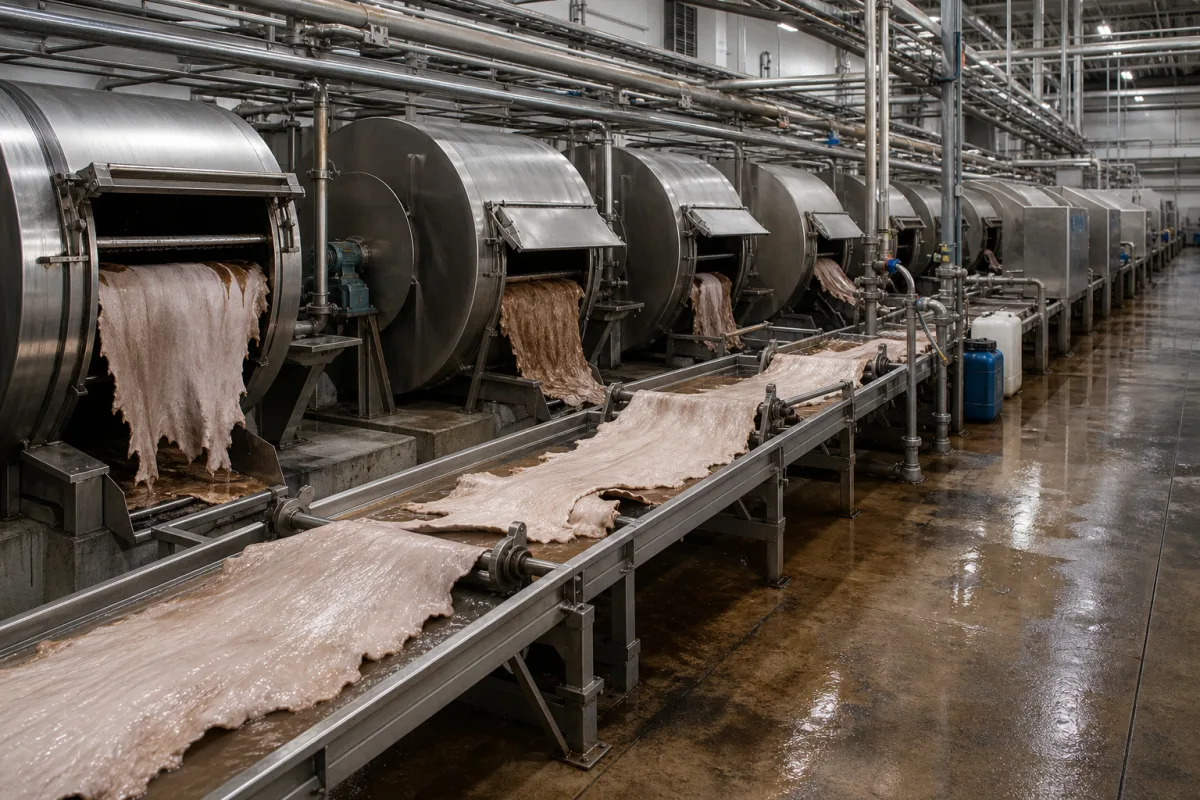
Based on aggregated insights from multiple verified factory profiles within the CNFX directory, the standard Integrated Leather Processing System used in the Leather and Related Product Manufacturing sector typically supports operational capacities ranging from standard industrial configurations to heavy-duty production requirements.

Technical Definition & Core Assembly

A canonical Integrated Leather Processing System is characterized by the integration of Beamhouse Module and Tanning Drum System. In industrial production environments, manufacturers listed on CNFX commonly emphasize Stainless Steel 316L construction to support stable, high-cycle operation across diverse manufacturing scenarios.

Complete industrial system for transforming raw hides into finished leather.

Product Specifications

Technical details and manufacturing context for Integrated Leather Processing System

Definition
An integrated production system that performs the complete sequence of leather processing operations from raw hide preparation through tanning to finishing. This coordinated multi-module solution enables continuous, high-volume leather production for footwear, automotive, and furniture industries. The system optimizes chemical usage, water consumption, and energy efficiency while maintaining consistent leather quality. It represents a turnkey solution for tanneries seeking to modernize operations and improve productivity.
Working Principle
Sequential processing of hides through mechanical, chemical, and finishing modules using automated material handling and process control systems.
Common Materials
Stainless Steel 316L, Polypropylene, Ceramic Linings, EPDM Seals
Technical Parameters
  • Maximum throughput of raw hides (hides/day) Customizable
  • Percentage of process water recycled (%) Customizable
Components / BOM
  • Beamhouse Module
    Initial hide preparation including soaking, liming, and fleshing
    Material: Stainless Steel 316L
  • Tanning Drum System
    Chemical treatment of hides with tanning agents
    Material: Stainless Steel 316L with rubber lining
  • Sammying and Setting Machine
    Removes excess moisture and stretches hides
    Material: Stainless Steel with rubber rollers
  • Drying Tunnel
    Controlled drying of leather to specific moisture content
    Material: Insulated stainless steel with ceramic heating
  • Finishing Line Optional
    Applies coatings, pigments, and protective layers
    Material: Stainless Steel with precision applicators
  • Automated Conveyor System
    Transports hides between processing modules
    Material: Stainless Steel with food-grade belts
Engineering Reasoning
0.8-2.5 MPa hydraulic pressure, 15-35°C chemical bath temperature, 40-70% humidity
Hydraulic pressure exceeding 3.2 MPa causes seal rupture, chemical bath temperature below 10°C initiates protein denaturation, humidity above 85% promotes microbial growth
Design Rationale: Hydraulic seal failure due to elastomer yield strength limit (3.2 MPa), collagen fiber degradation at low temperatures via Arrhenius kinetics (activation energy 85 kJ/mol), microbial proliferation above water activity threshold 0.85
Risk Mitigation (FMEA)
Trigger Hydraulic fluid contamination exceeding ISO 4406 18/16/13 cleanliness level
Mode: Servo valve spool seizure causing position control loss
Strategy: Install 3 μm absolute filtration with differential pressure monitoring at 0.15 MPa trigger
Trigger Chromium sulfate concentration deviation beyond 2.5-3.0% w/v in tanning bath
Mode: Incomplete cross-linking resulting in tensile strength reduction below 20 MPa
Strategy: Implement real-time conductivity monitoring with automated dosing at 0.1% concentration resolution

Industry Taxonomies & Aliases

Commonly used trade names and technical identifiers for Integrated Leather Processing System.

Industrial Ecosystem & Supply Chain DNA

Complementary Systems
Downstream Applications
Specialized Tooling

Application Fit & Sizing Matrix

Operational Limits
pH range: 3.0-8.5 (process compatible)
pressure: 0-10 bar (system max), 2-6 bar (typical operating)
flow rate: 5-100 m³/h (per processing unit)
temperature: 15-45°C (process fluid), 5-60°C (ambient)
max hide size: 3.5 m² (single piece)
slurry concentration: 5-25% solids by weight
Media Compatibility
✓ bovine hides ✓ ovine hides ✓ exotic leathers (reptile, ostrich)
Unsuitable: synthetic materials or non-organic substrates
Sizing Data Required
  • daily raw hide input capacity (kg/day)
  • target leather thickness/finish specification
  • available plant footprint and utility connections (power, water, drainage)

Reliability & Engineering Risk Analysis

Failure Mode & Root Cause
Corrosion and chemical degradation
Cause: Exposure to harsh chemicals (acids, alkalis, tannins) and moisture during processing, leading to material breakdown, pitting, and structural weakening in tanks, pipes, and valves.
Mechanical wear and fatigue
Cause: Continuous operation of moving parts (conveyors, rollers, pumps) under high loads and abrasive conditions, resulting in bearing failures, seal leaks, and shaft misalignment.
Maintenance Indicators
  • Unusual vibrations or loud grinding noises from pumps, motors, or conveyors
  • Visible leaks, discoloration, or corrosion spots on tanks, pipes, or chemical handling equipment
Engineering Tips
  • Implement a proactive lubrication and alignment program for all rotating equipment, using chemical-resistant lubricants compatible with leather processing fluids
  • Install corrosion-resistant materials (e.g., stainless steel, lined pipes) in high-chemical-exposure areas and establish regular chemical concentration monitoring to prevent accelerated degradation

Compliance & Manufacturing Standards

Reference Standards
ISO 9001:2015 - Quality Management Systems ASTM D1517 - Standard Terminology Relating to Leather CE Marking - Machinery Directive 2006/42/EC
Manufacturing Precision
  • Thickness Uniformity: +/- 0.2mm across hide
  • Chemical Bath Temperature Control: +/- 1.5°C
Quality Inspection
  • Chromium Content Analysis (for chrome-tanned leather)
  • Tensile Strength and Elongation Test

Factories Producing Integrated Leather Processing System

Verified manufacturers with capability to produce this product in China

✓ 98% Supplier Capability Match Found

T Technical Director from Singapore Feb 23, 2026
★★★★★
"As a professional in the Leather and Related Product Manufacturing sector, I confirm this Integrated Leather Processing System meets all ISO standards."
Technical Specifications Verified
P Project Engineer from Germany Feb 20, 2026
★★★★☆
"Standard OEM quality for Leather and Related Product Manufacturing applications. The Integrated Leather Processing System arrived with full certification. (Delivery took slightly longer than expected, but technical support was excellent.)"
Technical Specifications Verified
S Sourcing Manager from Brazil Feb 17, 2026
★★★★★
"Great transparency on the Integrated Leather Processing System components. Essential for our Leather and Related Product Manufacturing supply chain."
Technical Specifications Verified
Verification Protocol

“Feedback is collected from verified sourcing managers during RFQ (Request for Quote) and factory evaluation processes on CNFX. These reports represent historical performance data and technical audit summaries from our B2B manufacturing network.”

15 sourcing managers are analyzing this specification now. Last inquiry for Integrated Leather Processing System from Vietnam (51m ago).

Supply Chain Commonly Integrated Components

Beamhouse Module

A specialized module within an integrated leather processing system that performs the initial preparation of raw hides before tanning.

Explore Specs →
Tanning Drum System

A rotating drum system used for the tanning process in leather production, where hides are treated with chemicals to convert them into durable leather.

Explore Specs →
Sammying and Setting Machine

A leather processing machine that stretches and sets the hide to achieve uniform thickness and proper grain orientation.

Explore Specs →
Drying Tunnel

A controlled-environment chamber within leather processing systems that removes moisture from leather through heated airflow.

Explore Specs →

Frequently Asked Questions

What materials are used in the Integrated Leather Processing System construction?

The system is constructed with corrosion-resistant Stainless Steel 316L, durable Polypropylene components, wear-resistant Ceramic Linings, and reliable EPDM Seals for long-term performance in harsh chemical environments.

What is included in the system's Bill of Materials (BOM)?

The complete system includes an Automated Conveyor System, Beamhouse Module, Drying Tunnel, Finishing Line, Sammying and Setting Machine, and Tanning Drum System for end-to-end leather production.

What are the key specifications for this leather processing system?

Key specifications include Chemical Recovery Rate (%), Power Consumption (kW), Process Cycle Time (hours), Processing Capacity (hides/day), System Footprint (m²), and Water Consumption (m³/hide) for efficient operation.

Can I contact factories directly on CNFX?

CNFX is an open directory, not a transaction platform. Each factory profile provides direct contact information and production details to help you initiate direct inquiries with Chinese suppliers.

Get Quote for Integrated Leather Processing System

Request technical pricing, lead times, or customized specifications for Integrated Leather Processing System directly from verified manufacturing units.

Your business information is encrypted and only shared with verified Integrated Leather Processing System suppliers.

Thank you! Your message has been sent. We'll respond within 1–3 business days.

Need to Manufacture Integrated Leather Processing System?

Connect with verified factories specializing in this product category

Add Your Factory Contact Us
Previous Product
Industrial Rotary Hook
Next Product
Last Holder