Structured Manufacturing Data (2026)

Leather Gasket Seal

Based on aggregated insights from structured factory profiles within the CNFX directory, the standard Leather Gasket Seal used in the Leather and Related Product Manufacturing sector typically supports operational capacities ranging from standard industrial configurations to heavy-duty production requirements.

Technical Definition & Core Assembly

A canonical Leather Gasket Seal is characterized by the integration of Leather body and Surface treatment. In industrial production environments, manufacturers listed on CNFX commonly emphasize Vegetable-tanned bovine leather construction to support stable, high-cycle operation across diverse manufacturing scenarios.

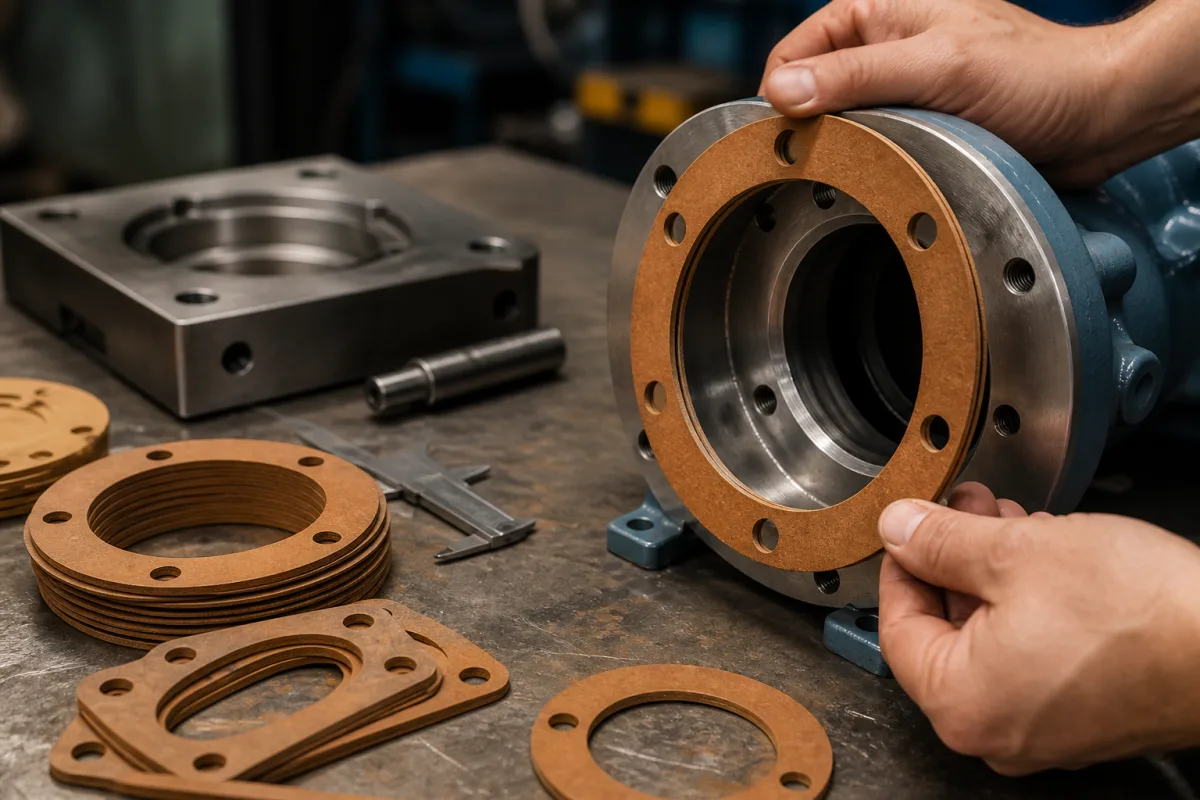
Precision-cut leather sealing component for industrial machinery interfaces.

Product Specifications

Technical details and manufacturing context for Leather Gasket Seal

Definition
A leather gasket seal is a precision-manufactured sealing component used to create fluid-tight or dust-resistant barriers between mating surfaces in industrial equipment. These components are essential in B2B supply chains for machinery maintenance, repair, and assembly operations where reliable sealing is required under moderate pressure and temperature conditions. They serve as critical consumables in industries ranging from manufacturing equipment to hydraulic systems, preventing leaks and contamination while accommodating surface irregularities better than many synthetic alternatives.
Working Principle
Compresses between two mating surfaces to fill microscopic imperfections, creating a barrier that prevents fluid or particle passage through applied pressure.
Common Materials
Vegetable-tanned bovine leather, Chrome-tanned leather
Technical Parameters
  • Nominal thickness of leather material (mm) Customizable
  • Hardness measurement of leather material (Shore A) Customizable
Components / BOM
  • Leather body Part
    Primary sealing element that compresses between surfaces
    Material: Vegetable-tanned or chrome-tanned leather
  • Surface treatment Optional Part
    Enhances resistance to fluids and wear
    Material: Wax, oil, or polymer coating
  • Reinforcement layer Optional Part
    Adds dimensional stability under compression
    Material: Fabric or fiber backing

Industry Taxonomies & Aliases

Commonly used trade names and technical identifiers for Leather Gasket Seal.

Industrial Ecosystem & Supply Chain Structure

Complementary Systems
Downstream Applications
Specialized Tooling

Application Fit & Sizing Matrix

Operational Limits
pressure: Up to 10 MPa (static), 5 MPa (dynamic)
flow rate: Not applicable (static seal)
temperature: -40°C to 120°C (continuous), up to 150°C (intermittent)
slurry concentration: Up to 15% solids by weight (non-abrasive)
Media Compatibility
✓ Hydraulic oils (mineral-based) ✓ Compressed air/dry gases ✓ Water/glycol mixtures
Unsuitable: Strong acids/bases (pH <4 or >10) or aggressive solvents
Sizing Data Required
  • Interface gap dimensions (ID/OD)
  • Compression set requirements (%)
  • Surface finish of mating surfaces (Ra)

Reliability & Engineering Risk Analysis

Failure Mode & Root Cause
Compression set and hardening
Cause: Exposure to high temperatures or chemical degradation causing loss of elasticity and permanent deformation
Swelling and deterioration
Cause: Incompatibility with process fluids or lubricants leading to material breakdown and loss of sealing integrity
Maintenance Indicators
  • Visible leakage or weeping around the gasket interface
  • Audible hissing or escaping gas sounds indicating pressure loss
Engineering Tips
  • Ensure proper surface finish (32-63 microinch Ra) and flatness of mating flanges to prevent uneven compression
  • Select gasket material compatible with both process media and operating temperature range, and apply controlled torque during installation using criss-cross pattern

Compliance & Manufacturing Standards

Reference Standards
ISO 9001:2015 - Quality Management Systems ASTM D2000 - Standard Classification System for Rubber Products in Automotive Applications DIN 7716 - Rubber Gaskets; Requirements for Materials
Manufacturing Precision
  • Thickness: +/-0.1mm
  • Inner Diameter: +/-0.5mm
Quality Inspection
  • Leak Test (Pressure/Vacuum)
  • Dimensional Verification with Calipers/Micrometers

Factories Producing Leather Gasket Seal

Manufacturer profiles with relevant production capability in China

Manufacturer listings support early research and capability understanding. They are not certification, ranking, or transaction guarantees.

Technical documentation
4/5
Manufacturing capability
4/5
Inspection readiness
5/5
Supplier transparency
3/5

These scores are example evaluation dimensions, not real customer ratings, country-specific buyer feedback, or live inquiry activity.

Supply Chain Commonly Integrated Components

Beamhouse Module

A specialized module within an integrated leather processing system that performs the initial preparation of raw hides before tanning.

Explore Specs →
Tanning Drum System

A rotating drum system used for the tanning process in leather production, where hides are treated with chemicals to convert them into durable leather.

Explore Specs →
Sammying and Setting Machine

A leather processing machine that stretches and sets the hide to achieve uniform thickness and proper grain orientation.

Explore Specs →
Drying Tunnel

A controlled-environment chamber within leather processing systems that removes moisture from leather through heated airflow.

Explore Specs →

Frequently Asked Questions

What are the advantages of vegetable-tanned vs chrome-tanned leather for gaskets?

Vegetable-tanned leather offers superior heat resistance and environmental friendliness, while chrome-tanned provides better chemical resistance and flexibility for dynamic applications.

Can these leather gasket seals handle high-pressure industrial applications?

Yes, our precision-cut leather gaskets are engineered with reinforcement layers to maintain seal integrity at specified pressure ratings, typically up to [bar value] bar depending on thickness and material.

How do I determine the correct size leather gasket for my machinery?

Measure the inner and outer diameters of your interface precisely. Our gaskets are custom-cut to your specifications, with standard thickness options from [min]mm to [max]mm to ensure optimal sealing performance.

Can I contact factories directly on CNFX?

CNFX is an open directory, not a transaction platform. Each factory profile provides direct contact information and production details to help you initiate direct inquiries with Chinese suppliers.

Data Basis

CNFX manufacturer profiles, technical classification, publicly available product information, and ongoing plausibility checks.

Preliminary Technical Classification
This page supports structured research, RFQ preparation, and supplier evaluation. It does not replace buyer-led supplier qualification, standards review, or technical approval.

Request Manufacturing Insight for Leather Gasket Seal

Ask for use case, specification boundaries, supplier type, and RFQ preparation information for Leather Gasket Seal.

Your business information is used only to process this request.

Thank you! Your message has been sent. We'll respond within 1–3 business days.

Need to Manufacture Leather Gasket Seal?

Compare manufacturer profiles with relevant product and process capability.

Create Manufacturer Profile Contact Us
Previous Product
Leather Edge Coating Application System
Next Product
Leather Grain Pattern Replication System