Industry-Verified Manufacturing Data (2026)

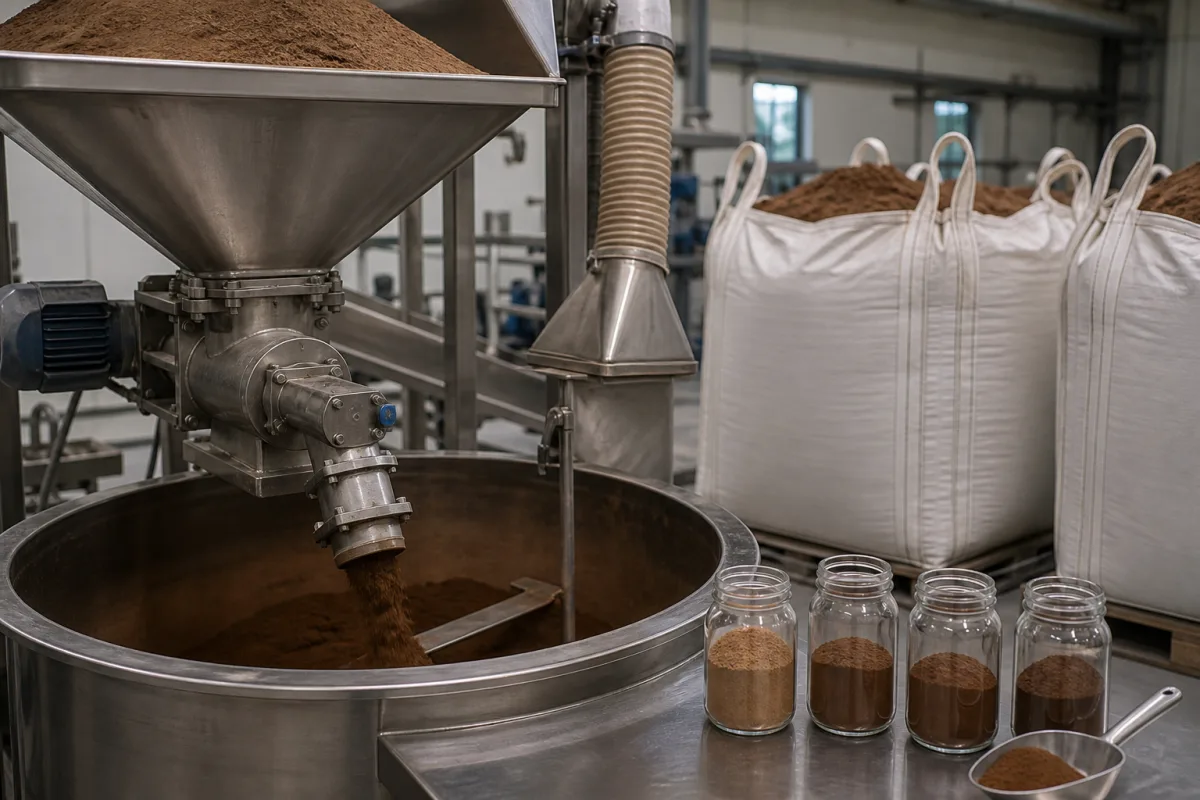
Vegetable Tanning Extract Powder

Based on aggregated insights from multiple verified factory profiles within the CNFX directory, the standard Vegetable Tanning Extract Powder used in the Leather and Related Product Manufacturing sector typically supports operational capacities ranging from standard industrial configurations to heavy-duty production requirements.

Technical Definition & Core Assembly

A canonical Vegetable Tanning Extract Powder is characterized by the integration of Tannin Compounds and Natural Sugars. In industrial production environments, manufacturers listed on CNFX commonly emphasize Quebracho wood extract construction to support stable, high-cycle operation across diverse manufacturing scenarios.

Natural tannin-rich powder for traditional leather processing

Product Specifications

Technical details and manufacturing context for Vegetable Tanning Extract Powder

Definition
Vegetable Tanning Extract Powder is a concentrated natural tannin material derived from plant sources like quebracho, chestnut, or mimosa. It serves as the primary tanning agent in vegetable tanning processes, converting raw hides into durable leather through polyphenol cross-linking with collagen fibers. This material produces firm, breathable leather with distinctive natural characteristics, commonly used for saddlery, footwear soles, and artisanal goods. The powder form allows for precise formulation control and efficient storage and transportation in industrial settings.
Working Principle
Tannins penetrate hide collagen matrix and form hydrogen bonds and hydrophobic interactions, stabilizing protein structure against decay
Common Materials
Quebracho wood extract, Chestnut wood extract, Mimosa bark extract
Technical Parameters
  • Percentage of active tannins by weight (%) Customizable
  • Dissolution rate in water at 40°C (g/L) Customizable
Components / BOM
  • Tannin Compounds
    Primary tanning agents that bind to collagen
    Material: Polyphenolic plant extracts
  • Natural Sugars
    Provide viscosity and penetration control
    Material: Plant-derived carbohydrates
  • Mineral Content Optional
    Affects pH buffering and leather characteristics
    Material: Calcium, potassium, magnesium salts
Engineering Reasoning
15-85°C, 0.1-3.0 MPa, 40-75% relative humidity
Thermal degradation at 95°C, hygroscopic clumping at 85% RH, pressure-induced compaction at 3.5 MPa
Design Rationale: Protein-tannin complex denaturation above glass transition temperature (Tg=90°C), hydrogen bonding saturation causing capillary condensation, irreversible particle deformation exceeding yield strength (σ_y=4.2 MPa)
Risk Mitigation (FMEA)
Trigger Ambient humidity exceeding 85% RH during storage
Mode: Hygroscopic absorption leading to powder caking and flow obstruction
Strategy: Hermetic storage vessels with desiccant cartridges maintaining <60% RH
Trigger Mechanical vibration at 120 Hz resonance frequency during pneumatic transport
Mode: Particle segregation and density stratification in silos
Strategy: Anti-segregation baffles with tuned mass dampers at 115-125 Hz frequency range

Industry Taxonomies & Aliases

Commonly used trade names and technical identifiers for Vegetable Tanning Extract Powder.

Industrial Ecosystem & Supply Chain DNA

Complementary Systems
Downstream Applications
Specialized Tooling

Application Fit & Sizing Matrix

Operational Limits
pH range: 3.5-5.0 (optimal 4.0-4.5 for vegetable tanning)
pressure: Atmospheric (non-pressurized process)
flow rate: Batch process - agitation dependent (typically 10-30 RPM for mixing)
temperature: Ambient to 40°C (optimal 20-30°C)
slurry concentration: 5-15% w/v (optimal 8-12% for consistent tanning)
Media Compatibility
✓ Traditional wooden tanning drums ✓ Stainless steel mixing vessels (316L grade) ✓ Polypropylene containers and piping
Unsuitable: Aluminum equipment (tannins cause corrosion and discoloration)
Sizing Data Required
  • Daily leather processing volume (kg)
  • Desired tanning depth/time (hours)
  • Water hardness/purity of process water

Reliability & Engineering Risk Analysis

Failure Mode & Root Cause
Moisture-induced caking and bridging
Cause: Hygroscopic nature of vegetable tanning extract powder absorbing atmospheric moisture, leading to solidification and flow obstruction in storage or processing equipment.
Abrasive wear on conveying and mixing components
Cause: Fine particulate nature of the powder causing erosion and material degradation in pneumatic conveyors, screw feeders, and agitators due to continuous friction.
Maintenance Indicators
  • Visible powder accumulation or residue buildup around equipment seals, joints, or discharge points indicating potential blockages or seal failure.
  • Audible changes in pneumatic conveying systems (e.g., irregular airflow sounds, increased motor strain noises) suggesting flow restrictions or component wear.
Engineering Tips
  • Implement strict humidity control in storage and processing areas (maintain below 50% RH) and use desiccant breathers on storage containers to prevent moisture absorption and caking.
  • Utilize wear-resistant materials (e.g., ceramic-lined or hardened steel components) in high-friction areas and establish regular inspection schedules for conveying and mixing equipment to monitor erosion patterns.

Compliance & Manufacturing Standards

Reference Standards
ISO 15115:2019 - Leather - Chemical tests - Determination of vegetable tanning agents content ASTM D4906-17 - Standard Test Method for Total Solids and Water in Vegetable Tanning Materials DIN 53308 - Testing of leather; determination of the content of vegetable tanning agents
Manufacturing Precision
  • Moisture content: +/- 1.5%
  • Particle size distribution: 95% within 100-200 mesh
Quality Inspection
  • pH value test (ISO 4045)
  • Spectrophotometric analysis for tannin content

Factories Producing Vegetable Tanning Extract Powder

Verified manufacturers with capability to produce this product in China

✓ 92% Supplier Capability Match Found

T Technical Director from United States Jan 18, 2026
★★★★★
"As a professional in the Leather and Related Product Manufacturing sector, I confirm this Vegetable Tanning Extract Powder meets all ISO standards."
Technical Specifications Verified
P Project Engineer from United Arab Emirates Jan 15, 2026
★★★★☆
"Standard OEM quality for Leather and Related Product Manufacturing applications. The Vegetable Tanning Extract Powder arrived with full certification. (Delivery took slightly longer than expected, but technical support was excellent.)"
Technical Specifications Verified
S Sourcing Manager from Australia Jan 12, 2026
★★★★★
"Great transparency on the Vegetable Tanning Extract Powder components. Essential for our Leather and Related Product Manufacturing supply chain."
Technical Specifications Verified
Verification Protocol

“Feedback is collected from verified sourcing managers during RFQ (Request for Quote) and factory evaluation processes on CNFX. These reports represent historical performance data and technical audit summaries from our B2B manufacturing network.”

10 sourcing managers are analyzing this specification now. Last inquiry for Vegetable Tanning Extract Powder from Germany (1h ago).

Supply Chain Commonly Integrated Components

Beamhouse Module

A specialized module within an integrated leather processing system that performs the initial preparation of raw hides before tanning.

Explore Specs →
Tanning Drum System

A rotating drum system used for the tanning process in leather production, where hides are treated with chemicals to convert them into durable leather.

Explore Specs →
Sammying and Setting Machine

A leather processing machine that stretches and sets the hide to achieve uniform thickness and proper grain orientation.

Explore Specs →
Drying Tunnel

A controlled-environment chamber within leather processing systems that removes moisture from leather through heated airflow.

Explore Specs →

Frequently Asked Questions

What are the main benefits of using vegetable tanning extract powder?

Vegetable tanning extract powder offers natural, eco-friendly leather processing with rich tannins from quebracho, chestnut, and mimosa sources. It provides traditional leather characteristics, improved durability, and is biodegradable compared to synthetic alternatives.

How do I determine the right particle size for my leather processing needs?

Particle size (measured in mesh) affects dissolution rate and penetration. Finer powders dissolve faster for even tanning, while coarser grades offer controlled release. Our technical team can recommend based on your leather type and processing method.

What is the typical tannin content and how does it affect leather quality?

Our vegetable tanning extract powder typically contains 60-70% tannin compounds. Higher tannin content ensures better leather penetration, improved strength, and enhanced resistance to heat and decay, resulting in durable, high-quality leather products.

Can I contact factories directly on CNFX?

CNFX is an open directory, not a transaction platform. Each factory profile provides direct contact information and production details to help you initiate direct inquiries with Chinese suppliers.

Get Quote for Vegetable Tanning Extract Powder

Request technical pricing, lead times, or customized specifications for Vegetable Tanning Extract Powder directly from verified manufacturing units.

Your business information is encrypted and only shared with verified Vegetable Tanning Extract Powder suppliers.

Thank you! Your message has been sent. We'll respond within 1–3 business days.

Need to Manufacture Vegetable Tanning Extract Powder?

Connect with verified factories specializing in this product category

Add Your Factory Contact Us
Previous Product
Thread Tension System
Next Product
Waste Removal Chute