Editorial Technical Reference

Wireless Multi-Room Audio Speaker System

This page explains how Wireless Multi-Room Audio Speaker System is classified within Manufacture of Consumer Electronics. Technical values and manufacturer relationships are research references; confirm the current specification and supplier evidence for each order.

Technical Definition & Core Assembly

Self-contained wireless speaker system for synchronized audio playback across multiple rooms
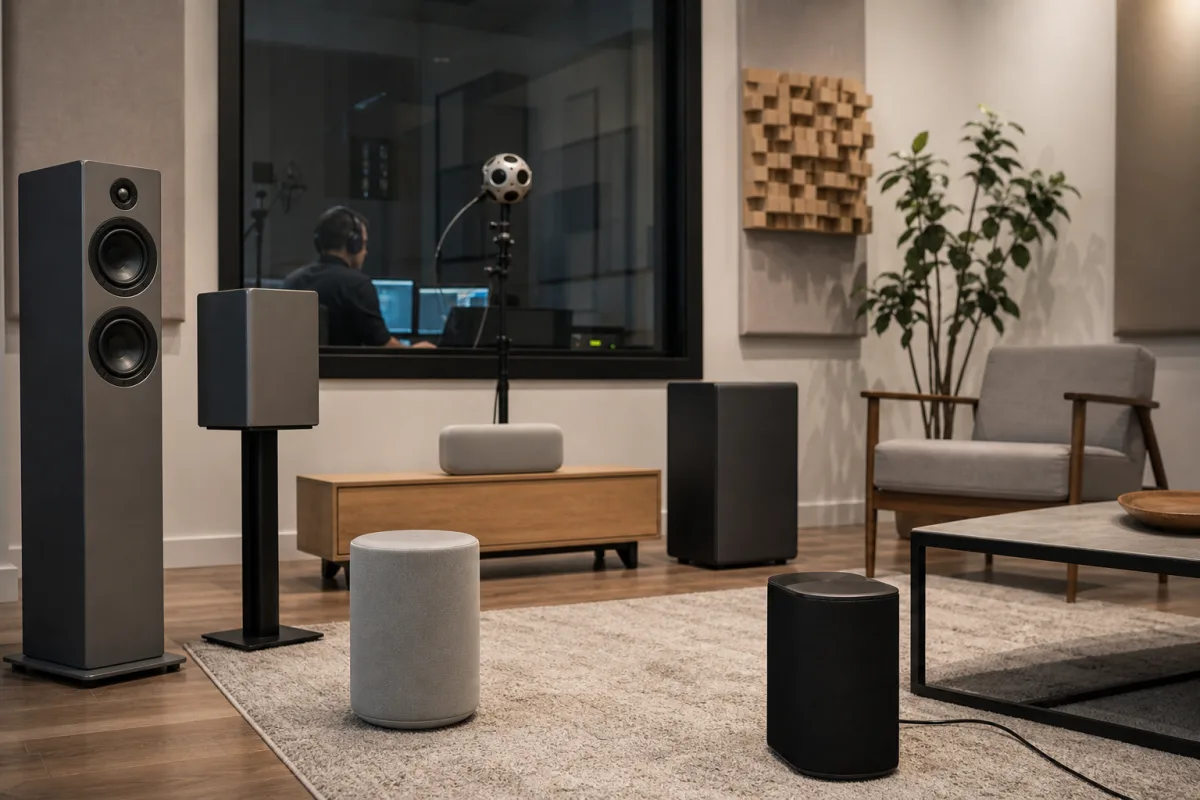
Wireless Multi-Room Audio Speaker System in a manufacturing environment
Representative product image. Confirm appearance and specifications with the manufacturer.

Product Specifications

Technical details and manufacturing context for Wireless Multi-Room Audio Speaker System

Definition
This product is a finished consumer electronics device consisting of multiple individual wireless speakers designed to operate as a synchronized audio system throughout a home or commercial space. It enables users to stream audio content from various sources to different zones simultaneously or independently. The system typically includes a primary hub or master speaker and satellite units that communicate via proprietary wireless protocols or standard Wi-Fi. Manufactured at industrial scale for retail distribution to end-users seeking whole-home audio solutions without complex wiring installations.

Key technical parameters, as listed in the directory, include a total audio output power of 20–60 watts (RMS, per IEC 60268-5), a frequency response range of 50–20000 Hz (per IEC 60268-5), and a wireless transmission range of 30–50 meters (per IEEE 802.11). The system supports up to 8–32 satellite speaker units. Portable satellite units have a battery capacity of 2500–5000 mAh (per IEC 62133). The signal-to-noise ratio is 80–95 dB (per IEC 60268-3). Operating temperature range is -10 to 45 °C (non-condensing, per IEC 60068-2-1). Ingress protection rating is IPX4–IPX6 (per IEC 60529). Power supply voltage is 100–240 V AC, 50/60 Hz (per IEC 62368-1). Audio input impedance is 10–47 kΩ (line input, per IEC 61938). Dimensions per unit are 200–300 x 150–250 x 150–250 mm (W x H x D), and weight per unit is 1.5–3.5 kg without packaging.

Materials used include ABS plastic, aluminum alloy, polymer composite, and acoustic fabric. These values are directory reference ranges and must be confirmed for the specific model and application with the legal manufacturer or supplier. The listed standards are procurement references and do not imply certification or compliance of any particular product.
Working Principle
Digital audio signals are transmitted wirelessly from source devices to a network of speakers using radio frequency protocols. Synchronization algorithms ensure time-aligned playback across all units in the system. The system operates by receiving audio data from a source (e.g., smartphone, computer, or media server) via Wi-Fi or proprietary wireless protocol. The master speaker or hub coordinates the distribution of audio streams to satellite units, which play them in sync. Users can select different zones or group speakers for simultaneous playback. The system supports various audio sources and can be controlled via an app or physical controls. The wireless transmission range and number of supported units are limited by the protocol and environmental factors. For optimal performance, speakers should be placed within the specified range and avoid excessive interference.
Common Materials
ABS Plastic, Aluminum Alloy, Polymer Composite, Acoustic Fabric
Technical Parameters
ParameterTypical rangeNotes & selection driver
Total Audio Output PowerRequired20–60 wattsCombined RMS power output of all speakers in the systemIEC 60268-5
Frequency Response RangeRequired50–20000 HzMinimum to maximum reproducible audio frequenciesIEC 60268-5
Wireless Transmission RangeRequired30–50 metersMaximum operating distance between speakers without signal degradationIEEE 802.11
Maximum Speaker UnitsRequired8–32 unitsMaximum number of satellite speakers supported in a single system
Battery Capacity2500–5000 mAhBattery capacity for portable satellite unitsIEC 62133
Signal-to-Noise RatioRequired80–95 dBRatio of audio signal strength to background noiseIEC 60268-3
Operating Temperature Range-10–45 °CNon-condensingIEC 60068-2-1
Ingress Protection RatingIPX4–IPX6Water resistanceIEC 60529
Power Supply Voltage100–240 V AC50/60 HzIEC 62368-1
Audio Input Impedance10–47 Line inputIEC 61938
Dimensions (W x H x D)200–300 x 150–250 x 150–250 mmPer unit
Weight per Unit1.5–3.5 kgWithout packaging

Ranges are indicative industry figures for RFQ preparation, not a supplier commitment. Confirm every value and standard with the legal manufacturer before ordering.

Components / BOM
  • Primary Hub Speaker
    Central control unit that manages audio distribution and synchronization
    Material: ABS Plastic with Aluminum Trim
  • Satellite Speaker Unit
    Secondary audio output device that receives wireless signals from primary hub
    Material: Polymer Composite with Acoustic Fabric
  • Wireless Transceiver Module
    Radio frequency component for transmitting and receiving audio data
    Material: PCB with RF Components
  • Digital Signal Processor
    Processes audio signals and manages synchronization algorithms
    Material: Integrated Circuit
  • Power Supply Unit
    Provides regulated power to speaker electronics
    Material: Plastic Housing with Electronic Components

Industry Taxonomies & Aliases

Commonly used trade names and technical identifiers for Wireless Multi-Room Audio Speaker System.

Industrial Ecosystem & Supply Chain Structure

Complementary Systems
Downstream Applications
Specialized Tooling

Application Fit & Sizing Matrix

Operational Limits
pressure: N/A (atmospheric operation only)
other spec: Humidity: 20-80% RH non-condensing, Power: 100-240V AC, 50/60Hz
temperature: 0°C to 40°C (operating), -10°C to 50°C (storage)
Media Compatibility
✓ Residential indoor environments ✓ Office spaces with standard drywall construction ✓ Retail/commercial spaces with moderate ambient noise
Unsuitable: Industrial environments with high electromagnetic interference (e.g., near heavy machinery, welding equipment)
Sizing Data Required
  • Room dimensions and acoustic characteristics
  • Number of zones/rooms requiring synchronized audio
  • Desired audio quality level (e.g., background music vs. high-fidelity listening)

Reliability & Engineering Risk Analysis

Failure Mode & Root Cause
Thermal degradation of electronic components
Cause: Prolonged operation at high volumes causing overheating of amplifiers and processors, accelerated by poor ventilation or dust accumulation
Battery failure in wireless units
Cause: Lithium-ion battery degradation from repeated charge cycles, deep discharges, and exposure to high temperatures, leading to reduced capacity or swelling
Maintenance Indicators
  • Audible distortion or crackling during audio playback, indicating potential amplifier or speaker driver failure
  • Intermittent wireless connectivity or frequent dropouts, suggesting antenna issues or radio frequency interference problems
Engineering Tips
  • Implement regular cleaning of ventilation ports and heat sinks to prevent thermal buildup, and avoid placing units in enclosed spaces or direct sunlight
  • Maintain battery health by avoiding complete discharges, using manufacturer-recommended chargers, and replacing batteries proactively after 2-3 years of heavy use

Indicative industry ranges for design and RFQ preparation. Confirm the exact figures and applicable standard with the manufacturer before specifying.

Compliance & Manufacturing Standards

Applicable Standards
CE Marking (EU Directive 2014/53/EU Radio Equipment Directive) ANSI/CTA-2037-A Standard Method of Measurement for In-Home Loudspeakers

Quoted from the published standard.

Manufacturing Precision
  • Speaker Driver Alignment: +/-0.5mm
  • Enclosure Dimensional Stability: +/-1.0mm
Quality Inspection
  • Acoustic Performance Test (Frequency Response, THD)
  • Wireless Connectivity & Interoperability Test

Manufacturers of Wireless Multi-Room Audio Speaker System

Manufacturer profiles associated with Wireless Multi-Room Audio Speaker System.

Sourcing Wireless Multi-Room Audio Speaker System from China?
Tell us your specification and target quantity — we will match it against manufacturer records and come back with the factories that fit.
Request manufacturers We manufacture this

Manufacturer listings support early research and capability understanding. They are not certification, ranking, or transaction guarantees.

Share this page
Technical documentation
Request current drawings, revision history, and a signed specification sheet.
Manufacturing capability
Verify equipment lists, process limits, capacity, and representative production evidence.
Inspection readiness
Confirm test methods, calibrated equipment, sampling plans, and traceable reports.
Supplier transparency
Check the legal entity, factory address, ownership, certifications, and direct contacts.

CNFX does not score or rank suppliers. Buyers must verify all claims and documents with the legal manufacturer before ordering.

Frequently Asked Questions

What is the maximum number of speakers that can be used in one system?

According to the directory, the system supports up to 8–32 satellite speaker units. However, the exact number depends on the specific model and configuration. Verify with the manufacturer.

What is the wireless transmission range?

The directory lists a wireless transmission range of 30–50 meters, based on IEEE 802.11. Actual range may vary due to environmental factors and interference. Confirm with the supplier.

What is the power supply requirement?

The system operates on 100–240 V AC, 50/60 Hz, per IEC 62368-1. Ensure the power supply matches your local voltage. Check the product label for exact requirements.

Are the speakers water-resistant?

The ingress protection rating is IPX4–IPX6, indicating water resistance. However, the level of protection varies by model. Refer to the manufacturer's specifications for the specific unit.

Data Basis

Editorial classification, named public sources where available, and source-reviewed manufacturer records.

Preliminary Technical Classification
This page supports structured research, RFQ preparation, and supplier evaluation. It does not replace buyer-led supplier qualification, standards review, or technical approval.
Buyer enquiry

Request manufacturing insight for Wireless Multi-Room Audio Speaker System

Ask for use case, specification boundaries, supplier type, and RFQ preparation information for this product.

Where it goes
Straight to the CNFX editorial desk, and to the manufacturer if this product is linked to a claimed profile. Nothing is broadcast to a supplier list.
Your details stay here
We do not sell or rent enquiry data, and we do not add you to a mailing list. Used only to answer this request.
No commission, no middleman
CNFX is a directory. We take no cut of any order and never negotiate on a supplier's behalf.
What we don't claim
A listing is not an endorsement. Qualify every supplier and verify every figure yourself before ordering.

Your business information is used only to process this request.

Thank you! Your message has been sent. We'll respond within 1–3 business days.
Sorry, we couldn't send your message. Please try again, or email us at [email protected].

Need to Manufacture Wireless Multi-Room Audio Speaker System?

Compare manufacturer profiles with relevant product and process capability.

Previous Product
Digital Audio Signal Processor Module
Last Product
Get QuotesChat