Editorial Technical Reference

Molten Metal Sampling Spoon

This page explains how Molten Metal Sampling Spoon is classified within Other Basic Metal Production. Technical values and manufacturer relationships are research references; confirm the current specification and supplier evidence for each order.

Technical Definition & Core Assembly

The Molten Metal Sampling Spoon is a precision-engineered component used in basic metal production facilities to extract representative molten metal samples from smelting furnaces, converters, or ladles.
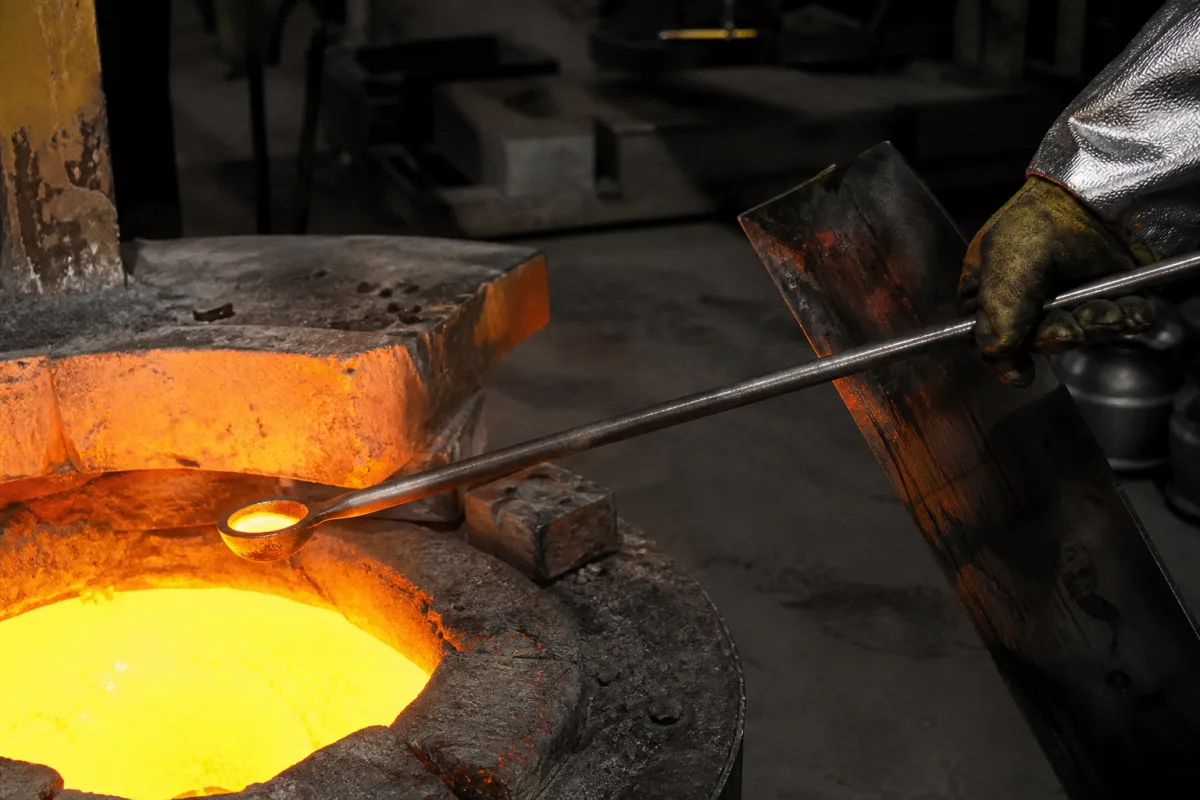
Molten Metal Sampling Spoon in a manufacturing environment
Representative product image. Confirm appearance and specifications with the manufacturer.

Product Specifications

Technical details and manufacturing context for Molten Metal Sampling Spoon

Definition
The Molten Metal Sampling Spoon is a precision-engineered component used in basic metal production facilities to extract representative molten metal samples from smelting furnaces, converters, or ladles. These samples are critical for real-time chemical analysis and quality control during steelmaking, aluminum production, and non-ferrous metal processing. The spoon's design ensures minimal contamination and accurate temperature preservation during sample extraction and transfer to analytical equipment. Constructed from high-alumina refractory ceramic and stainless steel 316L, the spoon features a refractory coating for erosion resistance and a smooth surface finish to reduce slag adhesion. Key parameters include a sample volume capacity of 50–100 ml, thermal shock resistance of at least 20 cycles, handle lengths from 1500 to 3000 cm, wall thickness of 5–8 mm, pouring spout width of 30–50 mm, and a maximum operating temperature of 1600°C for molten steel sampling. The material grade for heat-resistant cast stainless steel is ASTM A297 HK, with dimensional tolerance per ISO 2768-m. The spoon weighs 2.5–4.0 kg, has a surface roughness of Ra 3.2–6.3 μm, and a coating thickness of 0.2–0.5 mm. These specifications are directory reference ranges and must be confirmed for the specific model and application with the legal manufacturer or supplier. The spoon is designed for manual or mechanical operation, ensuring operator safety with extended handle lengths. It is essential for maintaining product quality in metal production, and its performance directly impacts the accuracy of chemical analysis. Proper selection and verification of parameters are crucial for optimal performance and longevity.
Working Principle
The spoon is manually or mechanically dipped into molten metal, filling through a precisely sized opening. A protective coating prevents reaction with the molten metal, while thermal insulation maintains sample integrity during transfer to cooling stations for solidification and subsequent spectroscopic analysis. The refractory ceramic body and stainless steel handle provide structural integrity and thermal resistance. The pouring spout allows controlled pouring of the sample into molds or analysis equipment. The spoon's design minimizes contamination and ensures representative sampling. The handle length provides operator safety by keeping distance from the molten metal. The spoon undergoes thermal cycling, and its thermal shock resistance determines its lifespan. Proper maintenance and inspection are required to ensure reliable performance.
Common Materials
High-Alumina Refractory Ceramic, Stainless Steel 316L
Technical Parameters
ParameterTypical rangeNotes & selection driver
Sample Volume CapacityRequired50–100 mlMaximum molten metal volume the spoon can hold
Thermal Shock ResistanceRequired≥20 cyclesNumber of heating-cooling cycles before failure
Handle LengthRequired1500–3000 cmDistance from spoon bowl to grip end for operator safety
Wall ThicknessRequired5–8 mmRefractory material thickness for thermal insulation
Pouring Spout Width30–50 mmOpening dimension for controlled sample pouring
Maximum Operating Temperature1600 °CFor molten steel sampling
Material GradeASTM A297 HKHeat-resistant cast stainless steelASTM A297
Weight2.5–4.0 kgIncludes handle; manageable for operator
Surface RoughnessRa 3.2–6.3 μmSmooth finish reduces slag adhesion
Dimensional Tolerance±1.5 mmEnsures fit with sampling accessoriesISO 2768-m
Coating Thickness0.2–0.5 mmRefractory coating for erosion resistance

Ranges are indicative industry figures for RFQ preparation, not a supplier commitment. Confirm every value and standard with the legal manufacturer before ordering.

Components / BOM
  • Refractory Bowl
    Contains and insulates molten metal sample
    Material: High-alumina ceramic with zirconia additive
  • Steel Reinforcement Cage Part
    Provides structural support to refractory material
    Material: Stainless steel wire mesh
  • Handle Assembly Part
    Enables safe manipulation and sample transfer
    Material: Stainless steel tube with insulated grip
  • Thermal Barrier Coating Optional Part
    Prevents metal adhesion and reduces heat transfer
    Material: Boron nitride or alumina-based coating

Industry Taxonomies & Aliases

Commonly used trade names and technical identifiers for Molten Metal Sampling Spoon.

Industrial Ecosystem & Supply Chain Structure

Complementary Systems
Downstream Applications
Specialized Tooling

Application Fit & Sizing Matrix

Operational Limits
pressure: Atmospheric only (not for pressurized systems)
other spec: Max immersion depth: 1.5m, Sample volume: 50-500ml, Handle length: 1-3m
temperature: Up to 1800°C (3272°F) for ferrous metals, up to 1200°C (2192°F) for non-ferrous
Media Compatibility
✓ Molten steel (carbon/alloy) ✓ Molten aluminum alloys ✓ Molten copper/brass
Unsuitable: Molten reactive metals (e.g., titanium, magnesium) without inert gas protection
Sizing Data Required
  • Required sample volume (ml)
  • Furnace/ladle depth (m)
  • Molten metal temperature (°C)

Reliability & Engineering Risk Analysis

Failure Mode & Root Cause
Thermal fatigue cracking
Cause: Repeated thermal cycling from molten metal contact and cooling leads to stress concentration and crack initiation at stress points like handle-socket joints or spoon bowl edges.
Oxidation and scaling degradation
Cause: Exposure to high-temperature molten metal and atmospheric oxygen causes surface oxidation, scale formation, and material thinning, especially in unprotected or low-alloy steel areas.
Maintenance Indicators
  • Visible cracks or warping at the spoon bowl or handle connection points
  • Excessive scale buildup or pitting on the spoon surface that flakes off during use
Engineering Tips
  • Apply a refractory coating to the spoon bowl before each use to reduce direct metal contact and thermal shock
  • Implement controlled cooling procedures after sampling—avoid rapid water quenching; use designated cooling racks in low-oxygen environments

Indicative industry ranges for design and RFQ preparation. Confirm the exact figures and applicable standard with the manufacturer before specifying.

Compliance & Manufacturing Standards

Applicable Standards
ISO 14284:1996 - Steel and iron - Sampling and preparation of samples for the determination of chemical composition ASTM E716-16 - Standard Practices for Sampling and Sample Preparation of Aluminum and Aluminum Alloys for Determination of Chemical Composition by Spark Atomic Emission Spectrometry DIN 50601-1:1985 - Sampling of steel, cast iron and ferroalloys; sampling of liquid metal

Quoted from the published standard.

Manufacturing Precision
  • Spoon capacity: +/- 2% of nominal volume
  • Spoon wall thickness uniformity: +/- 0.5mm across all surfaces
Quality Inspection
  • Visual and dimensional inspection for cracks, porosity, and conformity to specifications
  • Chemical composition verification of spoon material via X-ray fluorescence (XRF) analysis

Manufacturers of Molten Metal Sampling Spoon

Manufacturer profiles associated with Molten Metal Sampling Spoon.

Sourcing Molten Metal Sampling Spoon from China?
Tell us your specification and target quantity — we will match it against manufacturer records and come back with the factories that fit.
Request manufacturers We manufacture this

Manufacturer listings support early research and capability understanding. They are not certification, ranking, or transaction guarantees.

Share this page
Technical documentation
Request current drawings, revision history, and a signed specification sheet.
Manufacturing capability
Verify equipment lists, process limits, capacity, and representative production evidence.
Inspection readiness
Confirm test methods, calibrated equipment, sampling plans, and traceable reports.
Supplier transparency
Check the legal entity, factory address, ownership, certifications, and direct contacts.

CNFX does not score or rank suppliers. Buyers must verify all claims and documents with the legal manufacturer before ordering.

Frequently Asked Questions

What is the maximum operating temperature of this sampling spoon?

According to the directory data, the maximum operating temperature is 1600°C, specifically for molten steel sampling. This value is a reference and must be confirmed with the manufacturer for the specific model and application.

What materials are used in the construction of the spoon?

The spoon is made from high-alumina refractory ceramic and stainless steel 316L. The refractory ceramic provides thermal insulation and erosion resistance, while the stainless steel handle offers structural support. The material grade for the heat-resistant cast stainless steel is ASTM A297 HK.

How does the spoon ensure sample integrity during transfer?

The spoon has a protective coating that prevents reaction with the molten metal, and thermal insulation maintains sample temperature during transfer. The smooth surface finish (Ra 3.2–6.3 μm) reduces slag adhesion, and the pouring spout allows controlled pouring to minimize contamination.

What is the thermal shock resistance of the spoon?

The spoon is rated for at least 20 heating-cooling cycles before failure. This parameter indicates the spoon's ability to withstand repeated thermal cycling without cracking or degrading. Actual performance may vary based on operating conditions and maintenance.

Data Basis

Editorial classification, named public sources where available, and source-reviewed manufacturer records.

Preliminary Technical Classification
This page supports structured research, RFQ preparation, and supplier evaluation. It does not replace buyer-led supplier qualification, standards review, or technical approval.
Buyer enquiry

Request manufacturing insight for Molten Metal Sampling Spoon

Ask for use case, specification boundaries, supplier type, and RFQ preparation information for this product.

Where it goes
Straight to the CNFX editorial desk, and to the manufacturer if this product is linked to a claimed profile. Nothing is broadcast to a supplier list.
Your details stay here
We do not sell or rent enquiry data, and we do not add you to a mailing list. Used only to answer this request.
No commission, no middleman
CNFX is a directory. We take no cut of any order and never negotiate on a supplier's behalf.
What we don't claim
A listing is not an endorsement. Qualify every supplier and verify every figure yourself before ordering.

Your business information is used only to process this request.

Thank you! Your message has been sent. We'll respond within 1–3 business days.
Sorry, we couldn't send your message. Please try again, or email us at [email protected].

Need to Manufacture Molten Metal Sampling Spoon?

Compare manufacturer profiles with relevant product and process capability.

Previous Product
Molten Metal Flow Control Nozzle
Last Product
Get QuotesChat