Editorial Technical Reference

Polymer Pelletizing Strand Cutter

This page explains how Polymer Pelletizing Strand Cutter is classified within Plastics in Primary Forms Manufacturing. Technical values and manufacturer relationships are research references; confirm the current specification and supplier evidence for each order.

Technical Definition & Core Assembly

A polymer pelletizing strand cutter is a downstream processing machine used in plastics manufacturing.
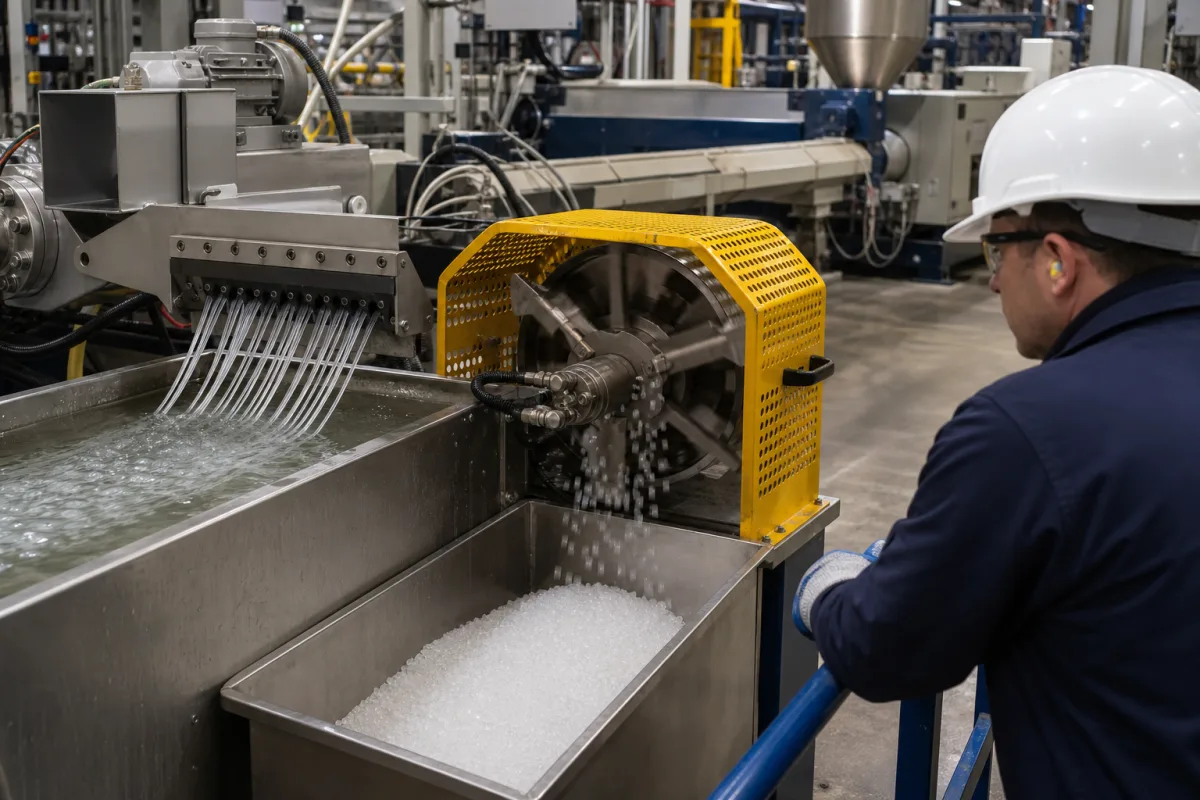
Polymer Pelletizing Strand Cutter in a manufacturing environment
Representative product image. Confirm appearance and specifications with the manufacturer.

Product Specifications

Technical details and manufacturing context for Polymer Pelletizing Strand Cutter

Definition
A polymer pelletizing strand cutter is a downstream processing machine used in plastics manufacturing. It receives continuous polymer strands from an extruder and cuts them into uniform pellets for packaging, storage, and further processing. This standalone device ensures consistent pellet geometry, which is essential for material handling, feeding into injection molding machines, and maintaining product quality. The cutter operates at the end of extrusion lines to transform continuous polymer output into discrete, manageable pellets.

The machine typically consists of a feed mechanism, a cutting chamber with a high-speed rotor, and stationary bed knives. Extruded strands are guided into the cutting chamber where rotating blades shear them against the bed knives, producing pellets of a specified length. The pellets are then cooled and collected for downstream use.

Key specifications include a cutting capacity of 500–2000 kg/h, rotor speed of 300–1200 rpm, and 3–12 blades. The acceptable strand diameter ranges from 1–6 mm, and the resulting pellet length is typically 2–5 mm. The drive motor power is 5.5–22 kW, and the machine operates within an ambient temperature range of 0–50 °C. Pneumatic systems require a pressure of 0.4–0.8 MPa. The ingress protection rating is IP54–IP65 per IEC 60529. Blade material can be HSS or carbide, depending on the polymer's abrasiveness. Machine weight ranges from 800–3000 kg, and dimensions vary from 1500×1000×1800 mm to 3000×2000×2500 mm.

Materials used in construction include hardened tool steel, stainless steel, and cast iron. These values are reference ranges and must be verified with the legal manufacturer or supplier for specific models and applications. Standards listed are for procurement reference only and do not imply certification or compliance of any particular product.
Working Principle
Extruded polymer strands are fed through guide rollers into a rotating cutting chamber where multiple blades mounted on a high-speed rotor shear the strands against stationary bed knives, producing uniform pellets that are then cooled and collected.
Common Materials
Hardened Tool Steel, Stainless Steel, Cast Iron
Technical Parameters
ParameterTypical rangeNotes & selection driver
Cutting CapacityRequired500–2000 kg/hMaximum polymer throughput rate
Rotor SpeedRequired300–1200 rpmRotational speed of cutting blades
Number of BladesRequired3–12 unitsQuantity of cutting blades on rotor
Strand Diameter RangeRequired1–6 mmAcceptable input strand thickness
Pellet LengthRequired2–5 mmStandard output pellet dimension
Motor PowerRequired5.5–22 kWDrive motor electrical rating
Operating Temperature0–50 °CAmbient temperature range
Operating Pressure0.4–0.8 MPaPneumatic system pressure
Ingress ProtectionIP54–IP65Dust and water protectionIEC 60529
Blade MaterialHSS or CarbideCarbide for abrasive polymers
Machine Weight800–3000 kgDepends on size and options
Dimensions (L×W×H)1500×1000×1800 – 3000×2000×2500 mmVaries with model

Ranges are indicative industry figures for RFQ preparation, not a supplier commitment. Confirm every value and standard with the legal manufacturer before ordering.

Components / BOM
  • Cutting Rotor
    Rotating assembly with multiple blades that shear polymer strands
    Material: Hardened Tool Steel
  • Bed Knife Part
    Stationary cutting edge against which rotor blades shear strands
    Material: Hardened Tool Steel
  • Strand Guide System
    Rollers and guides that feed strands into cutting chamber
    Material: Stainless Steel
  • Pellet Discharge Chute Part
    Channel directing cut pellets to collection system
    Material: Stainless Steel
  • Drive Motor
    Electric motor powering cutting rotor
    Material: Copper Windings, Steel Housing

Industry Taxonomies & Aliases

Commonly used trade names and technical identifiers for Polymer Pelletizing Strand Cutter.

Industrial Ecosystem & Supply Chain Structure

Complementary Systems
Downstream Applications
Specialized Tooling

Application Fit & Sizing Matrix

Operational Limits
pressure: Atmospheric to 1 bar (14.5 psi) - low pressure cutting environment
flow rate: 50-500 kg/hr (110-1100 lb/hr) - strand throughput capacity
temperature: Ambient to 120°C (248°F) - typical polymer processing range
pellet length: 2-6 mm (0.08-0.24 in) - adjustable cut length range
strand diameter: 1-10 mm (0.04-0.4 in) - compatible strand sizes
Media Compatibility
✓ Polyethylene (PE) strands ✓ Polypropylene (PP) strands ✓ Polyamide (PA) strands
Unsuitable: Abrasive-filled polymers (e.g., glass-filled compounds) - causes excessive blade wear
Sizing Data Required
  • Required throughput capacity (kg/hr)
  • Strand diameter and number of strands
  • Desired pellet length specification

Reliability & Engineering Risk Analysis

Failure Mode & Root Cause
Blade edge degradation
Cause: Abrasive wear from polymer pellets containing fillers (e.g., glass fibers, minerals) or contaminants, leading to dull cutting edges and increased cutting force
Bearing failure in cutter assembly
Cause: Thermal stress from frictional heat during high-speed cutting cycles, combined with inadequate lubrication, causing premature bearing wear or seizure
Maintenance Indicators
  • Irregular pellet lengths or excessive fines generation during operation
  • Unusual high-pitched whining or grinding noises from the cutter housing
Engineering Tips
  • Implement a predictive maintenance schedule using vibration analysis on cutter bearings and thermal imaging to detect early-stage overheating
  • Optimize blade material selection (e.g., carbide-tipped or ceramic-coated blades) and establish a regular sharpening/replacement protocol based on polymer abrasiveness

Indicative industry ranges for design and RFQ preparation. Confirm the exact figures and applicable standard with the manufacturer before specifying.

Compliance & Manufacturing Standards

Applicable Standards
ISO 12100:2010 Safety of machinery - General principles for design - Risk assessment and risk reduction ASTM D638 Standard Test Method for Tensile Properties of Plastics CE Machinery Directive 2006/42/EC

Quoted from the published standard.

Manufacturing Precision
  • Cutting blade edge straightness: +/-0.05mm
  • Cutter shaft runout: 0.03mm maximum
Quality Inspection
  • Hardness testing of cutting blades (Rockwell C scale)
  • Dynamic balancing test of rotating components

Manufacturers of Polymer Pelletizing Strand Cutter

Manufacturer profiles associated with Polymer Pelletizing Strand Cutter.

Sourcing Polymer Pelletizing Strand Cutter from China?
Tell us your specification and target quantity — we will match it against manufacturer records and come back with the factories that fit.
Request manufacturers We manufacture this

Manufacturer listings support early research and capability understanding. They are not certification, ranking, or transaction guarantees.

Share this page
Technical documentation
Request current drawings, revision history, and a signed specification sheet.
Manufacturing capability
Verify equipment lists, process limits, capacity, and representative production evidence.
Inspection readiness
Confirm test methods, calibrated equipment, sampling plans, and traceable reports.
Supplier transparency
Check the legal entity, factory address, ownership, certifications, and direct contacts.

CNFX does not score or rank suppliers. Buyers must verify all claims and documents with the legal manufacturer before ordering.

Frequently Asked Questions

What is the typical cutting capacity of a polymer pelletizing strand cutter?

The cutting capacity typically ranges from 500 to 2000 kg/h, depending on the model and polymer type. Always confirm the exact capacity with the manufacturer for your specific application.

What blade materials are available for abrasive polymers?

Blades can be made of high-speed steel (HSS) or carbide. Carbide is recommended for abrasive polymers to extend blade life. Verify the appropriate material with the supplier.

What ingress protection rating does the machine have?

The machine typically has an ingress protection rating of IP54 to IP65, as per IEC 60529. This indicates protection against dust and water. Confirm the exact rating for your model.

What are the acceptable strand diameters for this cutter?

The cutter can handle strand diameters from 1 to 6 mm. Ensure your extruded strands are within this range for optimal performance. Check with the manufacturer for specific limits.

Data Basis

Editorial classification, named public sources where available, and source-reviewed manufacturer records.

Preliminary Technical Classification
This page supports structured research, RFQ preparation, and supplier evaluation. It does not replace buyer-led supplier qualification, standards review, or technical approval.
Buyer enquiry

Request manufacturing insight for Polymer Pelletizing Strand Cutter

Ask for use case, specification boundaries, supplier type, and RFQ preparation information for this product.

Where it goes
Straight to the CNFX editorial desk, and to the manufacturer if this product is linked to a claimed profile. Nothing is broadcast to a supplier list.
Your details stay here
We do not sell or rent enquiry data, and we do not add you to a mailing list. Used only to answer this request.
No commission, no middleman
CNFX is a directory. We take no cut of any order and never negotiate on a supplier's behalf.
What we don't claim
A listing is not an endorsement. Qualify every supplier and verify every figure yourself before ordering.

Your business information is used only to process this request.

Thank you! Your message has been sent. We'll respond within 1–3 business days.
Sorry, we couldn't send your message. Please try again, or email us at [email protected].

Need to Manufacture Polymer Pelletizing Strand Cutter?

Compare manufacturer profiles with relevant product and process capability.

Previous Product
Twin-Screw Polymer Compounding Extruder
Last Product
Get QuotesChat