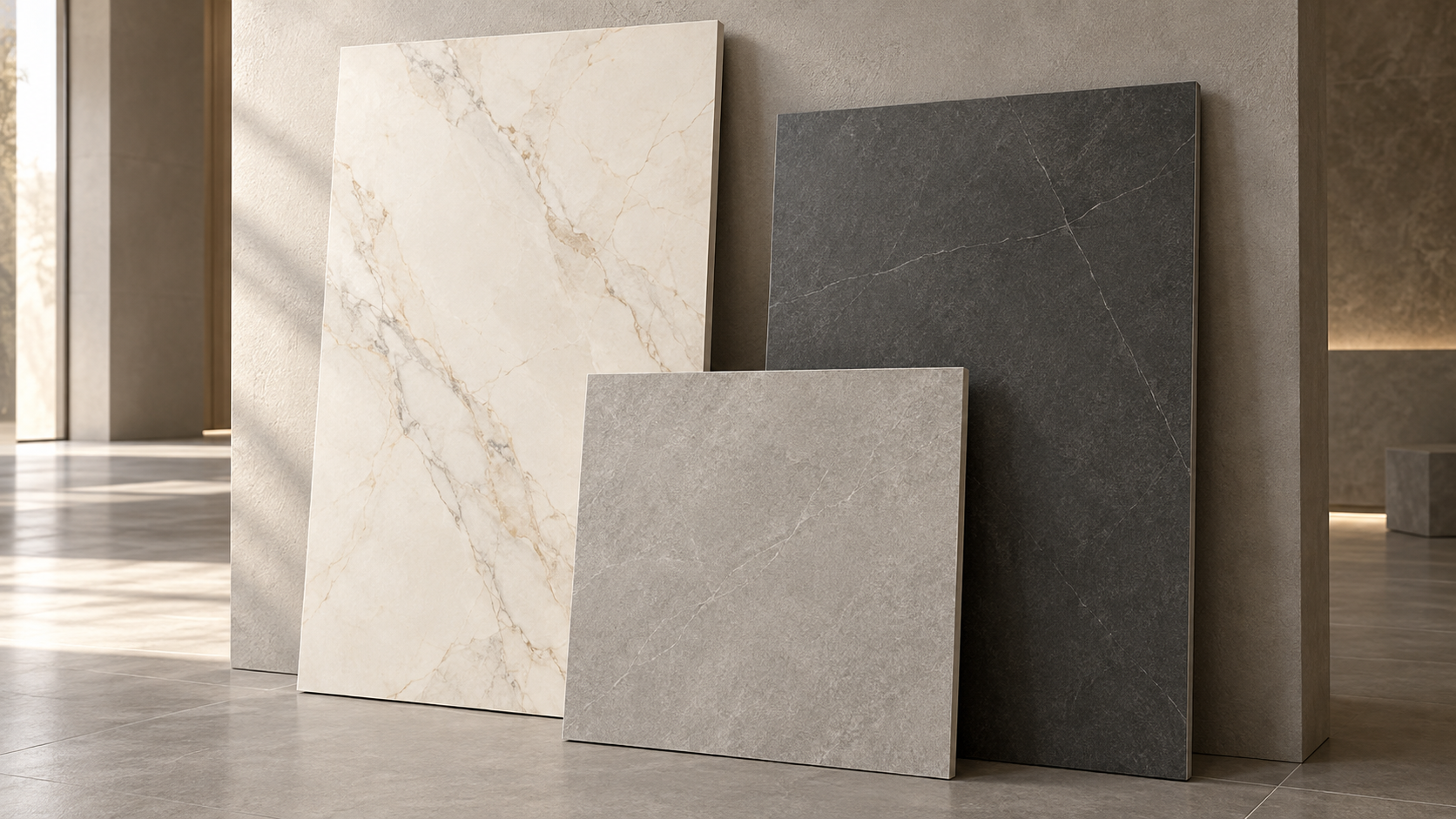
A factory option for importers building their own collection
Hunan Qiangqiang Ceramics Co., Ltd. offers glazed porcelain tiles and buyer-brand programmes from Chaling, Hunan. Its published range includes four sizes, from 400 × 800 mm to 750 × 1500 mm, with polished, matte and soft-matte options. Importers can discuss a coordinated collection, carton artwork and sample approval with the manufacturer through its CNFX factory profile. The range gives importers a focused starting point for a coordinated, buyer-branded offer.
For a distributor, a collection is more than an attractive photograph. A clear relationship between the display sample, sellable format and reorder specification makes it easier for a sales team to explain the range. Start with the rooms and customers your collection should serve, then ask the factory to identify suitable products. Treat the following as a starting brief for discussion, not a site-installation specification.
Choose the format before building the colour range
The manufacturer's current product page lists 400 × 800, 800 × 800, 600 × 1200 and 750 × 1500 mm formats. The square option can anchor a simple range, while rectangular formats offer different layout proportions. The largest listed format is still a tile; it should not be sold as an extra-large sintered slab. The same page identifies 300 × 600 mm as discontinued, so it should not form the basis of a new replenishment programme without fresh confirmation.
| Collection decision | What to settle with the factory | Why it helps the buyer |
|---|---|---|
| Format | Which listed size belongs to each design | Keeps catalogue, samples and quotation aligned |
| Surface | Polished, matte or soft-matte reference | Lets the showroom present an intentional finish choice |
| Design family | Approved physical sample and acceptable visual variation | Reduces ambiguity when matching a display to an order |
| Brand presentation | Buyer artwork, product name and pack identification | Connects the supplier's product to the distributor's range |
| Reorder reference | Saved article code, sample version and agreed specification | Gives both teams a common reference for later purchases |
This matrix is a buyer-side planning aid. It does not imply that every size and finish combination is available for every design.
Turn a design idea into a buyer-branded product
Qiangqiang's OEM programme describes custom-design discussions, buyer carton artwork and unbranded supply. Its process moves from a reference and feasibility check to samples, artwork and the production order. An inspiration image is a starting point, not a guarantee that a stone pattern will be reproduced vein for vein. A physical approval sample gives the buyer and factory a more useful shared reference.
A practical launch brief can contain three parts: the intended product range, the brand presentation and the purchasing plan. For the range, list the desired formats and finishes rather than only a collection name. For branding, provide print-ready artwork and the wording that belongs on each carton. For purchasing, state the destination and an initial quantity estimate. Keeping these together helps the factory answer the commercial question instead of sending a general catalogue.
A distributor may prefer a compact initial selection over many loosely related designs. That is a merchandising decision, not a factory restriction. Compare the proposed products side by side and decide which are core stock, which are sample-only and which need a project order. Do not promise immediate local availability until your own inventory is in place.
Make samples useful to your sales team
A sample should answer a specific question. A small chip can help compare colour and surface feel; a full-size piece is more useful for judging the overall pattern and layout. Ask what sample format is available for the selected design and confirm any sample and freight charges before dispatch. The factory's published sample process does not make every sample shipment free.
- Assign an internal range code before requesting the sample.
- Photograph the received sample with its label and record the format and finish.
- Review the appearance under the lighting relevant to the intended showroom or project.
- Return one consolidated approval or revision list to the supplier.
- Keep the approved reference with the final order documents.
These are suggested purchasing steps, not evidence that CNFX has inspected a shipment. Screen images alone cannot establish the exact appearance of a supplied batch.
Match the collection to its intended application
Buyers often ask whether a porcelain tile can serve a bathroom, kitchen or commercial space. The answer depends on the particular product and use. Appearance is not a slip-resistance result, and a matte surface alone does not establish suitability for a wet floor. Request the applicable current product report and let the project's qualified specification or installation team assess the actual conditions.
Similarly, an indoor collection should not automatically be presented as frost-resistant outdoor paving. Confirm the intended environment, substrate and installation system separately. Keeping these limits clear allows the sales message to focus on the chosen design and available supply without promising unverified performance.
Plan packaging and replenishment as part of the range
Ask for carton quantities, pallet arrangement and loading details against the exact selected articles. A mixed order needs an itemised packing plan: a single total area does not tell a warehouse how many cartons of each product will arrive. Put your own SKU beside the supplier's article reference on the purchasing schedule. On receipt, that pairing helps the warehouse identify stock without relying on a photograph.
Common avoidable errors include approving a design but not its finish, using an outdated size in the sales catalogue, and changing artwork after the order details are settled. Resolve these in one specification record. For repeat orders, refer to the previous approved record and ask the factory to confirm current availability, rather than assuming every production detail remains unchanged.
Questions for a first collection
What is the largest tile size currently listed?
The current range lists 750 × 1500 mm as its largest format. Ask about the chosen design in that size; do not describe it as an extra-large slab.
Can an importer use its own brand?
The published OEM programme includes buyer carton artwork and unbranded options. Agree the actual presentation and order conditions with the factory.
Where can I discuss a tile collection?
Open the Hunan Qiangqiang Ceramics Co., Ltd. enquiry form on CNFX. Include target sizes, finish preferences, destination and an estimated order size. This gives the manufacturer a concrete starting point for product and sample recommendations.
Explore the factory’s tile offering on CNFX
See Qiangqiang’s factory profile and stated product lines for the supplier overview, then use the enquiry form to discuss your collection. Tiles are finished surface products; tile-making machinery is a different purchasing category.
Sources and scope
Prepared by CNFX from the linked manufacturer product and OEM pages, checked on 15 September 2026. The collection matrix and sample workflow are editorial purchasing aids, not a report of a tested shipment. Product availability and commercial terms are agreed for the order. Suggest a correction.