Mechanical pumps for molten aluminium and zinc · Circulation, gas-injection and transfer duties, graphite and ceramic impellers, bases and posts, shafts, air or electric drives, lift, low-flow overflow transfer, furnace wells and service life
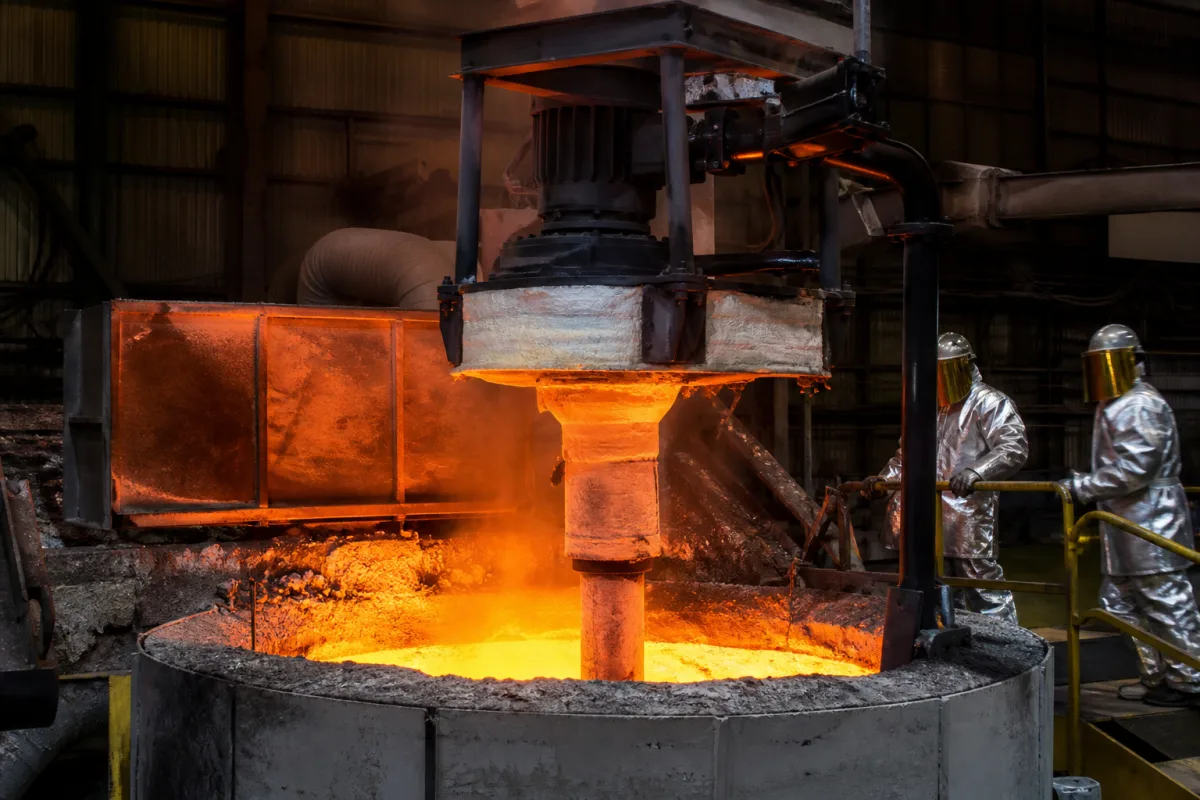
A molten metal pump is a mechanical centrifugal pump that hangs in a furnace well with its impeller turning in a pumping chamber in a refractory or graphite base, supported by posts beneath a motor platform, to circulate, treat or transfer molten non-ferrous metal such as aluminium or zinc. Ask three things first: which duty the pump must perform (circulation, gas injection or transfer) and at what flow and lift, what furnace, well and metal temperature it must work in, and what impeller, shaft, base and drive materials and service arrangements will give the life you need.
Mechanical immersion pumps for molten aluminium, zinc and other non-ferrous metals: circulation, gas-injection and transfer pumps (conventional and overflow), with their impellers, shafts, bases, posts, drives and transfer piping. Electromagnetic pumps, launders and tap-out systems without a pump, and degassing rotors (see molten metal degassing system) are outside this page except where compared.
CNFX editorial research · Sources checked October 11, 2026 · 7 sources
Choose the pump for circulation, gas injection or transfer
Pyrotek classifies mechanical pumps for molten metal into circulation, gas-injection and transfer types, each made in sizes chosen from the furnace holding capacity, melting rate and transfer rate. Circulation pumps circulate metal in reverberatory and stack melter furnaces, and Pyrotek says "the most important purpose for these pumps is to provide forced convectional heat transfer in the molten bath"; gas-injection circulation pumps work on the same principle while adding gas; transfer pumps stay in the furnace well and lift metal above the bath line to the point of use when delivery is needed, and are either conventional or overflow types. Against tap blocks or tilting furnaces it lists cleaner metal, faster transfer, lower temperature loss, better safety and lower capital cost as possible benefits. [1]
US6464458B2 describes the shared layout: a rotatable impeller in a pumping chamber formed in a base suspended in the metal by support posts, driven through a shaft by a motor on a platform carried by the posts; transfer pumps move metal out of a vessel, circulation pumps move it within the vessel, and gas-injection pumps are used to purify it. [5]
US5993728A explains that secondary aluminium refining uses a reactive gas such as chlorine to lower magnesium and inert gas to remove inclusions and hydrogen; the magnesium chloride formed collects as dross that is skimmed, and the patent states that "gas injection pumps are considered the most effective tool for this task" of magnesium removal during melt refining. [7]
Give the supplier the duty (circulation, gas injection, transfer), metal and alloy, furnace type and capacity, melting rate, transfer destinations and rate, gas type and rate if gas is injected, and whether scrap submergence equipment is fitted.
02
Set the flow, lift, well and temperature
Pyrotek's M-series pumps are designed for non-ferrous metals (aluminium and zinc) below 871 °C (1,600 °F), lift aluminium as high as 6 m (20 ft) for high- and low-lift work including filling ladles on trucks, need an external furnace well large enough for the pump — of which Pyrotek says "The external well is often an extension of the charging well, with a bridge-wall installed to protect the pump from damage caused by charged material and fluxing salts" — and are used with refractory-lined steel transfer piping. [2]
Flow covers a wide span. Pyrotek's dual-chamber overflow transfer pump is quoted at 4–450 kg/min for gentle low-flow transfer, and the company reports that one J-50 circulation pump on a melting furnace at Profilglass circulated 12 t of metal per minute, running continuously for three years (26,280 hours) with three posts and one base. US5509791A describes a variable-delivery design that "can handle rates as low as 10 to 15 pounds per minute, in contrast to usual types of pumps that require pumping about 80 pounds per minute". [3][4][6]
Editorial calculation: 12 t/min × 60 min × 26,280 h ≈ 18.9 million t, consistent with the 18 million t Pyrotek reports; 80 lb/min ≈ 36 kg/min and 10–15 lb/min ≈ 4.5–6.8 kg/min, which places the low end of the overflow pump's range in the band that patent sought. [4][6][3]
State the metal temperature, required flow (kg/min or t/min) at the duty point, lift and transfer pipe length, well dimensions and bridge wall, immersion depth, ambient and access around the well, and whether flow must be controlled at low rates.
03
Choose impeller, shaft, base and drive
US6464458B2 states that impellers for this environment are made of refractory or graphite material, which degrades when refractory pieces, feedstock contaminants and inclusions in the melt pass through, and describes passages inclined at least 5° and preferably about 45° from vertical in an impeller designed to resist clogging. US5509791A notes that a graphite drive shaft of significant diameter turbulates the bath and entrains dross, and that a slender moly-tungsten shaft to avoid this is "so expensive as to double the cost of some pumps". [5][6]
Pyrotek offers its M-series with air or electric motors — air drives being simpler to install and operate, electric drives needing panels and cooling fans but being more energy-efficient with more precise control — and offers ceramic and steel Tensor pumps among its J, M, S and D series. It attributes record pump life at Profilglass to pump-well cleaning, optimised speed, charging procedures and rebuild procedures. [2][1][4]
Ask for impeller, shaft, post and base materials and their expected life in your alloy, spare-part kits, rebuild procedure, motor type (air or electric), speed control, couplings, and the cleaning and inspection routine the supplier assumes.
04
Impeller, base, posts, shaft, drive, gas line and riser
The layout follows US6464458B2: the base hangs from the posts, and the shaft runs down from the motor platform to the impeller.
Part
Role
Fix in the order
Impeller
Draws in and expels metal in the pumping chamber. [5]
Material, passages, diameter.
Base (pump housing)
Holds the pumping chamber; suspended in the metal. [5]
Flow, lift, temperature and wetted materials for the quotation
Duty, metal and well size come from your furnace. Only flow, lift, temperature and wetted materials carry published values here; motor and enclosure data must come from the supplier.
Field
What it means and published values
Ask the supplier for
Flow rate (m³/h)
4–450 kg/min overflow transfer; 12 t/min on one circulation pump. [3][4]
Explore company information and manufacturing capabilities, then discuss the scope of your project with a relevant supplier.
Share this page
Compiled and source-reviewed by the CNFX editorial team.
Each manufacturer above links to the page on that company's own website where the product is listed, with the date we checked it. How we source and review
· Page last updated 13 October 2026
Buyer questions
What are the main types of molten metal pump?
Circulation, gas-injection and transfer pumps; transfer pumps are conventional or overflow types. [1]
Why are molten aluminium pump impellers made of graphite or refractory?
Those materials can operate in hot, reactive molten metal, though particles in the melt wear them. [5]
What temperature can a molten aluminium pump work at?
One series is designed for aluminium and zinc below 871 °C (1,600 °F). [2]
Why inject gas through a pump?
To feed chlorine for magnesium removal or inert gas for inclusion and hydrogen removal during refining. [7]
Sources and what still needs a direct check
Sources checked 2026-10-11. Pyrotek's pages and case study describe one maker's pumps; the patents describe designs, not current products. Values for your furnace must come from the supplier offered.