This page explains how Precision Casting Mold Cavity Insert is classified within Foundries. Technical values and manufacturer relationships are research references; confirm the current specification and supplier evidence for each order.
A precision-engineered insert that fits into the main mold body to create the internal cavities and features of cast metal components.
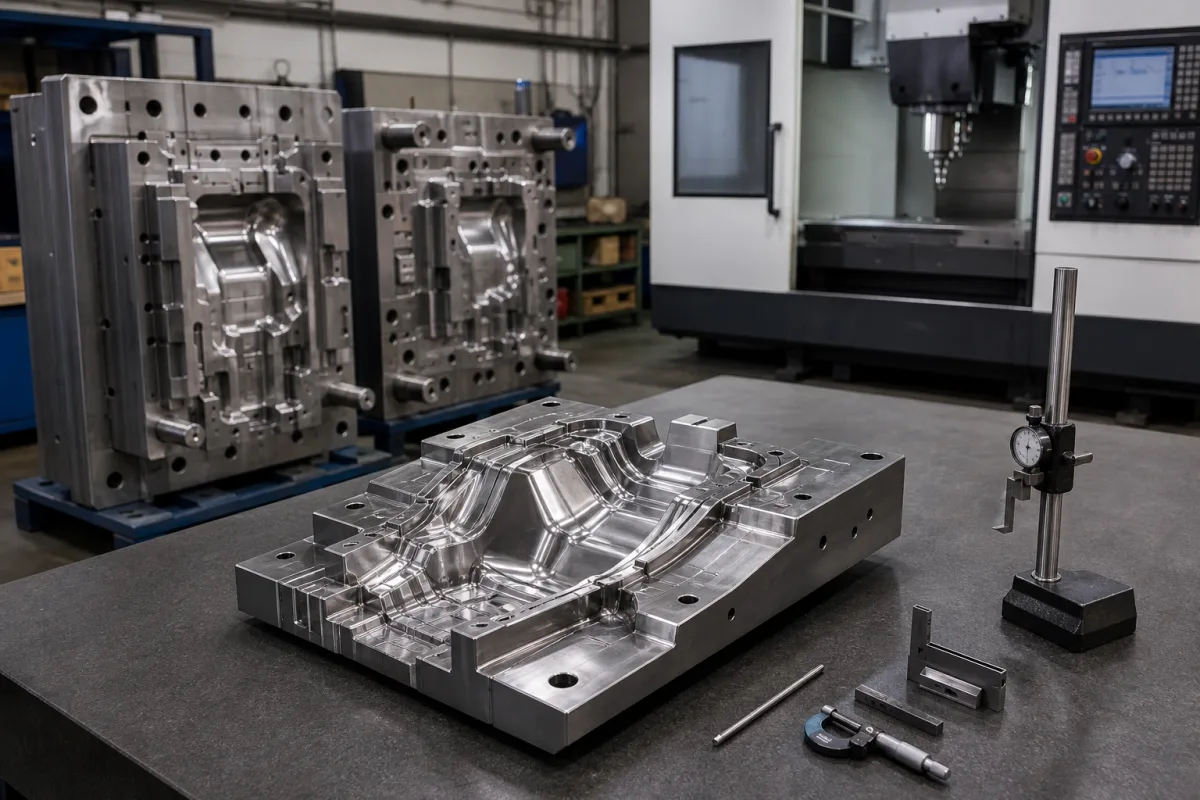
Technical details and manufacturing context for Precision Casting Mold Cavity Insert
| Parameter | Typical range | Notes & selection driver |
|---|---|---|
| Insert LengthRequired | 50–300 mm | Overall length of the insert component |
| Insert WidthRequired | 30–200 mm | Overall width of the insert component |
| Insert HeightRequired | 20–150 mm | Overall height/thickness of the insert |
| Draft AngleRequired | 0.5–3 degrees | Taper angle for part ejection from mold |
| Hardness | 45–52 HRC | Material hardness for wear resistance |
| Operating Temperature | 200–600 °C | Maximum continuous operating temperature |
| Surface Roughness | 0.4–1.6 μm Ra | Smoother finish improves part surface quality but increases cost. |
| Tolerance Grade | IT6–IT8 | Tighter than IT6 is difficult to achieve in casting.ISO 286 |
| Material Grade | H13 | Hot-work tool steel; alternative: 8407 or DIN 1.2344.ASTM A681 |
| Weight | 5–50 kg | Heavier inserts require crane handling; lighter may lack rigidity. |
Ranges are indicative industry figures for RFQ preparation, not a supplier commitment. Confirm every value and standard with the legal manufacturer before ordering.
Commonly used trade names and technical identifiers for Precision Casting Mold Cavity Insert.
| pressure: | Up to 100 MPa (14,500 psi) injection pressure |
| other spec: | Slurry concentration: 30-70% solids by weight, Flow rate: 0.5-5.0 L/min per cavity |
| temperature: | Ambient to 1200°C (2192°F) continuous, 1400°C (2552°F) peak |
Indicative industry ranges for design and RFQ preparation. Confirm the exact figures and applicable standard with the manufacturer before specifying.
Quoted from the published standard.
2 companies list this product among what they make. Company figures are quoted from each company's own website; every card states where the relationship came from.
Manufacturer listings support early research and capability understanding. They are not certification, ranking, or transaction guarantees.
A practical evidence checklist for RFQ preparation and supplier evaluation.
CNFX does not score or rank suppliers. Buyers must verify all claims and documents with the legal manufacturer before ordering.
According to the directory, available materials include tool steel (H13), carbide, and copper alloy. The specific material grade for H13 is listed as per ASTM A681, but you should confirm the exact grade and heat treatment with the supplier for your application.
Reference ranges are: length 50–300 mm, width 30–200 mm, height 20–150 mm, and weight 5–50 kg. These are general ranges; the actual dimensions depend on the mold design and casting requirements. Always verify with the manufacturer.
The directory lists a tolerance grade of IT6–IT8 per ISO 286. Tighter than IT6 is difficult to achieve in casting. However, the actual achievable tolerance depends on the casting process, material, and geometry. Confirm with your supplier.
Check the insert's dimensions, material grade, hardness, operating temperature, surface roughness, and tolerance against your casting requirements. Also, ensure the draft angle is appropriate for part ejection. Always consult the legal manufacturer or supplier for model-specific data and compliance.
Editorial classification, named public sources where available, and source-reviewed manufacturer records.
Ask for use case, specification boundaries, supplier type, and RFQ preparation information for this product.
Compare manufacturer profiles with relevant product and process capability.