UHT Sterilization Unit
View system integration details
This page explains how Holding Tube is classified within Beverage Manufacturing. Technical values and manufacturer relationships are research references; confirm the current specification and supplier evidence for each order.
A holding tube is a component in beverage manufacturing that provides residence time for product flow, enabling thermal treatment or reaction completion.
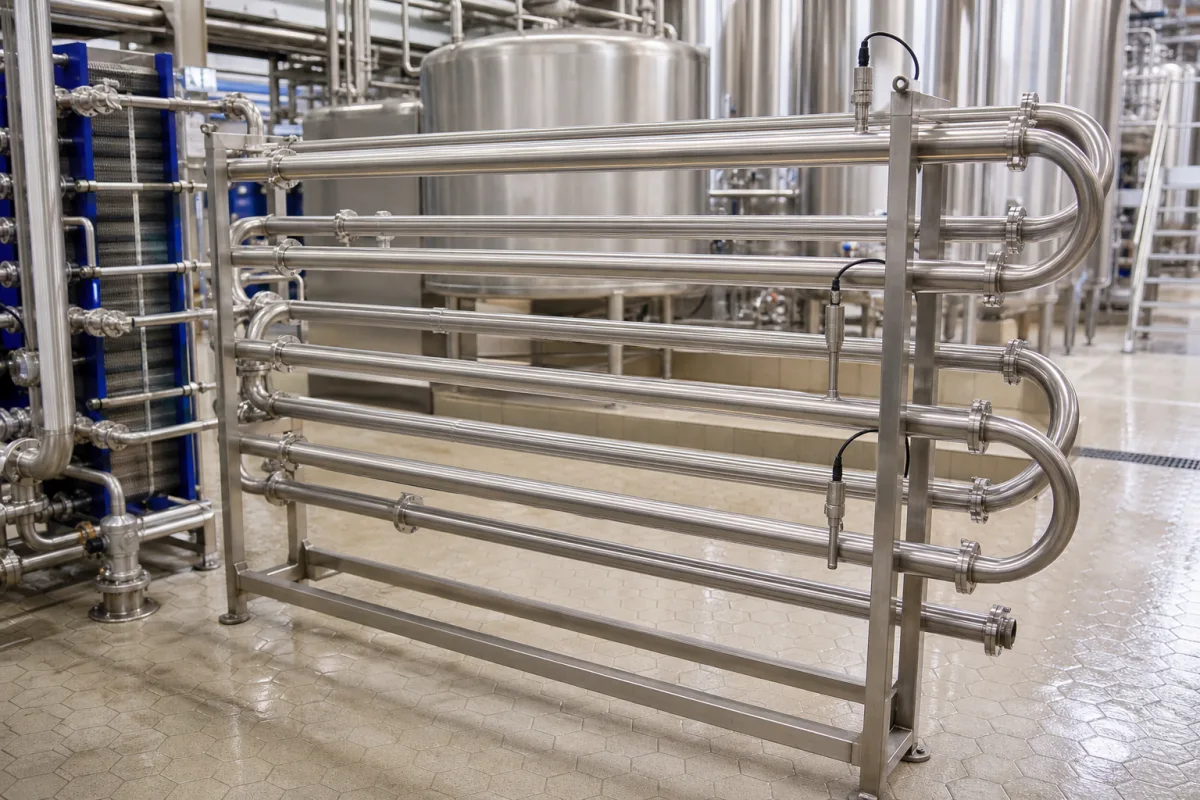
Technical details and manufacturing context for Holding Tube
| pressure: | Up to 10 bar (150 psi) |
| flow rate: | 0.5 to 5 m/s fluid velocity |
| temperature: | -40°C to 150°C |
| slurry concentration: | Up to 30% solids by weight |
Indicative industry ranges for design and RFQ preparation. Confirm the exact figures and applicable standard with the manufacturer before specifying.
Quoted from the published standard.
A practical evidence checklist for RFQ preparation and supplier evaluation.
Compare the published product scope and source details, then include your specifications and quantity in an enquiry.
Manufacturer profiles associated with Holding Tube.
Explore company information and manufacturing capabilities, then discuss the scope of your project with a relevant supplier.
Ask for use case, specification boundaries, supplier type, and RFQ preparation information for this product.
A holding tube provides a specified residence time for a product at a controlled temperature, allowing thermal treatment or reactions to complete, such as in pasteurization.
Residence time is calculated by dividing the internal volume of the holding tube by the volumetric flow rate of the product. The actual time must be verified for each installation.
Regular inspection for fouling, corrosion, or blockages is necessary. Cleaning-in-place (CIP) is typically used to remove deposits that could affect performance.
Standards may include those for food processing equipment, such as 3-A Sanitary Standards or EHEDG guidelines. Always confirm applicable standards with the manufacturer.
This component is essential for the following industrial systems and equipment:
Editorial classification, named public sources where available, and source-reviewed manufacturer records.
Compare manufacturer profiles with relevant product and process capability.