Industry-Verified Manufacturing Data (2026)

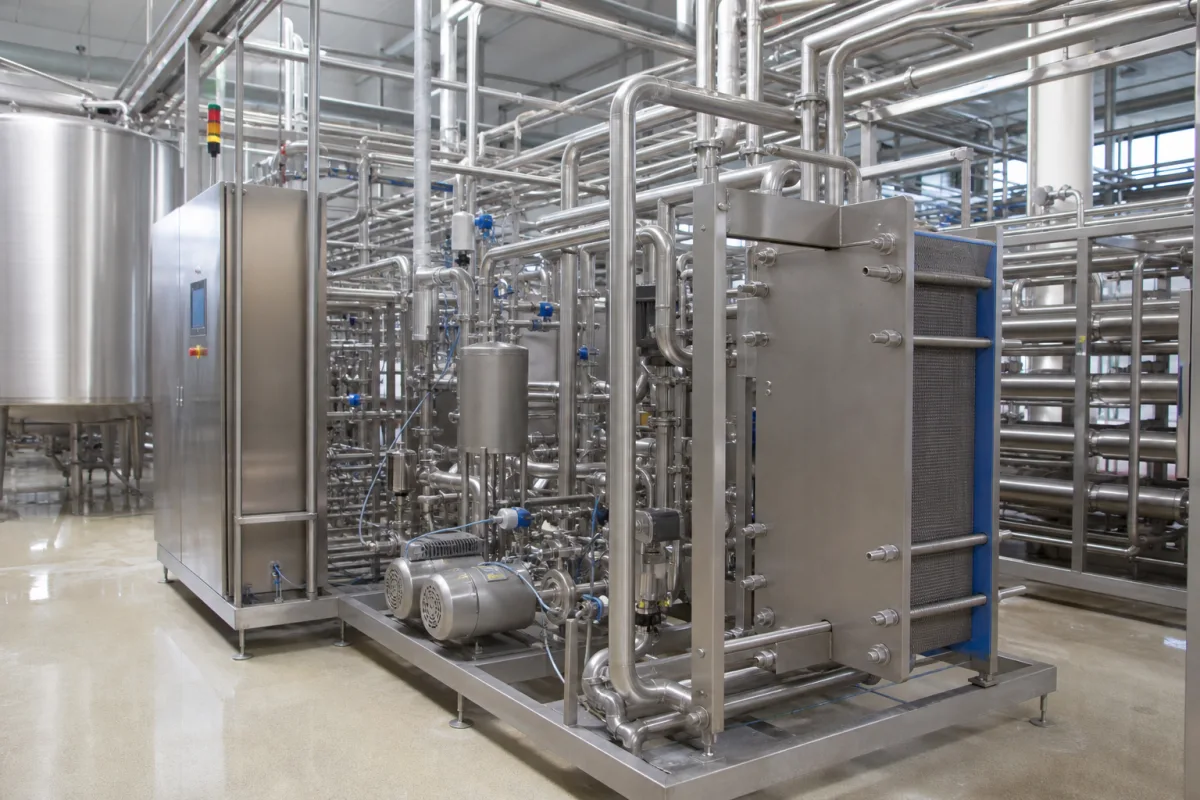
UHT Sterilization Unit

Based on aggregated insights from multiple verified factory profiles within the CNFX directory, the standard UHT Sterilization Unit used in the Beverage Manufacturing sector typically supports operational capacities ranging from standard industrial configurations to heavy-duty production requirements.

Technical Definition & Core Assembly

A canonical UHT Sterilization Unit is characterized by the integration of Heating Zone and Holding Tube. In industrial production environments, manufacturers listed on CNFX commonly emphasize 316L Stainless Steel construction to support stable, high-cycle operation across diverse manufacturing scenarios.

A specialized thermal processing component that rapidly heats liquid beverages to ultra-high temperatures (typically 135-150°C) for a very short time (2-8 seconds) to achieve commercial sterility while minimizing thermal damage to product quality.
Product Specifications

Technical details and manufacturing context for UHT Sterilization Unit

Definition
Within the Aseptic Cold-Fill Beverage Production System, the UHT Sterilization Unit is the critical thermal processing module responsible for destroying all viable microorganisms (including bacterial spores) in liquid beverages. It operates by rapidly heating the product to ultra-high temperatures (UHT range) using plate heat exchangers or direct steam injection, holding it for a precisely controlled short duration, then immediately cooling it to ambient or filling temperature. This process achieves commercial sterility (F0≥3) while preserving the beverage's nutritional value, flavor, and color better than traditional retort sterilization, enabling subsequent aseptic cold-filling into sterile containers.
Working Principle
The unit employs continuous flow thermal processing through heat exchangers. Product is pumped through a series of plates or tubes where it is rapidly heated by steam or hot water to 135-150°C, held in a retention tube for 2-8 seconds to ensure microbial lethality, then immediately cooled in a regeneration section (recovering heat from incoming product) and final cooling section. Temperature and flow rates are precisely controlled to achieve target F0 values while minimizing thermal degradation.
Common Materials
316L Stainless Steel
Technical Parameters
  • Maximum flow capacity of the sterilization unit (L/h) Standard Spec
Components / BOM
  • Heating Zone
    Rapidly elevates product temperature to sterilization level using steam or hot water heat exchange
    Material: 316L Stainless Steel
  • Holding Tube
    Maintains product at sterilization temperature for precise time to ensure microbial destruction
    Material: 316L Stainless Steel
  • Regeneration Section
    Recovers heat from sterilized product to preheat incoming product, improving energy efficiency
    Material: 316L Stainless Steel
  • Cooling Section
    Rapidly cools sterilized product to filling temperature using chilled water or glycol
    Material: 316L Stainless Steel
  • Temperature Sensors
    Monitor and control temperature at critical points throughout the sterilization process
    Material: Stainless Steel with PTFE coating
Engineering Reasoning
135-150°C at 2-8 seconds holding time, 3.5-6.0 MPa system pressure
Material yield strength threshold: 316L stainless steel at 150°C yields at 205 MPa, thermal shock limit: ΔT > 50°C/sec causes microcracking
Design Rationale: Thermal fatigue from cyclic heating/cooling induces stress concentration at weld joints exceeding material endurance limit (140 MPa for 10^7 cycles at 150°C)
Risk Mitigation (FMEA)
Trigger Plate heat exchanger fouling exceeding 0.5 mm calcium carbonate deposit
Mode: Localized overheating to 180°C causing protein denaturation burn-on
Strategy: Integrated CIP system with 2.0% nitric acid circulation at 80°C for 20 minutes
Trigger Steam pressure regulator hysteresis exceeding 0.15 MPa
Mode: Temperature overshoot to 155°C initiating Maillard reaction caramelization
Strategy: Triple-redundant PID control with 0.05 MPa resolution pressure transducers

Industry Taxonomies & Aliases

Commonly used trade names and technical identifiers for UHT Sterilization Unit.

Industrial Ecosystem & Supply Chain DNA

Complementary Systems
Downstream Applications
Specialized Tooling

Application Fit & Sizing Matrix

Operational Limits
pressure: Up to 10 bar (typical), 12 bar (max design)
flow rate: 1,000-50,000 L/hr (standard range)
temperature: 135-150°C (operating), up to 160°C (design)
slurry concentration: Up to 40% solids by weight (max for standard units)
Media Compatibility
✓ Dairy products (milk, cream) ✓ Juices and fruit-based beverages ✓ Plant-based milk alternatives
Unsuitable: High-viscosity products with particulates >3mm (e.g., soups with chunks, pulpy fruit purees)
Sizing Data Required
  • Required production capacity (L/hr)
  • Product viscosity and solids content
  • Required sterilization value (F0) and heat sensitivity

Reliability & Engineering Risk Analysis

Failure Mode & Root Cause
Thermal fatigue cracking
Cause: Cyclic thermal stresses from rapid heating and cooling cycles, exacerbated by temperature gradients and material expansion/contraction mismatches in heat exchangers and piping.
Seal and gasket degradation
Cause: High-temperature steam exposure, chemical cleaning agents, and mechanical wear leading to loss of sterility integrity and potential contamination.
Maintenance Indicators
  • Unusual steam leaks or hissing sounds from valves and seals during operation
  • Abnormal temperature or pressure fluctuations on control panels beyond set tolerances
Engineering Tips
  • Implement predictive maintenance using infrared thermography to detect early thermal stress points and schedule proactive repairs
  • Establish a rigorous chemical cleaning validation protocol to prevent corrosive damage while maintaining sterilization efficacy

Compliance & Manufacturing Standards

Reference Standards
ISO 14159:2002 (Safety of machinery - Hygiene requirements for the design of machinery) ANSI/NSF 51:2021 (Food Equipment Materials) CE Marking (EU Machinery Directive 2006/42/EC)
Manufacturing Precision
  • Temperature Uniformity: +/- 0.5°C across heating zones
  • Pressure Vessel Wall Thickness: +0.0mm / -0.1mm
Quality Inspection
  • Pressure Holding Test (Hydrostatic/Pneumatic)
  • Microbiological Validation Test (Bacillus stearothermophilus spore challenge)

Factories Producing UHT Sterilization Unit

Verified manufacturers with capability to produce this product in China

✓ 94% Supplier Capability Match Found

P Procurement Specialist from United Arab Emirates Jan 11, 2026
★★★★★
"Impressive build quality. Especially the technical reliability is very stable during long-term operation."
Technical Specifications Verified
T Technical Director from Australia Jan 08, 2026
★★★★★
"As a professional in the Beverage Manufacturing sector, I confirm this UHT Sterilization Unit meets all ISO standards."
Technical Specifications Verified
P Project Engineer from Singapore Jan 05, 2026
★★★★★
"Standard OEM quality for Beverage Manufacturing applications. The UHT Sterilization Unit arrived with full certification."
Technical Specifications Verified
Verification Protocol

“Feedback is collected from verified sourcing managers during RFQ (Request for Quote) and factory evaluation processes on CNFX. These reports represent historical performance data and technical audit summaries from our B2B manufacturing network.”

12 sourcing managers are analyzing this specification now. Last inquiry for UHT Sterilization Unit from Thailand (1h ago).

Supply Chain Compatible Machinery & Devices

Automated Beverage Batch Blending System

Automated system for precise multi-ingredient beverage batch preparation.

Explore Specs →
Automated Beverage Container Sterilization System

Automated system for sterilizing beverage containers before filling.

Explore Specs →
Automated Beverage Labeling and Coding System

Integrated system for applying labels and printing codes on beverage containers.

Explore Specs →
Automated Beverage Ingredient Dispensing System

Automated system for precise dispensing of beverage ingredients into production lines.

Explore Specs →

Frequently Asked Questions

How does the UHT sterilization unit preserve beverage quality while achieving sterility?

The unit uses ultra-high temperature processing (135-150°C) for only 2-8 seconds, which destroys harmful microorganisms while minimizing thermal damage to flavor, color, and nutritional content of beverages.

Why is 316L stainless steel used in the construction of this UHT unit?

316L stainless steel provides superior corrosion resistance against acidic and alkaline beverages, excellent cleanability for food safety compliance, and durability for continuous high-temperature operation in beverage manufacturing environments.

What is the purpose of the regeneration section in the UHT sterilization unit?

The regeneration section recovers heat from sterilized product to preheat incoming product, significantly reducing energy consumption by up to 90% while maintaining precise temperature control throughout the thermal processing cycle.

Can I contact factories directly on CNFX?

CNFX is an open directory, not a transaction platform. Each factory profile provides direct contact information and production details to help you initiate direct inquiries with Chinese suppliers.

Get Quote for UHT Sterilization Unit

Request technical pricing, lead times, or customized specifications for UHT Sterilization Unit directly from verified manufacturing units.

Your business information is encrypted and only shared with verified UHT Sterilization Unit suppliers.

Thank you! Your message has been sent. We'll respond within 1–3 business days.

Need to Manufacture UHT Sterilization Unit?

Connect with verified factories specializing in this product category

Add Your Factory Contact Us
Previous Product
Tunnel Sterilizer
Next Product
Vacuum Gripper End-Effector