Industry-Verified Manufacturing Data (2026)

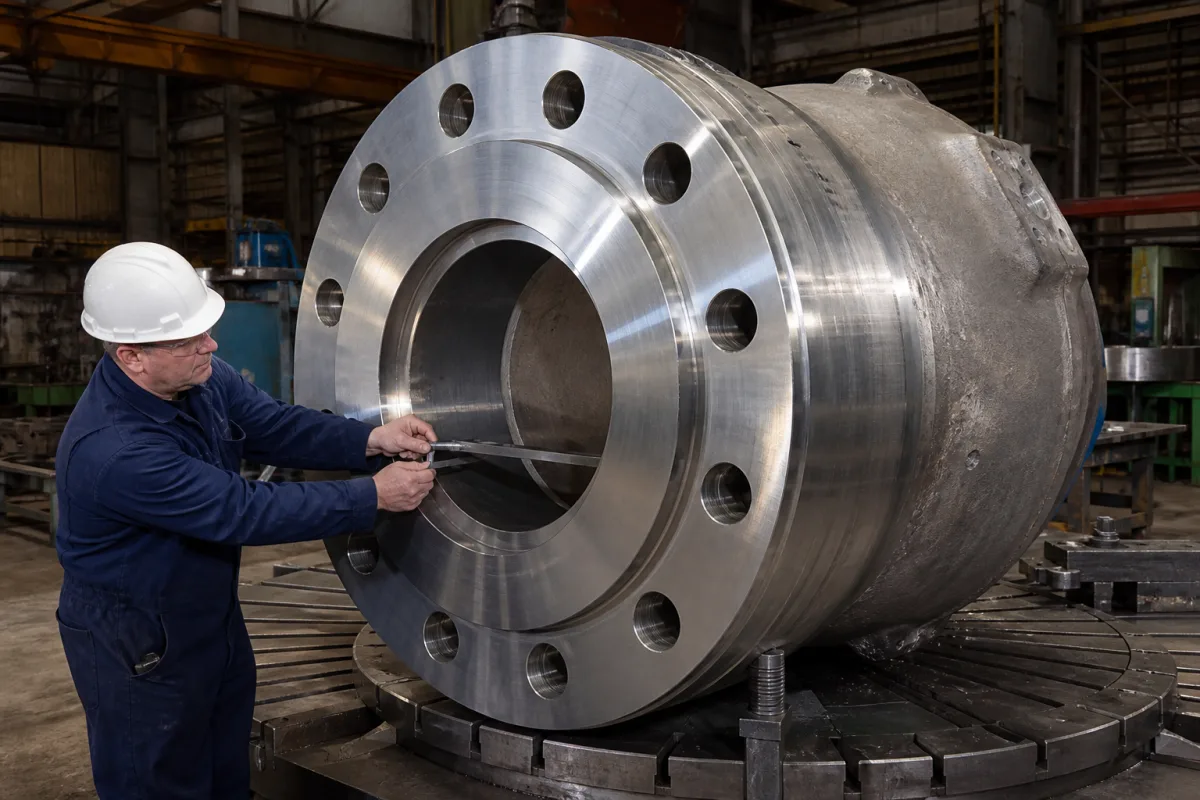
Main Flange Body

Based on aggregated insights from multiple verified factory profiles within the CNFX directory, the standard Main Flange Body used in the Chemical Manufacturing sector typically supports operational capacities ranging from standard industrial configurations to heavy-duty production requirements.

Technical Definition & Core Assembly

A canonical Main Flange Body is characterized by the integration of Mounting Face and Bolt Holes. In industrial production environments, manufacturers listed on CNFX commonly emphasize Stainless Steel 316L construction to support stable, high-cycle operation across diverse manufacturing scenarios.

The primary structural flange component of a chemical reactor sealing gland assembly.
Product Specifications

Technical details and manufacturing context for Main Flange Body

Definition
The Main Flange Body serves as the central structural element within a Chemical Reactor Sealing Gland, providing the mounting interface and load-bearing framework that connects the sealing mechanism to the reactor vessel. It ensures proper alignment, distributes mechanical stresses, and maintains the integrity of the sealing system under operational conditions.
Working Principle
The Main Flange Body functions by providing a rigid, precisely machined interface between the reactor vessel and the sealing gland components. It transfers clamping forces evenly across the sealing surfaces, maintains geometric alignment of the gland assembly, and withstands internal pressure and thermal expansion forces during reactor operation.
Common Materials
Stainless Steel 316L
Technical Parameters
  • Nominal diameter and bolt circle dimensions matching reactor flange specifications (mm) Per Request
Components / BOM
  • Mounting Face Part
    Provides flat sealing surface for gasket installation against reactor vessel
  • Bolt Holes Part
    Accepts mounting bolts to secure the gland assembly to the reactor
  • Gland Interface Surface Part
    Machined surface for attaching sealing gland components and mechanisms

Industry Taxonomies & Aliases

Commonly used trade names and technical identifiers for Main Flange Body.

Industrial Ecosystem & Supply Chain DNA

Complementary Systems
Downstream Applications
Specialized Tooling

Application Fit & Sizing Matrix

Operational Limits
pressure: Up to 150 bar (2175 psi)
other spec: Slurry concentration up to 40% solids by weight, flow rate dependent on flange size and system design
temperature: -40°C to 400°C
Media Compatibility
✓ Acidic chemical media (pH 2-6) ✓ High-purity pharmaceutical solutions ✓ Corrosive slurry mixtures
Unsuitable: Hydrofluoric acid environments
Sizing Data Required
  • Reactor operating pressure (bar/psi)
  • Flange nominal diameter (mm/inches)
  • Required sealing surface finish (Ra value in μm)

Reliability & Engineering Risk Analysis

Failure Mode & Root Cause
Gasket failure
Cause: Improper bolt torque leading to uneven compression, material degradation from chemical exposure, or thermal cycling causing creep relaxation
Flange face corrosion/pitting
Cause: Electrochemical corrosion due to dissimilar metals, chemical attack from process fluids, or erosion from high-velocity particulate flow
Maintenance Indicators
  • Visible fluid leakage around flange gasket interface
  • Audible hissing or whistling indicating pressure loss through compromised seal
Engineering Tips
  • Implement controlled bolt tightening sequence with calibrated torque wrenches to ensure even gasket compression and proper flange alignment
  • Apply appropriate protective coatings on flange faces and use corrosion-resistant gasket materials compatible with process media and operating temperatures

Compliance & Manufacturing Standards

Reference Standards
ISO 7005-1:2011 (Flanges for pipes, valves, fittings) ASME B16.5:2020 (Pipe Flanges and Flanged Fittings) DIN EN 1092-1:2018 (Flanges and their joints)
Manufacturing Precision
  • Bore Diameter: +/- 0.05 mm
  • Flange Face Flatness: 0.1 mm per 300 mm diameter
Quality Inspection
  • Dye Penetrant Test (for surface defects)
  • Dimensional Verification (using CMM or precision gauges)

Factories Producing Main Flange Body

Verified manufacturers with capability to produce this product in China

✓ 94% Supplier Capability Match Found

S Sourcing Manager from United Arab Emirates Apr 09, 2026
★★★★★
"Found 48+ suppliers for Main Flange Body on CNFX, but this spec remains the most cost-effective."
Technical Specifications Verified
P Procurement Specialist from Australia Apr 06, 2026
★★★★☆
"The technical documentation for this Main Flange Body is very thorough, especially regarding technical reliability. (Delivery took slightly longer than expected, but technical support was excellent.)"
Technical Specifications Verified
T Technical Director from Singapore Apr 03, 2026
★★★★★
"Reliable performance in harsh Chemical Manufacturing environments. No issues with the Main Flange Body so far."
Technical Specifications Verified
Verification Protocol

“Feedback is collected from verified sourcing managers during RFQ (Request for Quote) and factory evaluation processes on CNFX. These reports represent historical performance data and technical audit summaries from our B2B manufacturing network.”

15 sourcing managers are analyzing this specification now. Last inquiry for Main Flange Body from Brazil (20m ago).

Supply Chain Compatible Machinery & Devices

Automated Batch Crystallization System

Automated system for controlled crystallization of chemical compounds in batch processes.

Explore Specs →
Automated pH Monitoring and Dosing System

Automated system for continuous pH monitoring and chemical dosing in process streams.

Explore Specs →
Automated Powder Dispensing and Blending System

Automated system for precise dispensing and homogeneous blending of powdered chemicals.

Explore Specs →
Automated Solvent Recovery and Purification System

Automated system for recovering and purifying industrial solvents.

Explore Specs →

Frequently Asked Questions

What is the primary function of the main flange body in chemical manufacturing?

The main flange body serves as the primary structural component in chemical reactor sealing gland assemblies, providing secure mounting, pressure containment, and interface connections for safe chemical processing operations.

Why is Stainless Steel 316L the preferred material for this flange body?

Stainless Steel 316L offers superior corrosion resistance against harsh chemicals, excellent high-temperature stability, and enhanced durability in corrosive environments typical of chemical manufacturing processes.

What are the critical specifications to consider when selecting this flange body?

Key specifications include pressure rating, temperature range, dimensional accuracy of bolt holes, surface finish of gland interface, flatness of mounting face, and compliance with industry standards like ASME B16.5 for chemical applications.

Can I contact factories directly on CNFX?

CNFX is an open directory, not a transaction platform. Each factory profile provides direct contact information and production details to help you initiate direct inquiries with Chinese suppliers.

Get Quote for Main Flange Body

Request technical pricing, lead times, or customized specifications for Main Flange Body directly from verified manufacturing units.

Your business information is encrypted and only shared with verified Main Flange Body suppliers.

Thank you! Your message has been sent. We'll respond within 1–3 business days.

Need to Manufacture Main Flange Body?

Connect with verified factories specializing in this product category

Add Your Factory Contact Us
Previous Product
Main Distribution Header
Next Product
Main Mixing Vessel