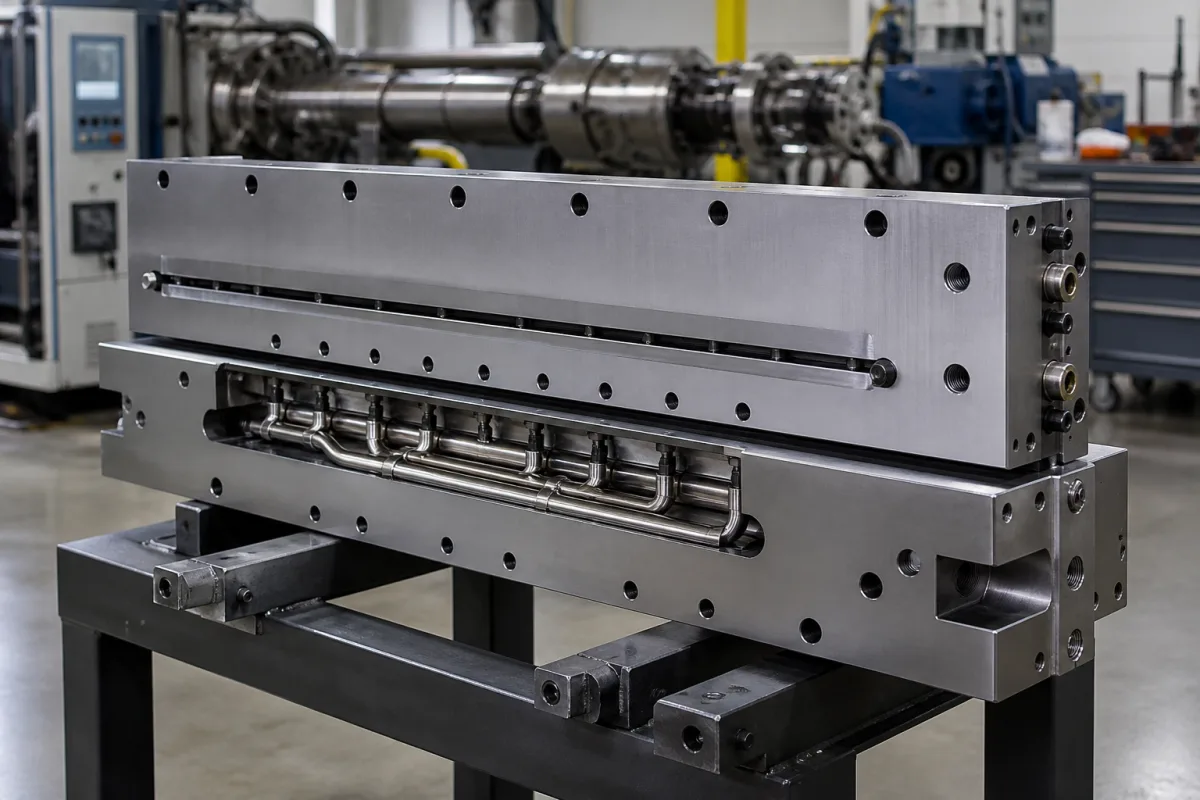
A polymer extrusion die plate is a precision-machined component used in plastics primary forms manufacturing to shape molten polymer into continuous profiles. It is a critical part of extrusion systems, determining the final cross-sectional geometry of products such as sheets, pipes, and custom shapes. The plate contains carefully designed orifices through which molten plastic is forced under pressure, and the emerging profile is cooled to maintain its form. In B2B supply chains, these die plates enable manufacturers to produce consistent, dimensionally accurate profiles for construction, automotive, and packaging industries. The design of the die plate directly impacts product quality, material efficiency, and production throughput. Key parameters include orifice diameter (1–10 mm), plate thickness (20–80 mm), operating temperature (150–300 °C), pressure rating (10–40 MPa), surface hardness (58–62 HRC), surface finish (0.4–0.8 μm Ra), flow channel length (30–120 mm), material grade (H13 per ASTM A681), weight (15–60 kg), tolerance (±0.05 mm per ISO 2768-m), heating power (2–8 kW), and maximum operating pressure (40 MPa). Materials on file include tool steel, stainless steel, and hardened aluminum. These values are reference ranges and must be verified with the legal manufacturer or supplier for specific models and applications. The die plate is a component, not a complete machine, and its performance depends on integration with the extruder and downstream cooling equipment. Buyers should confirm material compatibility with the polymer being processed, as well as the required dimensional tolerances and surface finish for their application. Regular inspection for wear, corrosion, and buildup is necessary to maintain product quality and prevent defects such as die lines or inconsistent dimensions.
Molten plastic is forced through precisely machined openings in the die plate under pressure, taking the shape of the orifice as it exits, then cooled to maintain the formed profile. The die plate is heated to the operating temperature to keep the polymer flowable, and the pressure is maintained within the rated range to ensure uniform flow. The geometry of the orifices, including their diameter, length, and surface finish, influences melt distribution and pressure drop. After exiting the die, the profile is cooled, often by air or water, to solidify the shape. The die plate must be precisely aligned and securely mounted to prevent leakage or distortion. The process requires careful control of temperature, pressure, and throughput to achieve consistent product dimensions and surface quality.