Coefficient Multiplier
View system integration details
This page explains how Multiplication Circuit is classified within Computer, Electronic and Optical Product Manufacturing. Technical values and manufacturer relationships are research references; confirm the current specification and supplier evidence for each order.
A Multiplication Circuit is a specialized electronic component used within a Coefficient Multiplier to multiply input signals by predetermined coefficients.
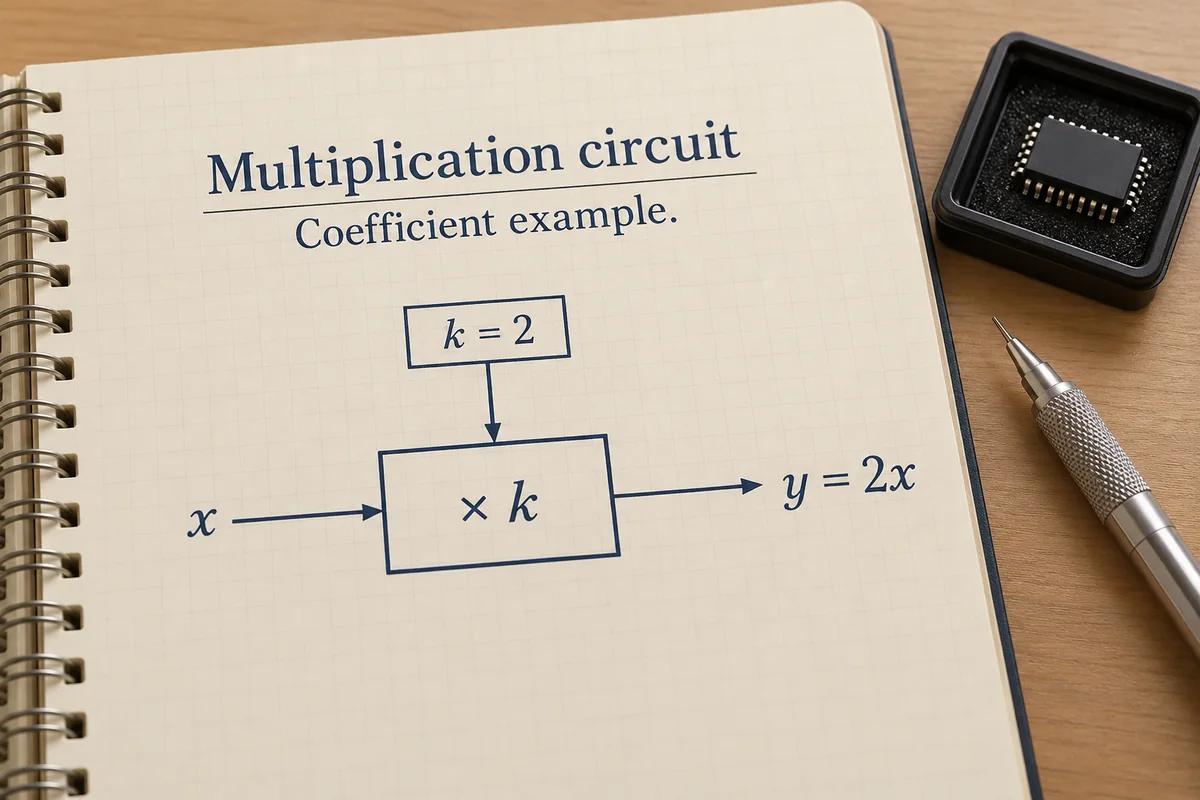
Technical details and manufacturing context for Multiplication Circuit
| Parameter | Typical range | Notes & selection driver |
|---|---|---|
| Supply Voltage | 3.3–5 V DC | Operating range for standard logic families |
| Power Consumption | 10–50 mW | Depends on frequency and technology |
| Input Voltage Range | 0–Vcc V | Must not exceed supply rails |
| Output Voltage Swing | 0.1–Vcc-0.1 V | Rail-to-rail output for CMOS |
| Bandwidth | 10–100 MHz | Small-signal -3 dB bandwidth |
| Multiplication Accuracy | ±0.5 % | Full-scale error |
| Input Offset Voltage | ±1 mV | Max offset for precision applications |
| Operating Temperature Range | -40–85 °C | Industrial grade |
| Storage Temperature Range | -55–125 °C | Non-operating |
| Relative Humidity | 5–95 % | Non-condensing |
| Input Impedance | 10^12 Ω | Typical for CMOS inputs |
| Output Impedance | 10–50 Ω | Low output impedance for driving loads |
| Package Type | SOIC-8 | Surface mountJEDEC MS-012 |
| Weight | 0.1–0.5 g | Depends on package |
Ranges are indicative industry figures for RFQ preparation, not a supplier commitment. Confirm every value and standard with the legal manufacturer before ordering.
| temperature: | -40°C to +85°C |
| voltage range: | 3.3V to 5V DC |
| signal frequency: | DC to 100 MHz |
| power consumption: | ≤ 500 mW |
Indicative industry ranges for design and RFQ preparation. Confirm the exact figures and applicable standard with the manufacturer before specifying.
Quoted from the published standard.
A practical evidence checklist for RFQ preparation and supplier evaluation.
Compare the published product scope and source details, then include your specifications and quantity in an enquiry.
Manufacturer profiles associated with Multiplication Circuit.
Explore company information and manufacturing capabilities, then discuss the scope of your project with a relevant supplier.
Ask for use case, specification boundaries, supplier type, and RFQ preparation information for this product.
The reference supply voltage range is 3.3–5 V DC, as listed in the directory. However, the actual operating range depends on the specific model and technology. Always consult the manufacturer's datasheet for the exact voltage requirements.
The reference full-scale error is ±0.5%, as listed. This indicates the maximum deviation from the ideal product. For precision applications, verify the accuracy specification with the manufacturer for the specific part.
The reference package type is SOIC-8, conforming to JEDEC MS-012. Other package options may exist depending on the manufacturer. Check the datasheet for available packages and their dimensions.
Review the datasheet for the specific model, focusing on parameters such as supply voltage, input/output voltage ranges, bandwidth, accuracy, and temperature ratings. Ensure these meet your system's requirements. For critical applications, request samples and test them under your operating conditions.
This component is essential for the following industrial systems and equipment:
Editorial classification, named public sources where available, and source-reviewed manufacturer records.
Compare manufacturer profiles with relevant product and process capability.