Industry-Verified Manufacturing Data (2026)

Insulation & Housing

Based on aggregated insights from multiple verified factory profiles within the CNFX directory, the standard Insulation & Housing used in the Electrical Equipment Manufacturing sector typically supports operational capacities ranging from standard industrial configurations to heavy-duty production requirements.

Technical Definition & Core Assembly

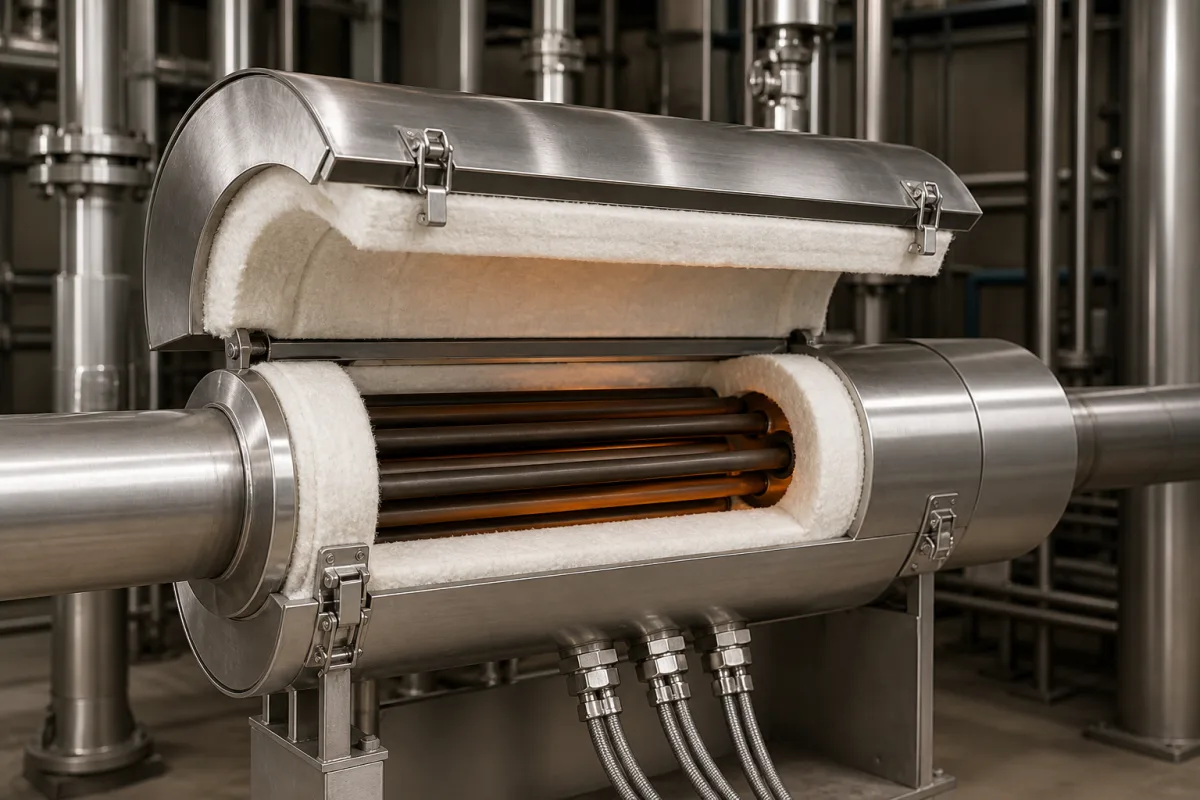
A canonical Insulation & Housing is characterized by the integration of Outer Casing and Insulation Layer. In industrial production environments, manufacturers listed on CNFX commonly emphasize Fiberglass construction to support stable, high-cycle operation across diverse manufacturing scenarios.

The protective enclosure and thermal insulation component of an electric heating system that contains heating elements and prevents heat loss.

Product Specifications

Technical details and manufacturing context for Insulation & Housing

Definition
Insulation & Housing is a critical component of electric heating systems that serves dual functions: providing structural housing for heating elements and thermal insulation to maximize energy efficiency. The housing protects internal components from environmental factors and user contact, while the insulation layer minimizes heat transfer to the surroundings, directing thermal energy toward the intended heating application.
Working Principle
The housing provides mechanical protection and containment for heating elements, while insulation materials with low thermal conductivity create a barrier that reduces heat loss through conduction, convection, and radiation, ensuring efficient heat transfer to the target area.
Common Materials
Fiberglass, Ceramic fiber, Mineral wool, Stainless steel, Galvanized steel
Technical Parameters
  • Thickness of insulation layer and housing dimensions (mm) Customizable
Components / BOM
  • Outer Casing
    Provides structural integrity and external protection
    Material: Stainless steel or galvanized steel
  • Insulation Layer
    Reduces heat loss through thermal resistance
    Material: Fiberglass or ceramic fiber
  • Mounting Brackets
    Secures the housing to the heating system frame
    Material: Steel
  • Access Panel
    Allows maintenance access to internal components
    Material: Steel with insulation backing
Engineering Reasoning
0-300°C continuous, 0-500°C intermittent (15 minutes)
Thermal degradation at 320°C continuous or 550°C intermittent, mechanical failure at 1.2 MPa internal pressure differential
Design Rationale: Polymer chain scission in insulation materials above glass transition temperature (Tg=280°C for polyimide), yielding of aluminum housing at 110 MPa stress (0.2% offset)
Risk Mitigation (FMEA)
Trigger Moisture ingress exceeding 1000 ppm concentration
Mode: Dielectric breakdown at 3.5 kV/mm insulation
Strategy: Hermetic sealing with IP68 rating and desiccant chambers
Trigger Thermal cycling exceeding 10,000 cycles between 20-300°C
Mode: Fatigue cracking at housing weld seams
Strategy: Finite element analysis-optimized reinforcement ribs and Inconel 718 weld material

Industry Taxonomies & Aliases

Commonly used trade names and technical identifiers for Insulation & Housing.

Applied To / Applications

This component is essential for the following industrial systems and equipment:

Industrial Ecosystem & Supply Chain DNA

Complementary Systems
Downstream Applications
Specialized Tooling

Application Fit & Sizing Matrix

Operational Limits
pressure: 0 to 10 bar (gauge), vacuum compatible
other spec: Thermal conductivity: 0.03-0.05 W/m·K, IP rating: IP65 minimum
temperature: -40°C to 200°C (continuous), up to 250°C (intermittent)
Media Compatibility
✓ Water/glycol mixtures ✓ Mineral oils ✓ Process air
Unsuitable: Concentrated acids or strong oxidizing agents
Sizing Data Required
  • Maximum heating element temperature
  • Required thermal insulation thickness
  • Enclosure dimensions and mounting constraints

Reliability & Engineering Risk Analysis

Failure Mode & Root Cause
Thermal degradation
Cause: Excessive heat exposure beyond rated temperature limits, leading to insulation breakdown, embrittlement, or charring.
Moisture ingress and tracking
Cause: Water or condensation penetration causing electrical leakage, corrosion, or short circuits, often due to seal failure or environmental exposure.
Maintenance Indicators
  • Visible cracking, discoloration, or charring on insulation surfaces
  • Audible arcing, buzzing, or unusual electrical noise from the housing
Engineering Tips
  • Implement regular infrared thermography inspections to detect hotspots and prevent thermal overload before failure occurs.
  • Apply conformal coatings or use sealed enclosures in humid environments, and ensure proper drainage to prevent moisture accumulation.

Compliance & Manufacturing Standards

Reference Standards
ISO 9001:2015 - Quality Management Systems ASTM D149 - Dielectric Breakdown Voltage and Dielectric Strength of Solid Electrical Insulating Materials CE Marking - Conformity with EU Directives for Electrical Equipment
Manufacturing Precision
  • Wall Thickness: +/-0.5mm
  • Surface Roughness: Ra ≤ 3.2 μm
Quality Inspection
  • High Voltage Dielectric Strength Test
  • Thermal Cycling Test

Factories Producing Insulation & Housing

Verified manufacturers with capability to produce this product in China

✓ 97% Supplier Capability Match Found

T Technical Director from Canada Feb 11, 2026
★★★★★
"As a professional in the Electrical Equipment Manufacturing sector, I confirm this Insulation & Housing meets all ISO standards."
Technical Specifications Verified
P Project Engineer from United States Feb 08, 2026
★★★★☆
"Standard OEM quality for Electrical Equipment Manufacturing applications. The Insulation & Housing arrived with full certification. (Delivery took slightly longer than expected, but technical support was excellent.)"
Technical Specifications Verified
S Sourcing Manager from United Arab Emirates Feb 05, 2026
★★★★★
"Great transparency on the Insulation & Housing components. Essential for our Electrical Equipment Manufacturing supply chain."
Technical Specifications Verified
Verification Protocol

“Feedback is collected from verified sourcing managers during RFQ (Request for Quote) and factory evaluation processes on CNFX. These reports represent historical performance data and technical audit summaries from our B2B manufacturing network.”

14 sourcing managers are analyzing this specification now. Last inquiry for Insulation & Housing from Mexico (1h ago).

Supply Chain Compatible Machinery & Devices

Transformer Winding Machine

Industrial machine for winding copper wire onto transformer cores

Explore Specs →
Circuit Breaker Trip Unit

Protective control module for electrical circuit breakers

Explore Specs →
Circuit Breaker Arc Chute

Electrical component that extinguishes arcs in circuit breakers

Explore Specs →
Medium Voltage Switchgear Assembly Line

Automated production system for assembling medium voltage electrical switchgear.

Explore Specs →

Frequently Asked Questions

What materials are used in insulation housing for electric heating systems?

Our insulation housings utilize high-temperature materials including fiberglass, ceramic fiber, or mineral wool for thermal insulation, combined with durable stainless steel or galvanized steel outer casings for protection and longevity.

What are the main components in an insulation housing bill of materials?

A complete BOM includes the outer casing, insulation layer, mounting brackets for secure installation, and an access panel for maintenance of internal heating elements.

How does insulation housing improve electric heating system efficiency?

The insulation layer minimizes heat loss by containing thermal energy within the system, while the protective enclosure safeguards heating elements from environmental damage, together enhancing energy efficiency and system durability.

Can I contact factories directly on CNFX?

CNFX is an open directory, not a transaction platform. Each factory profile provides direct contact information and production details to help you initiate direct inquiries with Chinese suppliers.

Get Quote for Insulation & Housing

Request technical pricing, lead times, or customized specifications for Insulation & Housing directly from verified manufacturing units.

Your business information is encrypted and only shared with verified Insulation & Housing suppliers.

Thank you! Your message has been sent. We'll respond within 1–3 business days.

Need to Manufacture Insulation & Housing?

Connect with verified factories specializing in this product category

Add Your Factory Contact Us
Previous Product
Input Interface Circuitry
Next Product
Insulation System