Industry-Verified Manufacturing Data (2026)

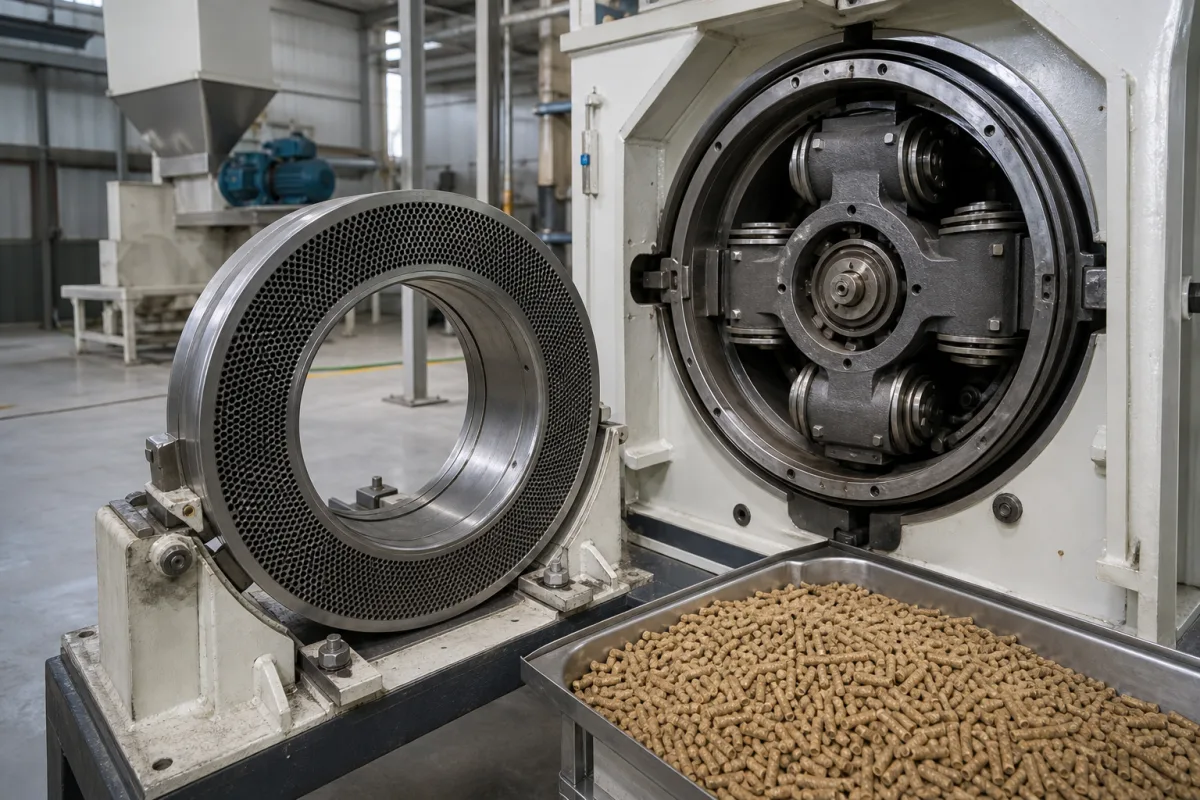
High-Efficiency Feed Pellet Die

Based on aggregated insights from multiple verified factory profiles within the CNFX directory, the standard High-Efficiency Feed Pellet Die used in the Food Manufacturing sector typically supports operational capacities ranging from standard industrial configurations to heavy-duty production requirements.

Technical Definition & Core Assembly

A canonical High-Efficiency Feed Pellet Die is characterized by the integration of Die Body and Mounting Flange. In industrial production environments, manufacturers listed on CNFX commonly emphasize Hardened Chromium Steel construction to support stable, high-cycle operation across diverse manufacturing scenarios.

Perforated steel die for shaping animal feed pellets in extrusion processes.

Product Specifications

Technical details and manufacturing context for High-Efficiency Feed Pellet Die

Definition
A critical wear component in pellet mills that determines pellet size, shape, and production efficiency. This hardened steel die features precisely machined holes through which feed mixture is extruded under pressure to form uniform pellets. It directly impacts pellet quality, production throughput, and operational costs in feed manufacturing plants. As a consumable component, it requires periodic replacement in B2B maintenance cycles.
Working Principle
Feed mixture is forced through die holes by rollers, extruding material into cylindrical pellets that are cut to length by external knives.
Common Materials
Hardened Chromium Steel, Stainless Steel Alloy
Technical Parameters
  • Diameter of extrusion holes determining pellet size (mm) Customizable
  • Working thickness affecting pellet compression and durability (mm) Customizable
Components / BOM
  • Die Body
    Main structural plate with extrusion holes
    Material: Hardened Steel
  • Mounting Flange
    Interface for securing die to pellet mill
    Material: Steel Alloy
  • Wear-Resistant Coating Optional
    Protective layer reducing abrasion
    Material: Chromium Carbide
Engineering Reasoning
15-35 MPa extrusion pressure, 60-90°C die temperature, 0.5-2.5 mm pellet diameter range
Material yield strength exceeded at 450 MPa stress, thermal fatigue cracking at >200°C differential, abrasive wear >0.8 mm depth
Design Rationale: High-cycle fatigue from cyclic pressure loading (15-35 MPa at 50 Hz), abrasive wear from silica content >2% in feed, thermal stress from >150°C extrusion temperature differentials
Risk Mitigation (FMEA)
Trigger Chromium carbide depletion below 12% at die surface
Mode: Accelerated abrasive wear exceeding 0.1 mm/hour removal rate
Strategy: Plasma nitriding surface treatment to achieve 1200 HV hardness, maintain 18-22% chromium carbide content
Trigger Thermal cycling exceeding ΔT=150°C between extrusion cycles
Mode: Thermal fatigue cracking initiating at 0.05 mm surface defects
Strategy: Active die cooling maintaining 60-80°C operating temperature, thermal barrier coating with 0.3 mm zirconia layer

Industry Taxonomies & Aliases

Commonly used trade names and technical identifiers for High-Efficiency Feed Pellet Die.

Industrial Ecosystem & Supply Chain DNA

Complementary Systems
Downstream Applications
Specialized Tooling

Application Fit & Sizing Matrix

Operational Limits
pressure: Up to 300 bar (4350 psi)
flow rate: 5-50 tons/hour depending on die size and configuration
temperature: Ambient to 150°C (302°F)
slurry concentration: 10-25% moisture content (75-90% dry matter)
Media Compatibility
✓ Poultry feed formulations (corn-soy based) ✓ Swine complete feed pellets ✓ Aquafeed (fish/shrimp pellets)
Unsuitable: Highly abrasive mineral supplements (e.g., high silica content additives)
Sizing Data Required
  • Required pellet diameter (mm)
  • Production capacity (tons/hour)
  • Material abrasiveness index (e.g., silica content %)

Reliability & Engineering Risk Analysis

Failure Mode & Root Cause
Die hole wear and enlargement
Cause: Abrasive erosion from hard feed ingredients (e.g., minerals, sand) and high-pressure extrusion causing gradual material removal, leading to oversized pellets and reduced compression efficiency.
Thermal fatigue cracking
Cause: Cyclic thermal stresses from repeated heating during operation and cooling during shutdowns, combined with mechanical loading, leading to crack initiation and propagation, typically around die holes or edges.
Maintenance Indicators
  • Irregular pellet size or shape (e.g., inconsistent diameter, frayed ends), indicating die hole wear or blockage.
  • Unusual grinding or screeching noises during operation, suggesting excessive friction, material buildup, or misalignment.
Engineering Tips
  • Implement regular die rotation or indexing to distribute wear evenly across the die surface, extending overall service life.
  • Optimize feed formulation and pre-conditioning (e.g., moisture control, particle size) to reduce abrasive content and lower extrusion pressure, minimizing mechanical and thermal stress.

Compliance & Manufacturing Standards

Reference Standards
ISO 9001:2015 - Quality Management Systems ANSI/ASME B46.1-2019 - Surface Texture DIN 8580:2003 - Manufacturing Processes
Manufacturing Precision
  • Bore Diameter: +/-0.02mm
  • Surface Flatness: 0.1mm per 100mm
Quality Inspection
  • Dye Penetrant Testing for Surface Defects
  • Spectrographic Analysis for Material Composition

Factories Producing High-Efficiency Feed Pellet Die

Verified manufacturers with capability to produce this product in China

✓ 96% Supplier Capability Match Found

P Procurement Specialist from Australia Jan 04, 2026
★★★★★
"As a professional in the Food Manufacturing sector, I confirm this High-Efficiency Feed Pellet Die meets all ISO standards."
Technical Specifications Verified
T Technical Director from Singapore Jan 01, 2026
★★★★★
"Standard OEM quality for Food Manufacturing applications. The High-Efficiency Feed Pellet Die arrived with full certification."
Technical Specifications Verified
P Project Engineer from Germany Dec 29, 2025
★★★★★
"Great transparency on the High-Efficiency Feed Pellet Die components. Essential for our Food Manufacturing supply chain."
Technical Specifications Verified
Verification Protocol

“Feedback is collected from verified sourcing managers during RFQ (Request for Quote) and factory evaluation processes on CNFX. These reports represent historical performance data and technical audit summaries from our B2B manufacturing network.”

5 sourcing managers are analyzing this specification now. Last inquiry for High-Efficiency Feed Pellet Die from Mexico (1h ago).

Supply Chain Commonly Integrated Components

Position Indicator

A visual or electronic device that displays the current open/closed position of a sanitary flow control valve.

Explore Specs →
Temperature Control Module

A precision electronic component that regulates and maintains optimal temperature conditions within fermentation vessels.

Explore Specs →
Pressure Regulation Unit

A specialized component within fermentation systems that maintains precise pressure levels during microbial growth processes.

Explore Specs →
Sensor Array Network

A network of multiple sensors distributed throughout a fermentation system to monitor and collect real-time data on critical parameters.

Explore Specs →

Frequently Asked Questions

What materials are used in your high-efficiency feed pellet dies?

Our dies are constructed from hardened chromium steel and stainless steel alloys, featuring wear-resistant coatings for extended durability in feed manufacturing operations.

How does hole pattern density affect pellet production?

Hole pattern density (holes/cm²) determines pellet output rate and quality. Higher density increases production capacity while maintaining consistent pellet size and shape in extrusion processes.

What maintenance is required for feed pellet dies?

Regular cleaning to prevent material buildup and periodic inspection of wear-resistant coatings. Proper mounting flange alignment ensures optimal performance and extends die lifespan in animal feed production.

Can I contact factories directly on CNFX?

CNFX is an open directory, not a transaction platform. Each factory profile provides direct contact information and production details to help you initiate direct inquiries with Chinese suppliers.

Get Quote for High-Efficiency Feed Pellet Die

Request technical pricing, lead times, or customized specifications for High-Efficiency Feed Pellet Die directly from verified manufacturing units.

Your business information is encrypted and only shared with verified High-Efficiency Feed Pellet Die suppliers.

Thank you! Your message has been sent. We'll respond within 1–3 business days.

Need to Manufacture High-Efficiency Feed Pellet Die?

Connect with verified factories specializing in this product category

Add Your Factory Contact Us
Previous Product
High-Durability Feed Pellet Die Ring
Next Product
High-Precision Feed Ingredient Metering Module