Editorial Technical Reference

Leather Belt Tensioner Pulley

This page explains how Leather Belt Tensioner Pulley is classified within Manufacture of Other Leather Products. Technical values and manufacturer relationships are research references; confirm the current specification and supplier evidence for each order.

Technical Definition & Core Assembly

Leather pulley component for maintaining proper belt tension in industrial machinery
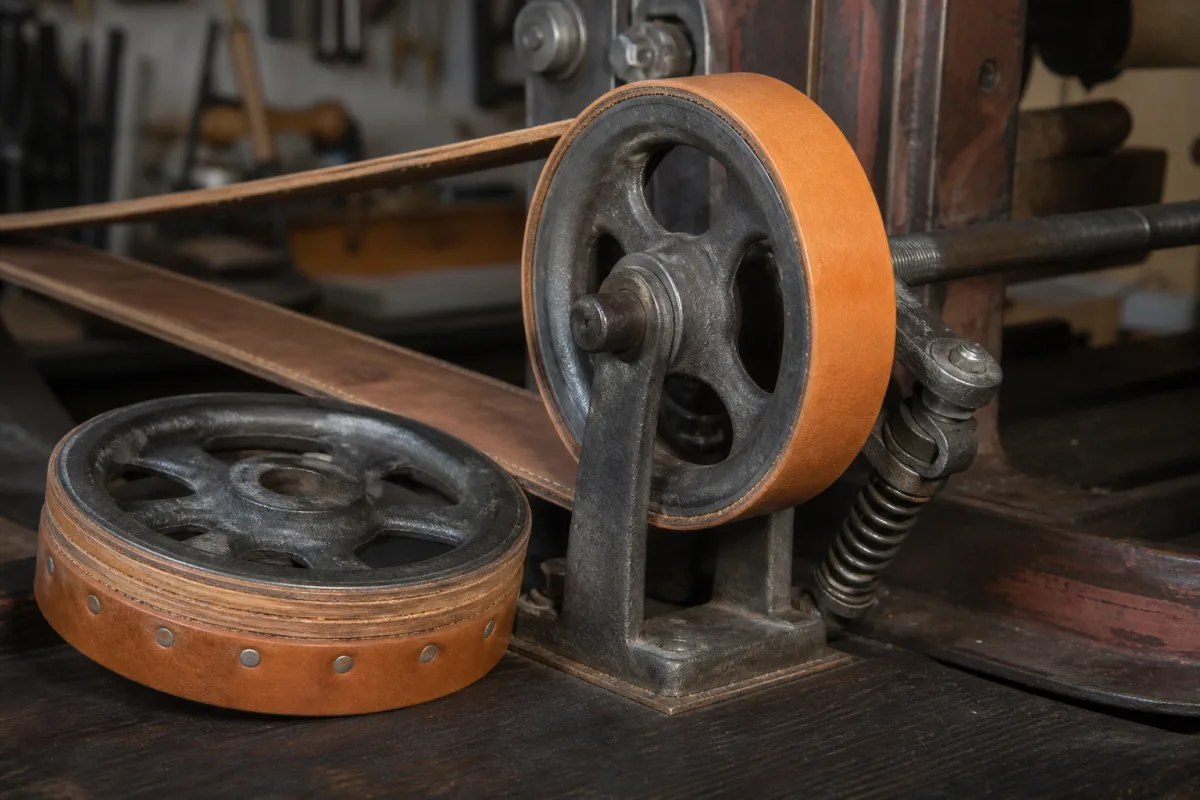
Leather Belt Tensioner Pulley in a manufacturing environment
Representative product image. Confirm appearance and specifications with the manufacturer.

Product Specifications

Technical details and manufacturing context for Leather Belt Tensioner Pulley

Definition
The Leather Belt Tensioner Pulley is a precision-engineered component used in industrial power transmission systems where leather belts are preferred for their flexibility and shock absorption. Its primary function is to maintain optimal belt tension, preventing slippage, reducing vibration, and extending the lifespan of the drive system. The pulley rotates on a bearing assembly, applying controlled tension through friction and mechanical pressure to keep the belt aligned and free of slack. Constructed from vegetable-tanned leather for the contact surface, it offers superior grip and wear resistance in specific applications compared to synthetic alternatives. The bearing housing is made of stainless steel, and the shaft is carbon steel, ensuring durability and corrosion resistance. This component is essential for operational efficiency in machinery that relies on leather belts. The pulley is available in a range of specifications: outer diameter from 60 to 120 mm, bore diameter from 10 to 25 mm, groove width from 8 to 20 mm, and leather thickness from 3 to 8 mm. It can operate at speeds up to 3000–6000 rpm, with a static load capacity of 500–2000 N. The operating temperature range is -20 to 80°C, as leather degrades above 80°C. Material properties include tensile strength of 20–40 MPa (ISO 3376), hardness of 80–95 Shore A (ISO 868), and surface roughness of Ra 1.6–3.2 μm (ISO 4287). The weight ranges from 0.3 to 1.5 kg. These values are directory reference ranges and must be confirmed for the specific model and application with the legal manufacturer or supplier. Always verify model-specific values and standards before procurement.
Working Principle
The pulley is mounted on a shaft and rotates on a bearing assembly. As the belt runs over the pulley, the leather surface creates friction, and the pulley's position applies mechanical pressure to tension the belt. This controlled tension prevents slack and misalignment, ensuring efficient power transmission. The bearing allows smooth rotation, while the leather's grip maintains belt contact. The tensioner adjusts to variations in belt length and load, reducing vibration and wear. Proper installation and alignment are critical for optimal performance.
Common Materials
Vegetable-tanned leather, Stainless steel bearing housing, Carbon steel shaft
Technical Parameters
ParameterTypical rangeNotes & selection driver
Outer DiameterRequired60–120 mmOverall pulley diameter including leather surface
Bore DiameterRequired10–25 mmInner shaft hole diameter for mounting
Groove WidthRequired8–20 mmWidth of belt contact surface
Maximum RPMRequired3000–6000 rpmMaximum safe rotational speed
Leather ThicknessRequired3–8 mmThickness of leather contact surface
Static Load Capacity500–2000 NMaximum static load before deformation
Operating Temperature-20–80 °CLeather degrades above 80°C
Tensile Strength20–40 MPaMinimum for reliable tensioningISO 3376
Hardness80–95 Shore ASofter grips better but wears fasterISO 868
Surface RoughnessRa 1.6–3.2 μmSmoother reduces frictionISO 4287
Weight0.3–1.5 kgAffects inertia and mounting

Ranges are indicative industry figures for RFQ preparation, not a supplier commitment. Confirm every value and standard with the legal manufacturer before ordering.

Components / BOM
  • Leather Contact Ring Part
    Provides friction surface for belt contact and tension maintenance
    Material: Vegetable-tanned leather
  • Bearing Assembly
    Enables smooth rotation and reduces friction on shaft
    Material: Stainless steel with sealed ball bearings
  • Steel Core Part
    Provides structural support and mounting interface
    Material: Carbon steel
  • Retaining Clip Optional Part
    Secures leather ring to steel core
    Material: Spring steel

Industry Taxonomies & Aliases

Commonly used trade names and technical identifiers for Leather Belt Tensioner Pulley.

Industrial Ecosystem & Supply Chain Structure

Complementary Systems
Downstream Applications
Specialized Tooling

Application Fit & Sizing Matrix

Operational Limits
pressure: Not applicable (mechanical component)
other spec: Max belt tension: 500 N, Max rotational speed: 3000 RPM
temperature: -20°C to 80°C
Media Compatibility
✓ Industrial textile machinery ✓ Packaging conveyor systems ✓ Agricultural equipment drives
Unsuitable: High-moisture or chemical exposure environments
Sizing Data Required
  • Belt width (mm)
  • Required tension force (N)
  • Shaft diameter (mm)

Reliability & Engineering Risk Analysis

Failure Mode & Root Cause
Belt slippage and excessive wear
Cause: Incorrect tension leading to friction heat buildup, misalignment, or contamination (oil, grease) on belt/pulley surfaces reducing grip
Pulley bearing failure
Cause: Inadequate lubrication, ingress of abrasive particles (dust, debris), or excessive radial/axial loads from belt tension or misalignment
Maintenance Indicators
  • High-pitched squealing or chirping noise during operation indicating belt slippage
  • Visible belt fraying, cracking, or glazing on contact surfaces, or noticeable pulley wobble/vibration
Engineering Tips
  • Use a tension gauge to maintain belt tension within manufacturer specifications, checking alignment with straightedge/laser tools quarterly
  • Implement sealed bearing designs or protective covers, and establish routine lubrication schedules with compatible greases while keeping pulley surfaces clean and dry

Indicative industry ranges for design and RFQ preparation. Confirm the exact figures and applicable standard with the manufacturer before specifying.

Compliance & Manufacturing Standards

Applicable Standards
ASTM D2000 - Standard Classification System for Rubber Products DIN 2211 - Endless Wedge Belt Drives

Quoted from the published standard.

Manufacturing Precision
  • Bore Diameter: +/-0.025 mm
  • Pulley Runout: 0.1 mm maximum
Quality Inspection
  • Hardness Test (Shore A/D scale)
  • Dynamic Balance Test (ISO 1940 G6.3 grade)

Manufacturers of Leather Belt Tensioner Pulley

Manufacturer profiles associated with Leather Belt Tensioner Pulley.

Sourcing Leather Belt Tensioner Pulley from China?
Tell us your specification and target quantity — we will match it against manufacturer records and come back with the factories that fit.
Request manufacturers We manufacture this

Manufacturer listings support early research and capability understanding. They are not certification, ranking, or transaction guarantees.

Share this page
Technical documentation
Request current drawings, revision history, and a signed specification sheet.
Manufacturing capability
Verify equipment lists, process limits, capacity, and representative production evidence.
Inspection readiness
Confirm test methods, calibrated equipment, sampling plans, and traceable reports.
Supplier transparency
Check the legal entity, factory address, ownership, certifications, and direct contacts.

CNFX does not score or rank suppliers. Buyers must verify all claims and documents with the legal manufacturer before ordering.

Frequently Asked Questions

What materials are used in this pulley?

The contact surface is vegetable-tanned leather, the bearing housing is stainless steel, and the shaft is carbon steel. These materials are specified in the product data.

What is the operating temperature range?

The operating temperature range is -20 to 80°C. Leather degrades above 80°C, so it is important to stay within this range.

What standards are referenced for material properties?

Tensile strength is referenced to ISO 3376, hardness to ISO 868, and surface roughness to ISO 4287. These are verification references, not certifications.

How do I select the right pulley size?

Consider the required outer diameter, bore diameter, groove width, and load capacity based on your application. Confirm these values with the manufacturer or supplier for your specific model.

Data Basis

Editorial classification, named public sources where available, and source-reviewed manufacturer records.

Preliminary Technical Classification
This page supports structured research, RFQ preparation, and supplier evaluation. It does not replace buyer-led supplier qualification, standards review, or technical approval.
Buyer enquiry

Request manufacturing insight for Leather Belt Tensioner Pulley

Ask for use case, specification boundaries, supplier type, and RFQ preparation information for this product.

Where it goes
Straight to the CNFX editorial desk, and to the manufacturer if this product is linked to a claimed profile. Nothing is broadcast to a supplier list.
Your details stay here
We do not sell or rent enquiry data, and we do not add you to a mailing list. Used only to answer this request.
No commission, no middleman
CNFX is a directory. We take no cut of any order and never negotiate on a supplier's behalf.
What we don't claim
A listing is not an endorsement. Qualify every supplier and verify every figure yourself before ordering.

Your business information is used only to process this request.

Thank you! Your message has been sent. We'll respond within 1–3 business days.
Sorry, we couldn't send your message. Please try again, or email us at [email protected].

Need to Manufacture Leather Belt Tensioner Pulley?

Compare manufacturer profiles with relevant product and process capability.

Previous Product
Leather Hydraulic Piston Seal
Last Product
Get QuotesChat