Editorial Technical Reference

Luggage Zipper Slider Mechanism

This page explains how Luggage Zipper Slider Mechanism is classified within Manufacture of Luggage, Handbags, Saddlery, Harness. Technical values and manufacturer relationships are research references; confirm the current specification and supplier evidence for each order.

Technical Definition & Core Assembly

Precision mechanism that engages with zipper teeth to open/close luggage compartments
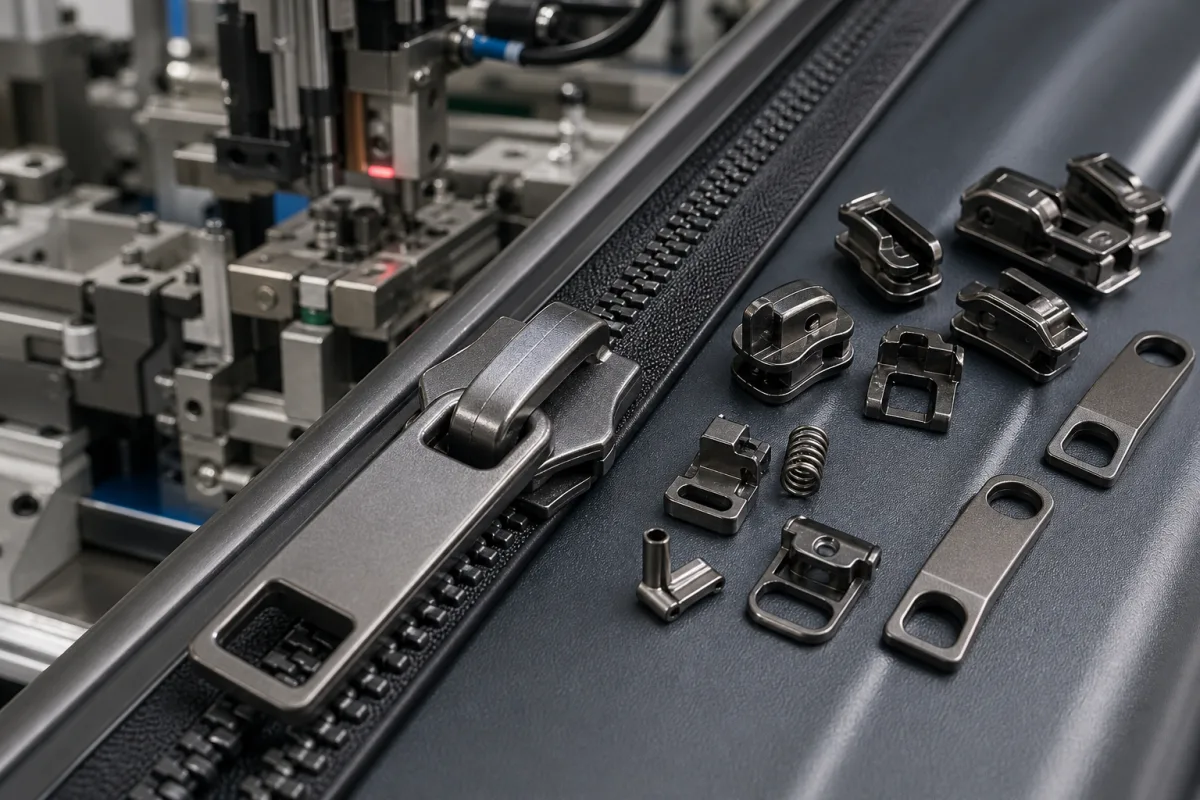
Luggage Zipper Slider Mechanism in a manufacturing environment
Representative product image. Confirm appearance and specifications with the manufacturer.

Product Specifications

Technical details and manufacturing context for Luggage Zipper Slider Mechanism

Definition
This component is a critical sub-assembly used in the manufacture of luggage, handbags, saddlery, and harness. It provides the mechanical interface between the user's pull tab and the zipper chain, translating linear pulling force into precise tooth engagement or disengagement. The slider body contains internal channels that guide and compress zipper teeth together when pulled in one direction, and separate them when pulled in the opposite direction. A spring-loaded locking pawl engages with the teeth to prevent accidental opening during transit. The mechanism must withstand repeated use cycles while maintaining alignment with the zipper tape. It is typically integrated into the luggage frame or panel during final assembly. Materials on file include zinc alloy die cast for the body, stainless steel spring for the locking mechanism, and nylon guide rails. Key parameters include tooth engagement force of 15–60 N, operating temperature range of -40 to 85 °C, cycle life of 50,000–100,000 cycles (per ISO 8124-1), slider body width of 8–12 mm, spring compression force of 5–15 N, material grade 304 stainless steel (per ASTM A240), surface hardness HV 400–600 (per ISO 6507), max pull force ≥200 N, weight 5–10 g, operating humidity ≤95% RH (per IEC 60068-2-78), ingress protection IP54–IP65 (per IEC 60529), and dimensional tolerance ±0.05 mm (per ISO 2768-m). These values are directory reference ranges and must be confirmed for the specific model and application. Always verify model-specific values and standards with the legal manufacturer or supplier.
Working Principle
The slider body has internal channels that guide the zipper teeth. When pulled in one direction, the channels force the teeth to interlock, closing the zipper. When pulled in the opposite direction, the channels separate the teeth, opening the zipper. A spring-loaded locking pawl engages with the teeth to prevent accidental opening during transit. The mechanism must maintain precise alignment with the zipper tape to ensure smooth operation.
Common Materials
Zinc Alloy Die Cast, Stainless Steel Spring, Nylon Guide Rails
Technical Parameters
ParameterTypical rangeNotes & selection driver
Tooth Engagement ForceRequired15–60 NForce required to properly engage zipper teeth
Operating Temperature RangeRequired-40–85 °CTemperature range for reliable operation
Cycle LifeRequired50000–100000 cyclesMinimum open/close cycles before failureISO 8124-1
Slider Body WidthRequired8–12 mmMaximum width of slider housing
Spring Compression Force5–15 NLocking spring compression force
Material Grade304 ASTMCorrosion-resistant stainless steel for durabilityASTM A240
Surface HardnessHV 400–600 HVResists wear and scratchingISO 6507
Max Pull Force≥200 NPrevents accidental opening under stress
Weight5–10 gLightweight to minimize luggage weight
Operating Humidity≤95 % RHResists corrosion in humid environmentsIEC 60068-2-78
Ingress ProtectionIP54–IP65Dust-tight and water-resistantIEC 60529
Dimensional Tolerance±0.05 mmEnsures precise fit with zipper teethISO 2768-m

Ranges are indicative industry figures for RFQ preparation, not a supplier commitment. Confirm every value and standard with the legal manufacturer before ordering.

Components / BOM
  • Slider Body Part
    Main housing that guides zipper teeth
    Material: Zinc Alloy Die Cast
  • Locking Pawl Part
    Spring-loaded tooth that prevents accidental opening
    Material: Stainless Steel
  • Guide Rails Part
    Internal channels that align zipper teeth
    Material: Reinforced Nylon
  • Pull Tab Attachment Point Optional Part
    Interface for connecting external pull tab
    Material: Brass Insert

Industry Taxonomies & Aliases

Commonly used trade names and technical identifiers for Luggage Zipper Slider Mechanism.

Industrial Ecosystem & Supply Chain Structure

Complementary Systems
Downstream Applications
Specialized Tooling

Application Fit & Sizing Matrix

Operational Limits
pressure: 0 to 0.5 bar
other spec: Max tensile load: 50N, Cycle life: 10,000 operations
temperature: -20°C to 80°C
Media Compatibility
✓ Polyester zipper tape ✓ Nylon coil zippers ✓ Plastic molded zipper teeth
Unsuitable: High-vibration industrial machinery
Sizing Data Required
  • Zipper tooth pitch (mm)
  • Required pull force (N)
  • Luggage compartment length (cm)

Reliability & Engineering Risk Analysis

Failure Mode & Root Cause
Slider Jamming
Cause: Accumulation of debris (e.g., fabric fibers, dust) in the slider channel or misalignment of teeth due to excessive lateral force during operation.
Slider Detachment
Cause: Wear or fatigue failure of the slider's pull tab attachment point or the slider body's structural integrity loss from repeated stress cycles and material degradation.
Maintenance Indicators
  • Audible grinding or scraping noise during zipper operation
  • Visible misalignment of zipper teeth or slider catching on fabric
Engineering Tips
  • Regularly clean the zipper track and slider with compressed air or a soft brush to prevent debris buildup
  • Apply a dry lubricant (e.g., silicone-based) to the zipper teeth and slider channel periodically to reduce friction and wear

Indicative industry ranges for design and RFQ preparation. Confirm the exact figures and applicable standard with the manufacturer before specifying.

Compliance & Manufacturing Standards

Applicable Standards
ASTM D2061 - Standard Test Methods for Zippers CE Marking - EU Regulation (EU) 2016/425 for Personal Protective Equipment (if applicable for luggage with protective features)

Quoted from the published standard.

Manufacturing Precision
  • Zipper Teeth Pitch: +/-0.1mm
  • Slider Pull Tab Force: +/-2N
Quality Inspection
  • Durability Cycle Test (ASTM D2061)
  • Visual and Dimensional Inspection per AQL Sampling

Manufacturers of Luggage Zipper Slider Mechanism

Manufacturer profiles associated with Luggage Zipper Slider Mechanism.

Sourcing Luggage Zipper Slider Mechanism from China?
Tell us your specification and target quantity — we will match it against manufacturer records and come back with the factories that fit.
Request manufacturers We manufacture this

Manufacturer listings support early research and capability understanding. They are not certification, ranking, or transaction guarantees.

Share this page
Technical documentation
Request current drawings, revision history, and a signed specification sheet.
Manufacturing capability
Verify equipment lists, process limits, capacity, and representative production evidence.
Inspection readiness
Confirm test methods, calibrated equipment, sampling plans, and traceable reports.
Supplier transparency
Check the legal entity, factory address, ownership, certifications, and direct contacts.

CNFX does not score or rank suppliers. Buyers must verify all claims and documents with the legal manufacturer before ordering.

Frequently Asked Questions

What is the typical cycle life of this zipper slider mechanism?

The cycle life is listed as 50,000 to 100,000 open/close cycles, per ISO 8124-1. This is a reference range; the actual cycle life depends on the specific model and application. Verify with the manufacturer.

What materials are used in this component?

The materials on file include zinc alloy die cast for the body, stainless steel spring for the locking mechanism, and nylon guide rails. The stainless steel is grade 304 per ASTM A240. Confirm material specifications with the supplier.

What is the operating temperature range?

The operating temperature range is -40 to 85 °C. This ensures reliable operation in various environments. Always verify the range for your specific application.

What is the ingress protection rating?

The ingress protection is rated IP54 to IP65 per IEC 60529, indicating dust-tight and water-resistant properties. Confirm the exact rating for the model you intend to use.

Data Basis

Editorial classification, named public sources where available, and source-reviewed manufacturer records.

Preliminary Technical Classification
This page supports structured research, RFQ preparation, and supplier evaluation. It does not replace buyer-led supplier qualification, standards review, or technical approval.
Buyer enquiry

Request manufacturing insight for Luggage Zipper Slider Mechanism

Ask for use case, specification boundaries, supplier type, and RFQ preparation information for this product.

Where it goes
Straight to the CNFX editorial desk, and to the manufacturer if this product is linked to a claimed profile. Nothing is broadcast to a supplier list.
Your details stay here
We do not sell or rent enquiry data, and we do not add you to a mailing list. Used only to answer this request.
No commission, no middleman
CNFX is a directory. We take no cut of any order and never negotiate on a supplier's behalf.
What we don't claim
A listing is not an endorsement. Qualify every supplier and verify every figure yourself before ordering.

Your business information is used only to process this request.

Thank you! Your message has been sent. We'll respond within 1–3 business days.
Sorry, we couldn't send your message. Please try again, or email us at [email protected].

Need to Manufacture Luggage Zipper Slider Mechanism?

Compare manufacturer profiles with relevant product and process capability.

Previous Product
Industrial Leather Skiving Machine
Last Product
Get QuotesChat