Editorial Technical Reference

Filter Cartridge/Bag

This page explains how Filter Cartridge/Bag is classified within Machinery and Equipment Manufacturing. Technical values and manufacturer relationships are research references; confirm the current specification and supplier evidence for each order.

Technical Definition & Core Assembly

A replaceable filtration element that captures and retains contaminants from fluids or gases within a filter unit.
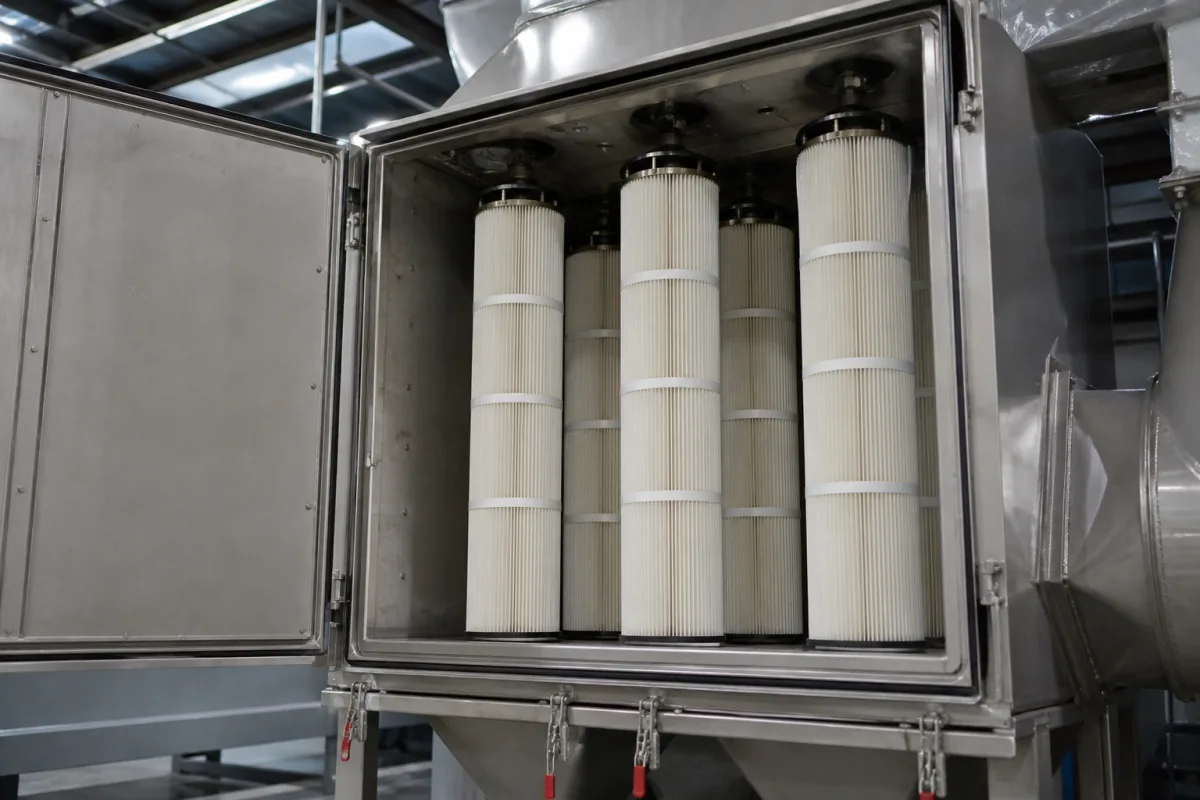
Representative product image. Confirm appearance and specifications with the manufacturer.

Product Specifications

Technical details and manufacturing context for Filter Cartridge/Bag

Definition
The filter cartridge/bag is the core consumable component of a filter unit, designed to physically trap and remove particulate matter, impurities, or specific substances from liquids or gases as they pass through. It is housed within the filter unit's housing and is the primary surface where separation occurs. Its performance directly determines the filtration efficiency, flow rate, and final purity of the processed medium. This component is available in various configurations, including pleated, wound, and bag styles, to suit different filtration requirements. The media material can be selected from options such as polypropylene, polyester, nylon, cellulose, stainless steel mesh, or activated carbon, depending on the chemical compatibility and operating conditions. Key parameters to consider include filtration rating (1–100 μm), operating pressure (1.0–1.6 MPa), maximum operating temperature (80–120 °C), flow rate (10–50 m³/h), filter area (0.5–2.5 m²), length (250–1000 mm), outer diameter (60–150 mm), inner diameter (25–70 mm), media material (PP, PE, PTFE, SS), end cap material (PP, SS, Al), and weight (0.5–3.0 kg). These values are reference ranges and must be verified for the specific model and application. The filtration rating is tested per ISO 16889. Always confirm the exact specifications and standards compliance with the legal manufacturer or supplier before procurement. Proper selection ensures efficient filtration and system reliability.
Working Principle
Fluid or gas is forced through the porous media of the cartridge or bag. Contaminants larger than the media's pore size are captured on the surface (surface filtration) or within the depth of the media (depth filtration). Clean fluid passes through to the outlet. Efficiency depends on media material, pore size (micron rating), and design (pleated, wound, bag, etc.). The pressure drop across the element increases as contaminants accumulate, indicating the need for replacement. The filtration rating, typically expressed in microns, determines the smallest particle size that can be effectively removed. The operating pressure and temperature must remain within the specified limits to avoid media degradation or structural failure. Proper installation and sealing are critical to prevent bypass flow. Regular monitoring of differential pressure helps schedule maintenance and ensures consistent filtration performance.
Common Materials
Polypropylene, Polyester, Nylon, Cellulose, Stainless Steel Mesh, Activated Carbon
Technical Parameters
ParameterTypical rangeNotes & selection driver
Filtration Rating1–100 μmSelect based on target particle size; finer rating increases pressure drop.ISO 16889
Max Operating Temperature80–120 °CHigher temperatures may degrade filter media.
Flow Rate10–50 m³/hEnsure sufficient flow for system demand.
Filter Area0.5–2.5 Larger area reduces pressure drop and extends service life.
Length250–1000 mmMust match housing dimensions.
Outer Diameter60–150 mmMust match housing dimensions.
Inner Diameter25–70 mmMust match core or adapter.
Media MaterialPP, PE, PTFE, SSChoose based on chemical compatibility and temperature.
End Cap MaterialPP, SS, AlMust be compatible with fluid and pressure.
Weight0.5–3.0 kgAffects handling and installation.

Ranges are indicative industry figures for RFQ preparation, not a supplier commitment. Confirm every value and standard with the legal manufacturer before ordering.

Components / BOM
  • Filter Media Part
    The porous material (e.g., pleated paper, felt, mesh) that physically captures contaminants.
    Material: Varies (e.g., Polypropylene, Polyester)
  • End Caps Part
    Seal the ends of the media, provide structural support, and interface with the filter housing.
    Material: Polypropylene, Metal
  • Core / Support Cage Part
    Internal structure (for cartridges) that prevents media collapse under pressure. External cage (for bags) provides support.
    Material: Polypropylene, Stainless Steel
  • Seals / Gaskets Part
    Ensure a leak-proof seal between the filter element and the housing.
    Material: Nitrile Rubber, Viton, EPDM

Applied To / Applications

This component is essential for the following industrial systems and equipment:

Industrial Ecosystem & Supply Chain Structure

Complementary Systems
Downstream Applications
Specialized Tooling

Application Fit & Sizing Matrix

Operational Limits
pressure: Up to 150 psi (10 bar) typical, burst pressure 2-3x operating pressure
flow rate: 0.5-500 GPM (2-1900 L/min) depending on size and media
temperature: -40°C to 150°C (varies by material)
slurry concentration: Up to 25% solids by weight for standard designs
Media Compatibility
✓ Polypropylene (PP) for general chemical resistance ✓ Polyester (PET) for high temperature and fine filtration ✓ Nylon for oil and fuel applications
Unsuitable: Concentrated oxidizing acids (e.g., nitric acid > 30%)
Sizing Data Required
  • Required flow rate (GPM or L/min)
  • Particle size to be filtered (microns)
  • System operating pressure and differential pressure limits

Reliability & Engineering Risk Analysis

Failure Mode & Root Cause
Media degradation
Cause: Chemical incompatibility between filter media and process fluid leading to swelling, dissolution, or embrittlement
Structural failure
Cause: Excessive differential pressure exceeding design limits, causing bag rupture or cartridge collapse
Maintenance Indicators
  • Sudden pressure drop increase across filter indicating bypass or media failure
  • Visible particulate contamination in downstream fluid or visible media breach
Engineering Tips
  • Implement differential pressure monitoring with automated alerts at 80% of maximum rated pressure
  • Conduct compatibility testing with actual process fluids at operating temperatures before full-scale deployment

Indicative industry ranges for design and RFQ preparation. Confirm the exact figures and applicable standard with the manufacturer before specifying.

Compliance & Manufacturing Standards

Applicable Standards
ISO 16889:2022 - Hydraulic fluid power - Filter elements - Multi-pass method for evaluating filtration performance ASTM F795 - Standard Practice for Determining the Performance of a Filter Medium Employing a Single-Pass, Constant-Rate, Liquid Test CE Marking - Directive 2006/42/EC (Machinery) for safety and performance compliance

Quoted from the published standard.

Manufacturing Precision
  • Bore diameter: +/-0.05 mm
  • End cap flatness: 0.15 mm across diameter
Quality Inspection
  • Bubble Point Test for pore size verification
  • Material Composition Analysis via X-ray Fluorescence (XRF)

Manufacturers of Filter Cartridge/Bag

Manufacturer profiles associated with Filter Cartridge/Bag.

Sourcing Filter Cartridge/Bag from China?
Tell us your specification and target quantity — we will match it against manufacturer records and come back with the factories that fit.
Request manufacturers We manufacture this

Manufacturer listings support early research and capability understanding. They are not certification, ranking, or transaction guarantees.

Technical documentation
Request current drawings, revision history, and a signed specification sheet.
Manufacturing capability
Verify equipment lists, process limits, capacity, and representative production evidence.
Inspection readiness
Confirm test methods, calibrated equipment, sampling plans, and traceable reports.
Supplier transparency
Check the legal entity, factory address, ownership, certifications, and direct contacts.

CNFX does not score or rank suppliers. Buyers must verify all claims and documents with the legal manufacturer before ordering.

Supply Chain Compatible Machinery & Devices

Heavy-Duty CNC Plasma Cutting Machine

The Heavy-Duty CNC Plasma Cutting Machine is a standalone industrial device designed for cutting conductive metals such as steel, stainless steel, aluminum, and copper alloys.

Explore Specs →
Automated Powder Coating System

Integrated industrial system for applying dry powder coatings to metal substrates.

Explore Specs →
Centrifugal Pump Impeller

The centrifugal pump impeller is a critical rotating component that converts mechanical energy from the motor into kinetic energy in fluid systems.

Explore Specs →
High-Precision CNC Laser Cutting Machine

Computer-controlled industrial machine using focused laser beams to cut sheet metal with micron-level accuracy.

Explore Specs →

Frequently Asked Questions

What is the difference between surface filtration and depth filtration?

Surface filtration captures particles on the surface of the media, while depth filtration retains particles within the thickness of the media. The choice depends on the application and particle characteristics.

How do I select the correct filtration rating?

The filtration rating (in microns) should be based on the target particle size you need to remove. Finer ratings increase pressure drop, so balance efficiency with system capacity. Refer to ISO 16889 for testing standards.

What are the typical operating limits for these components?

Reference ranges include operating pressure 1.0–1.6 MPa, max temperature 80–120 °C, and flow rate 10–50 m³/h. Always verify these values for your specific model and application with the manufacturer.

How often should the filter cartridge or bag be replaced?

Replacement frequency depends on the differential pressure across the element, which increases as contaminants accumulate. Monitor pressure drop and replace when it exceeds the recommended limit, as specified by the manufacturer.

Data Basis

Editorial classification, named public sources where available, and source-reviewed manufacturer records.

Preliminary Technical Classification
This page supports structured research, RFQ preparation, and supplier evaluation. It does not replace buyer-led supplier qualification, standards review, or technical approval.
Buyer enquiry

Request manufacturing insight for Filter Cartridge/Bag

Ask for use case, specification boundaries, supplier type, and RFQ preparation information for this product.

Where it goes
Straight to the CNFX editorial desk, and to the manufacturer if this product is linked to a claimed profile. Nothing is broadcast to a supplier list.
Your details stay here
We do not sell or rent enquiry data, and we do not add you to a mailing list. Used only to answer this request.
No commission, no middleman
CNFX is a directory. We take no cut of any order and never negotiate on a supplier's behalf.
What we don't claim
A listing is not an endorsement. Qualify every supplier and verify every figure yourself before ordering.

Your business information is used only to process this request.

Thank you! Your message has been sent. We'll respond within 1–3 business days.
Sorry, we couldn't send your message. Please try again, or email us at contact@cnfx.com.

Need to Manufacture Filter Cartridge/Bag?

Compare manufacturer profiles with relevant product and process capability.

Previous Product
Z-axis Ram/Spindle
Last Product
Get QuotesChat