Industry-Verified Manufacturing Data (2026)

Thermal Expansion Sleeve

Based on aggregated insights from multiple verified factory profiles within the CNFX directory, the standard Thermal Expansion Sleeve used in the Non-Metallic Mineral Product Manufacturing sector typically supports operational capacities ranging from standard industrial configurations to heavy-duty production requirements.

Technical Definition & Core Assembly

A canonical Thermal Expansion Sleeve is characterized by the integration of Sleeve Body and Thermal Barrier Coating. In industrial production environments, manufacturers listed on CNFX commonly emphasize High-temperature alloy steel construction to support stable, high-cycle operation across diverse manufacturing scenarios.

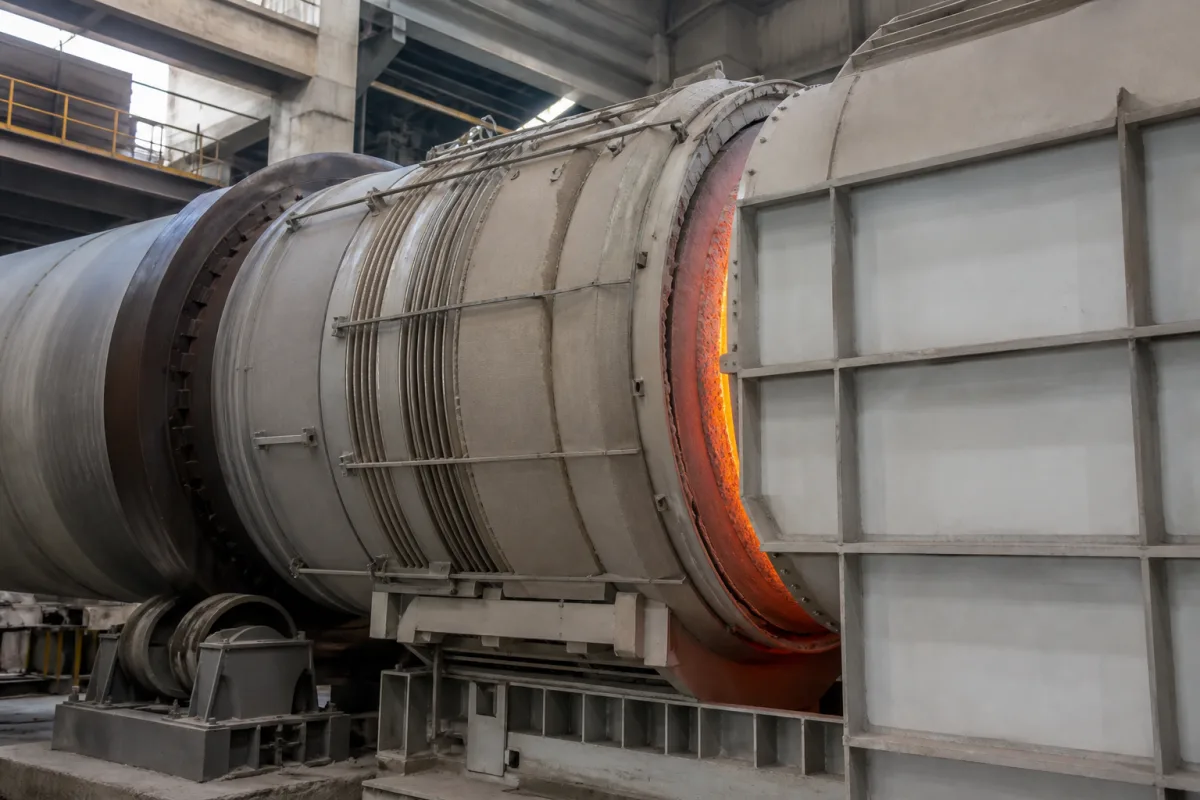
A cylindrical component designed to accommodate thermal expansion in roller assemblies during high-temperature processes.
Product Specifications

Technical details and manufacturing context for Thermal Expansion Sleeve

Definition
A critical component within the Float Glass Annealing Lehr Roller system that allows controlled thermal expansion of rollers during the glass annealing process, preventing stress buildup and maintaining precise roller alignment while operating at elevated temperatures.
Working Principle
Utilizes engineered clearance and material properties to expand predictably when heated, maintaining proper fit and function while compensating for differential thermal expansion between roller components.
Common Materials
High-temperature alloy steel, Heat-resistant ceramic composite
Technical Parameters
  • Inner diameter, outer diameter, and length dimensions with thermal expansion coefficients specified for operating temperature ranges (mm) Per Request
Components / BOM
  • Sleeve Body
    Primary structural element that expands and contracts with temperature changes
    Material: High-temperature alloy steel
  • Thermal Barrier Coating
    Reduces heat transfer to adjacent components and protects against thermal shock
    Material: Ceramic composite
  • Mounting Flange
    Secures the sleeve to the roller assembly while allowing controlled movement
    Material: Heat-treated steel
Engineering Reasoning
20-400°C with axial expansion compensation of 0.5-15 mm
Material yield strength exceeded at 450°C or cyclic fatigue limit of 10^6 cycles at 350°C with 10 mm expansion
Design Rationale: Thermal fatigue from cyclic stress exceeding material endurance limit (σ_e) due to differential expansion coefficients between sleeve (α_s=12×10^-6/°C) and shaft (α_sh=11×10^-6/°C)
Risk Mitigation (FMEA)
Trigger Exceeding material recrystallization temperature (0.4×T_melt=0.4×1450°C=580°C)
Mode: Grain growth reducing yield strength by 40%, causing permanent deformation
Strategy: Integrate embedded thermocouples with PID control limiting temperature to 400°C
Trigger Lubricant degradation at 300°C forming abrasive carbon deposits
Mode: Increased friction coefficient from 0.08 to 0.35, causing seizure torque exceeding 850 N·m
Strategy: Implement ceramic-based solid lubricant coating with 0.02 friction coefficient up to 500°C

Industry Taxonomies & Aliases

Commonly used trade names and technical identifiers for Thermal Expansion Sleeve.

Industrial Ecosystem & Supply Chain DNA

Complementary Systems
Downstream Applications
Specialized Tooling

Application Fit & Sizing Matrix

Operational Limits
pressure: Up to 10 MPa (100 bar)
other spec: Max axial expansion: ±15 mm, Max radial clearance: 0.5 mm
temperature: -40°C to +400°C
Media Compatibility
✓ High-temperature lubricants (silicone-based) ✓ Dry particulate media (e.g., cement, fly ash) ✓ Non-corrosive process gases (e.g., nitrogen, argon)
Unsuitable: Highly corrosive acidic or caustic slurries (e.g., sulfuric acid solutions, concentrated alkalis)
Sizing Data Required
  • Shaft diameter and material coefficient of thermal expansion
  • Operating temperature differential (ΔT) across the assembly
  • Required axial movement allowance and installation clearance

Reliability & Engineering Risk Analysis

Failure Mode & Root Cause
Sleeve Seizure
Cause: Inadequate lubrication or contamination ingress leading to excessive friction and binding between sleeve and shaft
Thermal Fatigue Cracking
Cause: Repeated thermal cycling beyond design limits causing stress concentration and material degradation in sleeve components
Maintenance Indicators
  • Abnormal vibration or audible knocking during thermal cycling
  • Visible scoring or discoloration on sleeve surface indicating overheating
Engineering Tips
  • Implement strict lubrication protocols with high-temperature compatible lubricants and regular contamination monitoring
  • Install temperature monitoring sensors with automated alerts for thermal excursion beyond operational parameters

Compliance & Manufacturing Standards

Reference Standards
ISO 286-2:2010 (Geometrical product specifications - Limits and fits) ASTM E228-17 (Standard Test Method for Linear Thermal Expansion of Solid Materials) DIN 7190-1:2017 (Interference fits - Calculation and design rules)
Manufacturing Precision
  • Bore diameter: +/-0.01 mm
  • Parallelism of faces: 0.005 mm
Quality Inspection
  • Dimensional verification with coordinate measuring machine (CMM)
  • Hardness testing (Rockwell C scale)

Factories Producing Thermal Expansion Sleeve

Verified manufacturers with capability to produce this product in China

✓ 93% Supplier Capability Match Found

S Sourcing Manager from Germany Feb 09, 2026
★★★★★
"Standard OEM quality for Non-Metallic Mineral Product Manufacturing applications. The Thermal Expansion Sleeve arrived with full certification."
Technical Specifications Verified
P Procurement Specialist from Brazil Feb 06, 2026
★★★★☆
"Great transparency on the Thermal Expansion Sleeve components. Essential for our Non-Metallic Mineral Product Manufacturing supply chain. (Delivery took slightly longer than expected, but technical support was excellent.)"
Technical Specifications Verified
T Technical Director from Canada Feb 03, 2026
★★★★★
"The Thermal Expansion Sleeve we sourced perfectly fits our Non-Metallic Mineral Product Manufacturing production line requirements."
Technical Specifications Verified
Verification Protocol

“Feedback is collected from verified sourcing managers during RFQ (Request for Quote) and factory evaluation processes on CNFX. These reports represent historical performance data and technical audit summaries from our B2B manufacturing network.”

13 sourcing managers are analyzing this specification now. Last inquiry for Thermal Expansion Sleeve from Poland (37m ago).

Supply Chain Compatible Machinery & Devices

High-Purity Fused Silica Powder

Ultra-pure amorphous silicon dioxide powder for industrial applications

Explore Specs →
Concrete Paver

A heavy construction machine used to lay and compact concrete for roads, highways, and large flat surfaces.

Explore Specs →
Concrete Batching Plant

A facility that combines various ingredients to form concrete, including cement, aggregates, water, and admixtures.

Explore Specs →
Concrete Vibrator

A construction tool used to eliminate air bubbles and ensure proper compaction of freshly poured concrete.

Explore Specs →

Frequently Asked Questions

What materials are used in thermal expansion sleeves for high-temperature applications?

Our thermal expansion sleeves combine high-temperature alloy steel for structural integrity with heat-resistant ceramic composites for thermal insulation, ensuring durability in extreme conditions up to 1200°C.

How does a thermal expansion sleeve protect roller assemblies in non-metallic mineral processing?

The sleeve accommodates differential thermal expansion between rollers and shafts during heating cycles, preventing binding, reducing mechanical stress, and extending equipment lifespan in kilns, calciners, and other high-temperature processes.

What maintenance is required for thermal expansion sleeves with thermal barrier coatings?

Minimal maintenance is needed due to the durable thermal barrier coating. Regular visual inspections for coating integrity and annual thermal performance checks are recommended, with typical service life of 3-5 years in continuous operation.

Can I contact factories directly on CNFX?

CNFX is an open directory, not a transaction platform. Each factory profile provides direct contact information and production details to help you initiate direct inquiries with Chinese suppliers.

Get Quote for Thermal Expansion Sleeve

Request technical pricing, lead times, or customized specifications for Thermal Expansion Sleeve directly from verified manufacturing units.

Your business information is encrypted and only shared with verified Thermal Expansion Sleeve suppliers.

Thank you! Your message has been sent. We'll respond within 1–3 business days.

Need to Manufacture Thermal Expansion Sleeve?

Connect with verified factories specializing in this product category

Add Your Factory Contact Us
Previous Product
Secondary Crusher
Next Product
Water Metering System