This page explains how Leather Belt Tensioner Pulley is classified within Manufacture of Other Leather Products. Technical values and manufacturer relationships are research references; confirm the current specification and supplier evidence for each order.
Leather pulley component for maintaining proper belt tension in industrial machinery
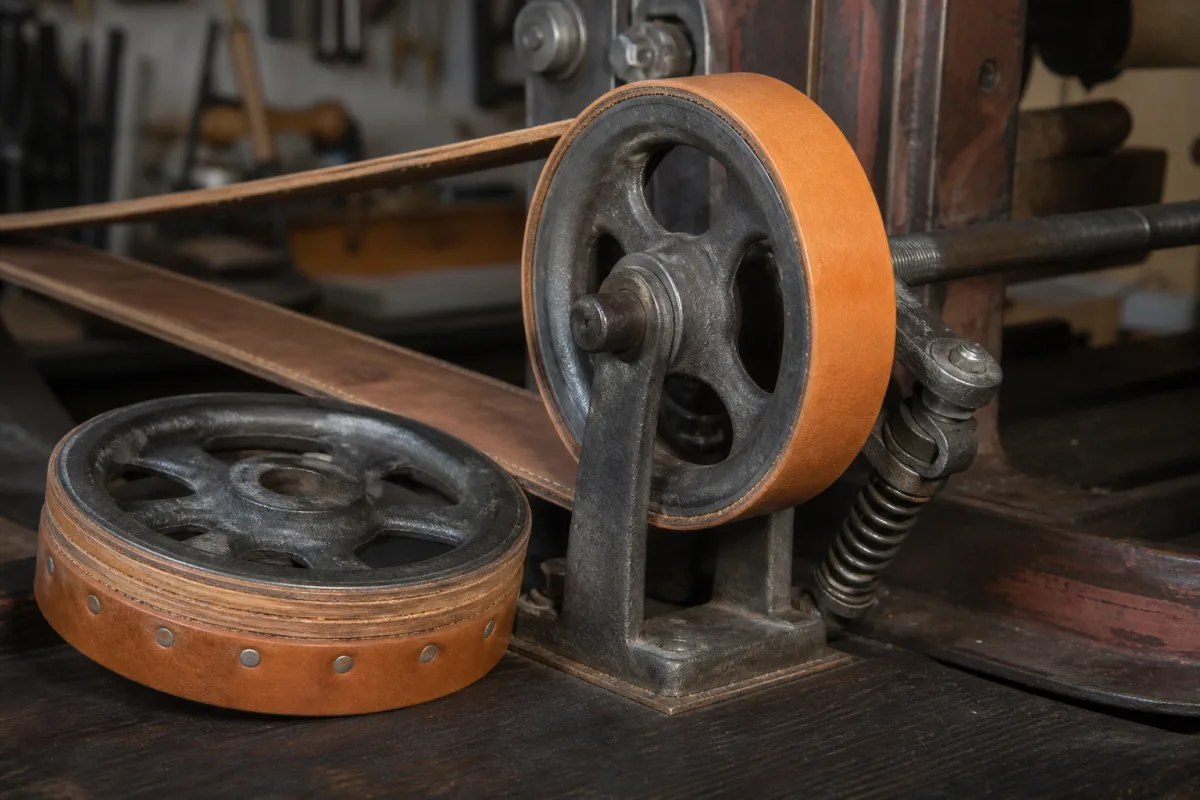
Technical details and manufacturing context for Leather Belt Tensioner Pulley
| Parameter | Typical range | Notes & selection driver |
|---|---|---|
| Outer DiameterRequired | 60–120 mm | Overall pulley diameter including leather surface |
| Bore DiameterRequired | 10–25 mm | Inner shaft hole diameter for mounting |
| Groove WidthRequired | 8–20 mm | Width of belt contact surface |
| Maximum RPMRequired | 3000–6000 rpm | Maximum safe rotational speed |
| Leather ThicknessRequired | 3–8 mm | Thickness of leather contact surface |
| Static Load Capacity | 500–2000 N | Maximum static load before deformation |
| Operating Temperature | -20–80 °C | Leather degrades above 80°C |
| Tensile Strength | 20–40 MPa | Minimum for reliable tensioningISO 3376 |
| Hardness | 80–95 Shore A | Softer grips better but wears fasterISO 868 |
| Surface Roughness | Ra 1.6–3.2 μm | Smoother reduces frictionISO 4287 |
| Weight | 0.3–1.5 kg | Affects inertia and mounting |
Ranges are indicative industry figures for RFQ preparation, not a supplier commitment. Confirm every value and standard with the legal manufacturer before ordering.
Commonly used trade names and technical identifiers for Leather Belt Tensioner Pulley.
| pressure: | Not applicable (mechanical component) |
| other spec: | Max belt tension: 500 N, Max rotational speed: 3000 RPM |
| temperature: | -20°C to 80°C |
Indicative industry ranges for design and RFQ preparation. Confirm the exact figures and applicable standard with the manufacturer before specifying.
Quoted from the published standard.
Manufacturer profiles associated with Leather Belt Tensioner Pulley.
Manufacturer listings support early research and capability understanding. They are not certification, ranking, or transaction guarantees.
A practical evidence checklist for RFQ preparation and supplier evaluation.
CNFX does not score or rank suppliers. Buyers must verify all claims and documents with the legal manufacturer before ordering.
The contact surface is vegetable-tanned leather, the bearing housing is stainless steel, and the shaft is carbon steel. These materials are specified in the product data.
The operating temperature range is -20 to 80°C. Leather degrades above 80°C, so it is important to stay within this range.
Tensile strength is referenced to ISO 3376, hardness to ISO 868, and surface roughness to ISO 4287. These are verification references, not certifications.
Consider the required outer diameter, bore diameter, groove width, and load capacity based on your application. Confirm these values with the manufacturer or supplier for your specific model.
Editorial classification, named public sources where available, and source-reviewed manufacturer records.
Ask for use case, specification boundaries, supplier type, and RFQ preparation information for this product.
Compare manufacturer profiles with relevant product and process capability.