Editorial Technical Reference

Sterilization Spray System

This page explains how Sterilization Spray System is classified within Beverage Manufacturing. Technical values and manufacturer relationships are research references; confirm the current specification and supplier evidence for each order.

Technical Definition & Core Assembly

A component for beverage manufacturing that sprays sterilizing liquid via nozzles, with adjustable flow, angle, and tank capacity.
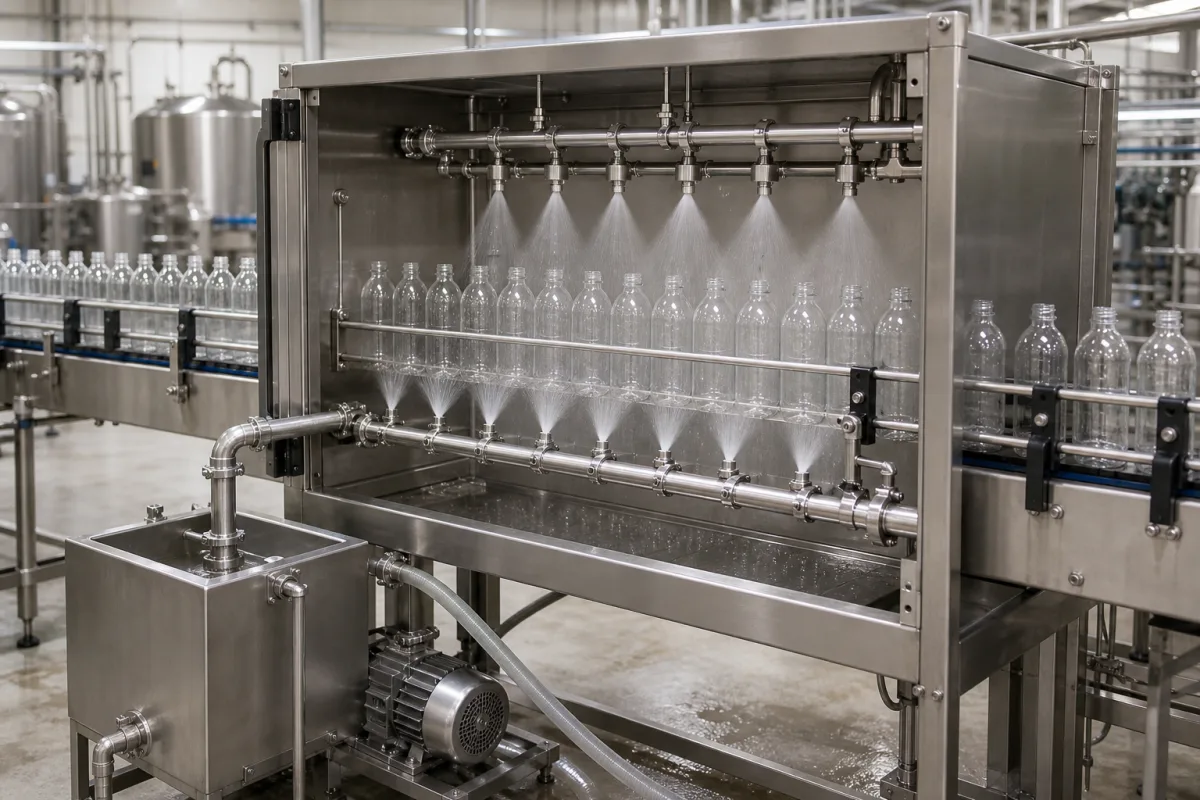
Sterilization Spray System in a manufacturing environment
Representative product image. Confirm appearance and specifications with the manufacturer.

Product Specifications

Technical details and manufacturing context for Sterilization Spray System

Definition
The Sterilization Spray System is a component used in beverage manufacturing to apply sterilizing liquids to surfaces or containers. It consists of a tank, a pump, and one or more spray nozzles. The system operates at a pressure of 1.0–1.6 MPa. The flow rate ranges from 5–20 L/min when using water, and the spray angle can be adjusted between 60° and 120° by selecting different nozzles. Nozzle diameter, which determines droplet size, ranges from 0.5–2.0 mm. The tank capacity is available in 10–50 L, with materials typically stainless steel or polyethylene. The system is designed to operate in temperatures from 5–50°C; above 50°C, seals may be damaged. Power supply is 220–240 V AC, 50/60 Hz, single phase, with power consumption between 0.5–1.5 kW depending on pump size. The ingress protection rating is IP54–IP65, suitable for washdown environments, and the material of construction is typically SS304 or SS316, with SS316 recommended for corrosive chemicals. The weight without liquid is 15–40 kg. This system is intended for integration into larger processing lines; it is not a standalone sterilizer. The listed parameters are reference ranges and must be verified for the specific model and application. Standards such as IEC 60529, and ASTM A240 are mentioned as procurement references, but do not imply certification. Always confirm model-specific values and compliance with the legal manufacturer or supplier.
Working Principle
The system uses a pump to pressurize sterilizing liquid from a tank to the nozzles. The pressure, typically 1.0–1.6 MPa, forces the liquid through nozzle orifices, atomizing it into droplets. The spray angle and droplet size are determined by nozzle selection. The operator adjusts flow rate and pressure to achieve the desired coverage. The system is designed for intermittent or continuous operation, depending on the process. Proper pressure is critical; deviation from it leads to poor sealing and ineffective spraying. The system must be operated within the specified temperature range to avoid seal damage. Regular maintenance includes checking for nozzle blockages and seal wear.
Technical Parameters
ParameterTypical rangeNotes & selection driver
Flow Rate5–20 L/minAt 1.0–1.6 MPa with water
Operating Pressure1.0–1.6 MPa
Spray Angle60–120 °Adjustable via nozzle selection
Nozzle Diameter0.5–2.0 mmDetermines droplet size
Tank Capacity10–50 LStainless steel or polyethylene
Operating Temperature5–50 °CAbove 50°C may damage seals
Power Supply220–240 V AC50/60 Hz, single phase
Power Consumption0.5–1.5 kWDepends on pump size
Ingress ProtectionIP54–IP65IP65 for washdown environmentsIEC 60529
MaterialSS304/316316 for corrosive chemicalsASTM A240
Weight15–40 kgWithout liquid

Ranges are indicative industry figures for RFQ preparation, not a supplier commitment. Confirm every value and standard with the legal manufacturer before ordering.

Components / BOM
  • Liquid Tank
    Holds the sterilizing liquid the pump draws from.
  • Pressure Pump
    Raises the liquid to the 1.0–1.6 MPa the nozzles need to atomize it.
  • Spray Nozzles
    Atomize the liquid; their choice sets spray angle and droplet size.
  • Seals
    Keep the pressurized liquid in; they are the wear item alongside the nozzles.

Application & selection

Application Fit & Sizing Matrix

Operational Limits
pressure: Up to 100 psi (6.9 bar)
flow rate: 0.5-10 GPM (1.9-37.9 L/min)
temperature: Ambient to 80°C (176°F)
slurry concentration: Up to 5% solids by weight
Media Compatibility
✓ Aqueous disinfectant solutions (e.g., hydrogen peroxide, peracetic acid) ✓ Clean-in-place (CIP) fluids for food processing equipment ✓ Pharmaceutical-grade sterilants (e.g., alcohol-based sprays)
Unsuitable: Highly corrosive or abrasive slurries with >5% solids or containing aggressive chemicals like concentrated acids
Sizing Data Required
  • Required flow rate (GPM or L/min) for target surface coverage
  • Spray nozzle type and pattern (e.g., fan, cone, flat) based on application geometry
  • System pressure and temperature requirements for effective sterilization

Risk, maintenance & compliance

Reliability & Engineering Risk Analysis

Failure Mode & Root Cause
Nozzle clogging
Cause: Accumulation of mineral deposits or particulate matter from the sterilization solution, leading to restricted flow and uneven spray patterns.
Seal degradation
Cause: Chemical attack from aggressive sterilants (e.g., hydrogen peroxide, peracetic acid) causing swelling, hardening, or cracking of elastomeric seals, resulting in leaks.
Maintenance Indicators
  • Irregular or pulsating spray pattern observed during operation
  • Audible hissing or dripping sounds indicating seal leaks or pressure loss
Engineering Tips
  • Implement routine preventive maintenance with nozzle inspection and cleaning schedules using appropriate solvents compatible with sterilant chemistry
  • Use corrosion-resistant materials (e.g., 316L stainless steel, PTFE seals) and install inline filtration to remove particulates from the sterilization solution

Indicative industry ranges for design and RFQ preparation. Confirm the exact figures and applicable standard with the manufacturer before specifying.

Compliance & Manufacturing Standards

Applicable Standards
ANSI/AAMI ST79:2017 - Comprehensive guide to steam sterilization and sterility assurance in health care facilities CE Marking - Medical Devices Regulation (EU) 2017/745

Quoted from the published standard.

Manufacturing Precision
  • Nozzle orifice diameter: +/-0.01mm
  • Spray pattern uniformity: +/-5% deviation from specified coverage area
Quality Inspection
  • Pressure decay leak test at 1.5x operating pressure
  • Microbiological efficacy validation per ISO 14937:2009
Technical documentation
Request current drawings, revision history, and a signed specification sheet.
Manufacturing capability
Verify equipment lists, process limits, capacity, and representative production evidence.
Inspection readiness
Confirm test methods, calibrated equipment, sampling plans, and traceable reports.
Supplier transparency
Check the legal entity, factory address, ownership, certifications, and direct contacts.

Compare the published product scope and source details, then include your specifications and quantity in an enquiry.

Manufacturers of Sterilization Spray System

Manufacturer profiles associated with Sterilization Spray System.

Sourcing Sterilization Spray System from China?
Tell us your specification and target quantity — we will match it against manufacturer records and come back with the factories that fit.
Request manufacturers We manufacture this

Explore company information and manufacturing capabilities, then discuss the scope of your project with a relevant supplier.

Buyer enquiry

Request manufacturing insight for Sterilization Spray System

Ask for use case, specification boundaries, supplier type, and RFQ preparation information for this product.

Where it goes
Straight to the CNFX editorial desk, and to the manufacturer if this product is linked to a claimed profile. Nothing is broadcast to a supplier list.
Your details stay here
We do not sell or rent enquiry data, and we do not add you to a mailing list. Used only to answer this request.
No commission, no middleman
CNFX is a directory. We take no cut of any order and never negotiate on a supplier's behalf.
What to include
Share your product specifications, quantity, destination and target delivery date.

Your business information is used only to process this request.

Thank you! Your message has been sent. We'll respond within 1–3 business days.
Sorry, we couldn't send your message. Please try again, or email us at [email protected].

Frequently Asked Questions

What is the operating pressure range for this sterilization spray system?

The operating pressure is 1.0–1.6 MPa. Always verify the exact pressure requirement for your specific model and application with the manufacturer.

Can the spray angle be adjusted?

Yes, the spray angle is adjustable between 60° and 120° by selecting different nozzles. The nozzle selection also affects droplet size and flow rate. Confirm the appropriate nozzle for your process with the supplier.

What materials are used for the tank and wetted parts?

The tank is typically made of stainless steel or polyethylene. The material of construction for wetted parts is usually SS304 or SS316, with SS316 recommended for corrosive chemicals. Verify material compatibility with your sterilizing agent.

What is the ingress protection rating?

The system is available with IP54 to IP65 ratings, suitable for washdown environments. IP65 offers better protection against water jets. Choose the rating based on your cleaning procedures and confirm with the manufacturer.

Related equipment

Applied To / Applications

This component is essential for the following industrial systems and equipment:

Data Basis

Editorial classification, named public sources where available, and source-reviewed manufacturer records.

Preliminary Technical Classification
This page supports structured research, RFQ preparation, and supplier evaluation. It does not replace buyer-led supplier qualification, standards review, or technical approval.

Need to Manufacture Sterilization Spray System?

Compare manufacturer profiles with relevant product and process capability.

Previous Product
Vacuum Gripper End-Effector
Last Product
Get QuotesChat