Industry-Verified Manufacturing Data (2026)

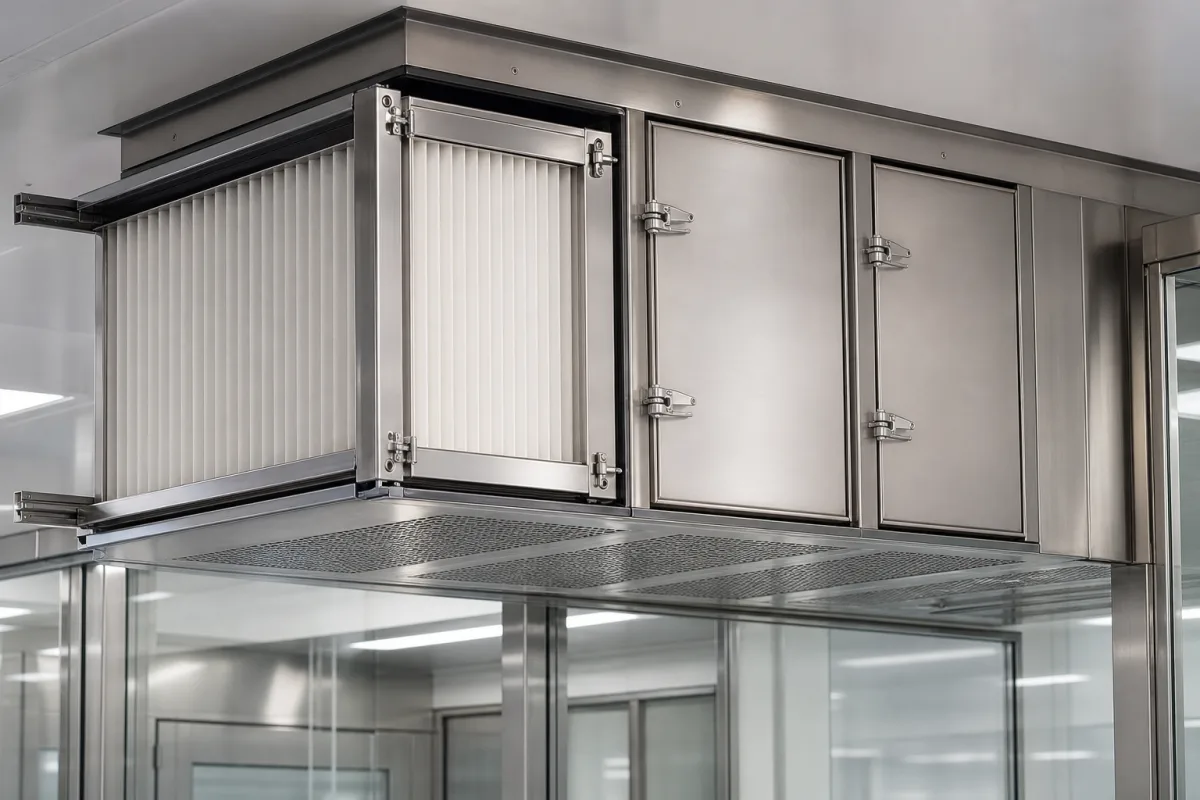
HEPA/ULPA Filter Module

Based on aggregated insights from multiple verified factory profiles within the CNFX directory, the standard HEPA/ULPA Filter Module used in the Chemical Manufacturing sector typically supports operational capacities ranging from standard industrial configurations to heavy-duty production requirements.

Technical Definition & Core Assembly

A canonical HEPA/ULPA Filter Module is characterized by the integration of Filter Media and Frame/ Housing. In industrial production environments, manufacturers listed on CNFX commonly emphasize Glass fiber filter media construction to support stable, high-cycle operation across diverse manufacturing scenarios.

A modular filtration unit containing HEPA or ULPA filters that provides sterile air supply and containment within aseptic barrier systems.
Product Specifications

Technical details and manufacturing context for HEPA/ULPA Filter Module

Definition
The HEPA/ULPA Filter Module is a critical component of Aseptic Barrier systems (Isolators/RABS) that ensures a controlled, particle-free environment. It consists of high-efficiency particulate air (HEPA) or ultra-low penetration air (ULPA) filters housed in a sealed module, which removes airborne contaminants and microorganisms from the air supply. Within the aseptic barrier, this module maintains positive or negative pressure differentials, prevents cross-contamination, and protects both the product and the external environment during pharmaceutical, biotech, or sterile manufacturing processes.
Working Principle
Air is forced through the filter media, which captures particles via mechanisms including interception, impaction, and diffusion. HEPA filters remove ≥99.97% of particles ≥0.3 μm, while ULPA filters remove ≥99.999% of particles ≥0.12 μm. The module ensures unidirectional airflow and maintains sterility by preventing particle ingress or egress.
Common Materials
Glass fiber filter media, Aluminum or stainless steel frame, Polyurethane or silicone gaskets
Technical Parameters
  • Module dimensions (length × width × depth) for integration into barrier systems (mm) Standard Spec
Components / BOM
  • Filter Media
    Primary filtration element that captures particles and microorganisms
    Material: Glass fiber or PTFE membrane
  • Frame/ Housing
    Provides structural integrity and seals the filter within the module
    Material: Stainless steel or anodized aluminum
  • Gasket/ Seal
    Ensures airtight seal between filter and housing to prevent bypass
    Material: Polyurethane, silicone, or closed-cell foam
  • Support Grid
    Reinforces filter media against airflow pressure and vibration
    Material: Aluminum or plastic
Engineering Reasoning
0.5-1.0 m/s face velocity, 250-750 Pa pressure differential
1.2 m/s face velocity causing filter media rupture, 1000 Pa pressure differential causing seal failure
Design Rationale: Darcy's law fluid dynamics exceeding filter media tensile strength (3.5 MPa for HEPA glass fiber), Bernoulli principle creating pressure-induced seal deformation
Risk Mitigation (FMEA)
Trigger Moisture ingress exceeding 85% RH for 72 hours
Mode: Filter media delamination and microbial growth
Strategy: Hydrophobic coating (contact angle >110°) with integrated humidity sensors
Trigger Vibration amplitude exceeding 0.5 mm at 60 Hz
Mode: Gasket seal fatigue and particle bypass
Strategy: Anti-vibration mounting with natural frequency >100 Hz and damping ratio >0.3

Industry Taxonomies & Aliases

Commonly used trade names and technical identifiers for HEPA/ULPA Filter Module.

Applied To / Applications

This component is essential for the following industrial systems and equipment:

Industrial Ecosystem & Supply Chain DNA

Complementary Systems
Downstream Applications
Specialized Tooling

Application Fit & Sizing Matrix

Operational Limits
pressure: Max 500 Pa (2 in. H₂O) differential pressure
flow rate: 0.1 to 1.0 m³/s (200 to 2100 CFM) per module
temperature: 0°C to 60°C (32°F to 140°F)
slurry concentration: Not applicable - dry air filtration only
Media Compatibility
✓ Pharmaceutical grade clean air ✓ Electronics manufacturing cleanrooms ✓ Hospital isolation room ventilation
Unsuitable: High moisture or oil-laden air streams (>80% RH or oil mist present)
Sizing Data Required
  • Required air volume (CFM or m³/h)
  • Required cleanliness class (ISO 14644-1 or FS209E)
  • Available installation space dimensions

Reliability & Engineering Risk Analysis

Failure Mode & Root Cause
Filter Media Degradation
Cause: Chemical attack from aggressive process gases or cleaning agents, leading to fiber breakdown and loss of filtration efficiency.
Seal Failure
Cause: Mechanical stress from improper installation, vibration, or gasket material incompatibility, resulting in bypass leakage around the filter frame.
Maintenance Indicators
  • Significant and sustained increase in pressure drop across the filter (ΔP) beyond the manufacturer's specified clean or final limit.
  • Visible particulate shedding downstream of the filter or a failed integrity test (e.g., aerosol photometer or particle counter scan).
Engineering Tips
  • Implement strict environmental monitoring and control of upstream air quality (humidity, chemical vapors, particulate load) to reduce the contaminant challenge to the filter media.
  • Use manufacturer-recommended installation procedures and torque specifications for gasketed frames, and perform regular in-situ integrity testing to detect seal leaks before they compromise the clean environment.

Compliance & Manufacturing Standards

Reference Standards
ISO 29463: High-efficiency filters and filter media for removing particles in air EN 1822: High efficiency air filters (EPA, HEPA and ULPA) IEST-RP-CC001.6: HEPA and ULPA Filters
Manufacturing Precision
  • Frame Squareness: ±0.5°
  • Seal Flatness: 0.1mm per 300mm
Quality Inspection
  • Particle Penetration Test (MPPS method)
  • Pressure Drop Test at rated airflow

Factories Producing HEPA/ULPA Filter Module

Verified manufacturers with capability to produce this product in China

✓ 97% Supplier Capability Match Found

P Project Engineer from Canada Feb 10, 2026
★★★★★
"Impressive build quality. Especially the technical reliability is very stable during long-term operation."
Technical Specifications Verified
S Sourcing Manager from United States Feb 07, 2026
★★★★★
"As a professional in the Chemical Manufacturing sector, I confirm this HEPA/ULPA Filter Module meets all ISO standards."
Technical Specifications Verified
P Procurement Specialist from United Arab Emirates Feb 04, 2026
★★★★★
"Standard OEM quality for Chemical Manufacturing applications. The HEPA/ULPA Filter Module arrived with full certification."
Technical Specifications Verified
Verification Protocol

“Feedback is collected from verified sourcing managers during RFQ (Request for Quote) and factory evaluation processes on CNFX. These reports represent historical performance data and technical audit summaries from our B2B manufacturing network.”

13 sourcing managers are analyzing this specification now. Last inquiry for HEPA/ULPA Filter Module from Thailand (1h ago).

Supply Chain Compatible Machinery & Devices

Modular Distillation Column System

Pre-engineered modular system for continuous separation of chemical mixtures via distillation.

Explore Specs →
Automated Batch Crystallization System

Automated system for controlled crystallization of chemical compounds in batch processes.

Explore Specs →
Automated pH Monitoring and Dosing System

Automated system for continuous pH monitoring and chemical dosing in process streams.

Explore Specs →
Automated Powder Dispensing and Blending System

Automated system for precise dispensing and homogeneous blending of powdered chemicals.

Explore Specs →

Frequently Asked Questions

What is the difference between HEPA and ULPA filters in these modules?

HEPA filters capture 99.97% of particles ≥0.3 microns, while ULPA filters capture 99.999% of particles ≥0.12 microns, providing higher purity for critical chemical manufacturing applications.

How do these filter modules maintain containment in aseptic barrier systems?

The modules feature polyurethane or silicone gaskets and sealed aluminum/stainless steel frames to prevent air leakage, ensuring sterile air supply and containment within controlled environments.

What maintenance is required for HEPA/ULPA filter modules in chemical facilities?

Regular integrity testing, gasket inspection, and filter replacement based on pressure drop monitoring are essential to maintain filtration efficiency and system performance in chemical manufacturing settings.

Can I contact factories directly on CNFX?

CNFX is an open directory, not a transaction platform. Each factory profile provides direct contact information and production details to help you initiate direct inquiries with Chinese suppliers.

Get Quote for HEPA/ULPA Filter Module

Request technical pricing, lead times, or customized specifications for HEPA/ULPA Filter Module directly from verified manufacturing units.

Your business information is encrypted and only shared with verified HEPA/ULPA Filter Module suppliers.

Thank you! Your message has been sent. We'll respond within 1–3 business days.

Need to Manufacture HEPA/ULPA Filter Module?

Connect with verified factories specializing in this product category

Add Your Factory Contact Us
Previous Product
Heating/Cooling Jacket
Next Product
High-Density Polyethylene (HDPE) Resin