Industry-Verified Manufacturing Data (2026)

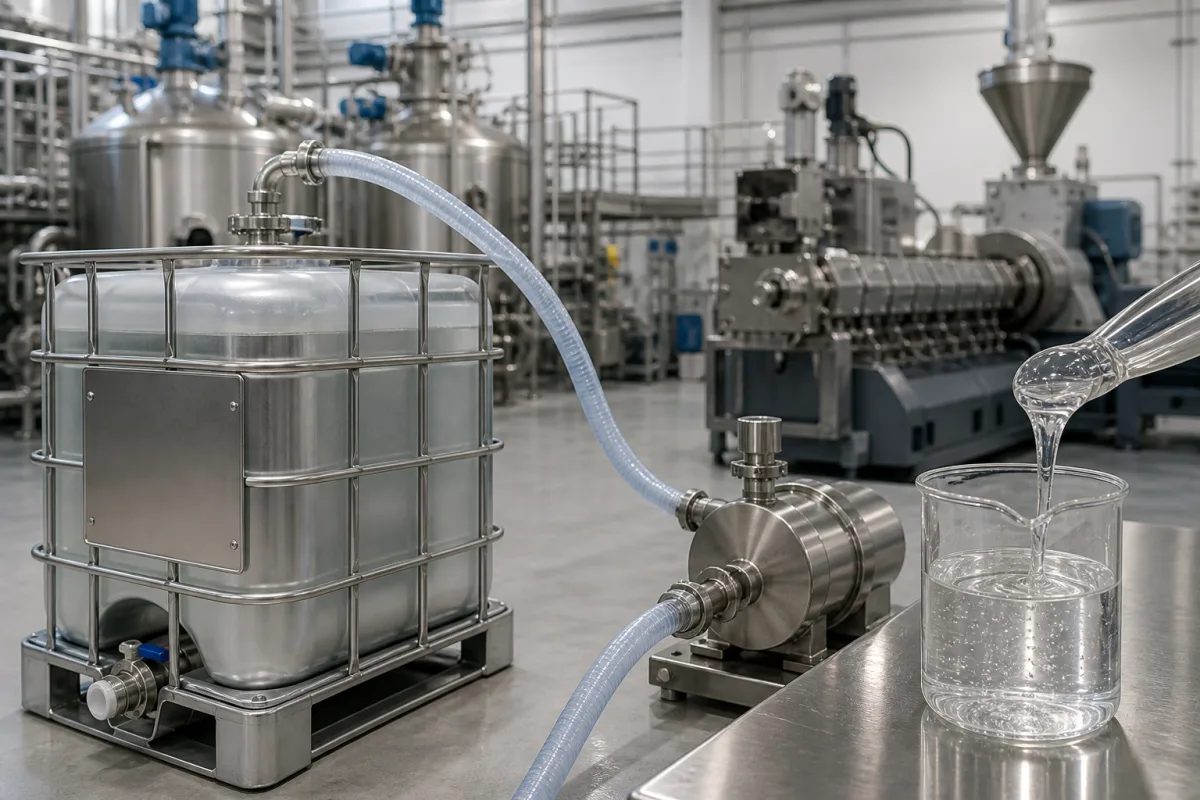
Industrial Grade Polyethylene Glycol Plasticizer

Based on aggregated insights from multiple verified factory profiles within the CNFX directory, the standard Industrial Grade Polyethylene Glycol Plasticizer used in the Chemical Manufacturing sector typically supports operational capacities ranging from standard industrial configurations to heavy-duty production requirements.

Technical Definition & Core Assembly

A canonical Industrial Grade Polyethylene Glycol Plasticizer is characterized by the integration of Polyethylene Glycol Polymer Chains and Terminal Hydroxyl Groups. In industrial production environments, manufacturers listed on CNFX commonly emphasize Ethylene oxide construction to support stable, high-cycle operation across diverse manufacturing scenarios.

High-purity polymeric plasticizer for industrial chemical formulations

Product Specifications

Technical details and manufacturing context for Industrial Grade Polyethylene Glycol Plasticizer

Definition
Industrial Grade Polyethylene Glycol Plasticizer is a high-purity, water-soluble polymer additive used to modify the physical properties of various industrial materials. It functions as a plasticizing agent that increases flexibility, reduces brittleness, and improves processing characteristics in polymer systems. This material is particularly valuable in chemical manufacturing where controlled viscosity, thermal stability, and compatibility with other compounds are essential. Its non-toxic nature and predictable performance make it suitable for demanding industrial applications requiring consistent material behavior.
Working Principle
Polyethylene glycol molecules intercalate between polymer chains, reducing intermolecular forces and increasing chain mobility through hydrogen bonding and molecular spacing.
Common Materials
Ethylene oxide, Water, Catalyst compounds
Technical Parameters
  • Terminal hydroxyl group concentration (mg KOH/g) Customizable
  • Average molecular weight distribution (g/mol) Customizable
Components / BOM
  • Polyethylene Glycol Polymer Chains
    Primary plasticizing component providing molecular flexibility
    Material: Polyethylene oxide polymers
  • Terminal Hydroxyl Groups
    Reactive sites for hydrogen bonding and compatibility
    Material: Hydroxyl functional groups
  • Molecular Weight Modifiers Optional
    Control polymer chain length and distribution
    Material: Catalyst and chain transfer agents
Engineering Reasoning
0.1-2.0 MPa at 20-80°C
3.5 MPa tensile stress at molecular chain entanglement limit
Design Rationale: Polymer chain disentanglement under shear stress exceeding 0.8 MPa·s, causing plasticizer migration and loss of viscoelastic properties
Risk Mitigation (FMEA)
Trigger Thermal degradation at 150°C for 24 hours
Mode: Polymer chain scission reducing molecular weight from 4000 to <2000 g/mol
Strategy: Incorporation of 0.5% phenolic antioxidant (BHT) and thermal monitoring at 100°C threshold
Trigger Hydrolysis at pH <4.0 with 15% water content
Mode: Ester bond cleavage causing 40% viscosity reduction in 72 hours
Strategy: Addition of 1.0% carbodiimide stabilizer and moisture control below 0.5% RH

Industry Taxonomies & Aliases

Commonly used trade names and technical identifiers for Industrial Grade Polyethylene Glycol Plasticizer.

Industrial Ecosystem & Supply Chain DNA

Complementary Systems
Downstream Applications
Specialized Tooling

Application Fit & Sizing Matrix

Operational Limits
pressure: Atmospheric to 10 bar (145 psi) max
flow rate: 0.1-5 m/s recommended for pumping applications
temperature: -40°C to 150°C continuous, 180°C peak
slurry concentration: Up to 60% solids by weight in compatible media
Media Compatibility
✓ PVC polymer formulations ✓ Rubber compounding systems ✓ Industrial adhesive and sealant bases
Unsuitable: Strong oxidizing acids (e.g., concentrated nitric acid, sulfuric acid above 50%)
Sizing Data Required
  • Required plasticizer concentration in final formulation (%)
  • Total batch volume or continuous flow rate (L/hr or kg/hr)
  • Target viscosity reduction or flexibility specification (e.g., Shore hardness, elongation at break)

Reliability & Engineering Risk Analysis

Failure Mode & Root Cause
Viscosity breakdown
Cause: Thermal degradation from prolonged exposure to high temperatures exceeding recommended operating range, leading to molecular chain scission and loss of plasticizing effectiveness.
Hydrolysis-induced phase separation
Cause: Moisture ingress or water contamination causing hydrolysis of polyethylene glycol chains, resulting in separation from the polymer matrix and loss of plasticizing properties.
Maintenance Indicators
  • Visible crystallization or solid deposit formation on surfaces indicating phase separation or contamination
  • Unusual hardening or embrittlement of the plasticized material suggesting loss of plasticizer effectiveness
Engineering Tips
  • Implement strict moisture control measures including desiccant breathers and sealed storage to prevent hydrolysis degradation
  • Monitor and maintain operating temperatures within manufacturer's specified range using temperature sensors and cooling systems where applicable

Compliance & Manufacturing Standards

Reference Standards
ISO 9001:2015 - Quality Management Systems ASTM D638 - Standard Test Method for Tensile Properties of Plastics CE - Conformité Européenne for Chemical Safety
Manufacturing Precision
  • Viscosity: +/- 5% at 25°C
  • Hydroxyl Value: +/- 2 mg KOH/g
Quality Inspection
  • Gas Chromatography for Purity Analysis
  • Viscosity Measurement at Standard Temperature

Factories Producing Industrial Grade Polyethylene Glycol Plasticizer

Verified manufacturers with capability to produce this product in China

✓ 97% Supplier Capability Match Found

P Project Engineer from Canada Feb 27, 2026
★★★★★
"Reliable performance in harsh Chemical Manufacturing environments. No issues with the Industrial Grade Polyethylene Glycol Plasticizer so far."
Technical Specifications Verified
S Sourcing Manager from United States Feb 24, 2026
★★★★★
"Testing the Industrial Grade Polyethylene Glycol Plasticizer now; the Average Molecular Weight (g/mol) results are within 1% of the laboratory datasheet."
Technical Specifications Verified
P Procurement Specialist from United Arab Emirates Feb 21, 2026
★★★★★
"Impressive build quality. Especially the Average Molecular Weight (g/mol) is very stable during long-term operation."
Technical Specifications Verified
Verification Protocol

“Feedback is collected from verified sourcing managers during RFQ (Request for Quote) and factory evaluation processes on CNFX. These reports represent historical performance data and technical audit summaries from our B2B manufacturing network.”

14 sourcing managers are analyzing this specification now. Last inquiry for Industrial Grade Polyethylene Glycol Plasticizer from India (50m ago).

Supply Chain Commonly Integrated Components

Reaction Module

A modular unit within a continuous flow pharmaceutical reactor where chemical reactions occur under controlled conditions.

Explore Specs →
Temperature Control Unit

A precision thermal management component that regulates and maintains specific temperature conditions within a continuous flow pharmaceutical reactor system.

Explore Specs →
Process Analytics

Real-time monitoring and analysis system for pharmaceutical manufacturing processes

Explore Specs →
Dust Containment System

A safety and environmental control system designed to capture, contain, and prevent the escape of airborne pharmaceutical powder particles during blending operations.

Explore Specs →

Frequently Asked Questions

What are the primary applications for this industrial polyethylene glycol plasticizer?

This high-purity PEG plasticizer is designed for industrial chemical formulations requiring controlled molecular weight and viscosity, including polymer modification, specialty coatings, adhesives, and functional fluid additives where consistent plasticization is critical.

How does the hydroxyl value affect the performance of this plasticizer?

The hydroxyl value (measured in mg KOH/g) determines the reactivity and compatibility of the plasticizer. Higher values indicate more terminal hydroxyl groups available for chemical reactions, making it suitable for formulations requiring cross-linking or chemical bonding, while lower values provide better stability in non-reactive systems.

What storage and handling precautions are recommended for this product?

Store in sealed containers at room temperature (15-25°C) away from moisture and oxidizing agents. The low water content specification requires protection from humidity. Use standard chemical handling PPE including gloves and eye protection. The pH-neutral formulation minimizes corrosion risks in standard industrial equipment.

Can I contact factories directly on CNFX?

CNFX is an open directory, not a transaction platform. Each factory profile provides direct contact information and production details to help you initiate direct inquiries with Chinese suppliers.

Get Quote for Industrial Grade Polyethylene Glycol Plasticizer

Request technical pricing, lead times, or customized specifications for Industrial Grade Polyethylene Glycol Plasticizer directly from verified manufacturing units.

Your business information is encrypted and only shared with verified Industrial Grade Polyethylene Glycol Plasticizer suppliers.

Thank you! Your message has been sent. We'll respond within 1–3 business days.

Need to Manufacture Industrial Grade Polyethylene Glycol Plasticizer?

Connect with verified factories specializing in this product category

Add Your Factory Contact Us
Previous Product
Industrial Grade Polyethylene Glycol
Next Product
Industrial Grade Polyurethane Foam Catalyst