Editorial Technical Reference

Frequency Synthesizer

This page explains how Frequency Synthesizer is classified within Computer, Electronic and Optical Product Manufacturing. Technical values and manufacturer relationships are research references; confirm the current specification and supplier evidence for each order.

Technical Definition & Core Assembly

Electronic circuit that generates a range of frequencies from a single reference frequency
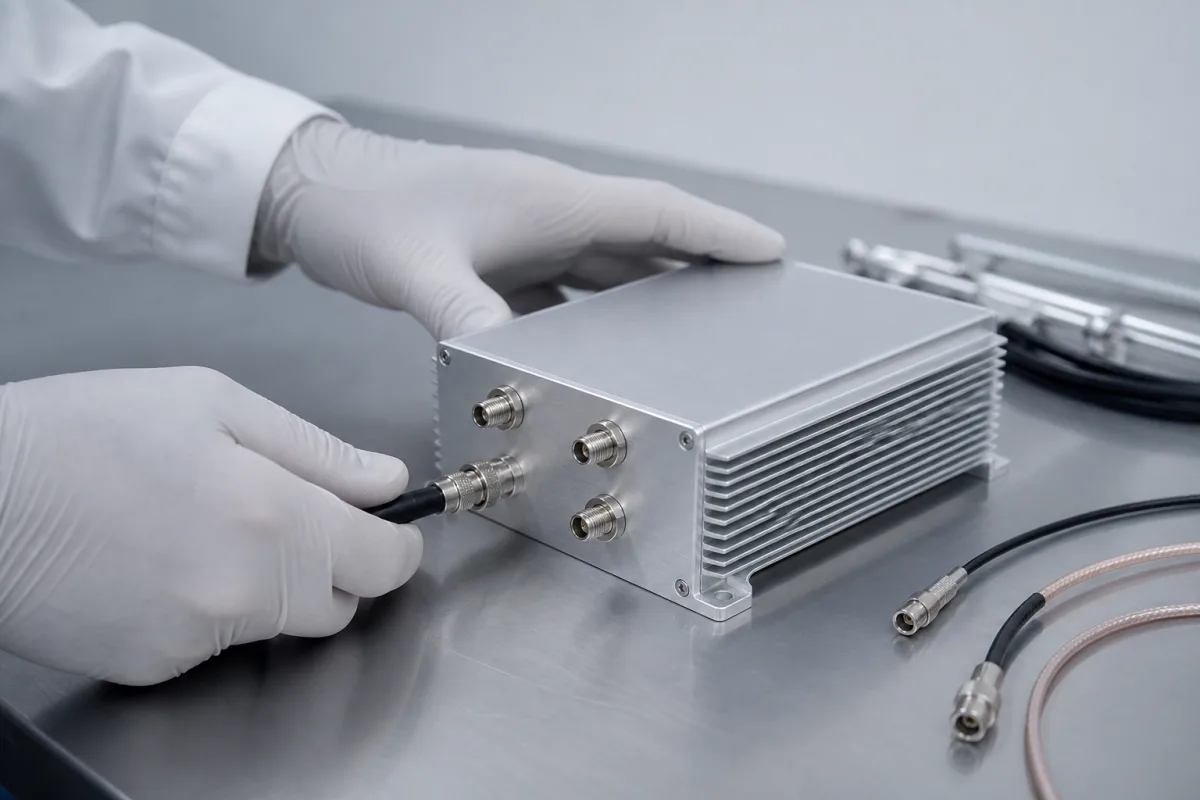
Representative product image. Confirm appearance and specifications with the manufacturer.

Product Specifications

Technical details and manufacturing context for Frequency Synthesizer

Definition
A frequency synthesizer is an electronic circuit that generates a range of output frequencies from a single reference frequency. It is a critical component within transceiver circuits, providing stable and precise output frequencies for modulation, demodulation, and channel selection in wireless communication systems. The synthesizer operates by using phase-locked loop (PLL) technology, which compares the output of a voltage-controlled oscillator (VCO) with a reference frequency. Through feedback control, the PLL adjusts the VCO to maintain the desired frequency, ensuring accuracy and stability. Typical parameters for such devices include an output frequency range of 10–10000 MHz, covering common communication bands, and a frequency resolution of 0.1–1 Hz for fine tuning. Phase noise is specified at -120 to -100 dBc/Hz at a 10 kHz offset, with lower values indicating better signal purity. Frequency stability is ±0.1 to ±1 ppm over temperature and aging. Output power is adjustable from 0 to 10 dBm, and the supply voltage is 3.3–5 V DC. The operating temperature range is -40 to 85 °C, suitable for industrial applications. The input reference frequency is typically 10–100 MHz. Spurious suppression is -70 to -50 dBc, and harmonic suppression is -30 to -20 dBc at the fundamental output. Switching speed, or frequency settling time, is 10–100 µs. The control interface is digital, supporting SPI or I2C. The device is constructed using semiconductor silicon, a ceramic substrate, and copper traces. These parameters are typical reference ranges and must be verified for the specific model and application with the legal manufacturer or supplier.
Working Principle
The frequency synthesizer uses a phase-locked loop (PLL) to generate precise frequencies. The PLL compares the phase of a voltage-controlled oscillator (VCO) output with a reference frequency from a stable oscillator. A phase detector produces an error signal proportional to the phase difference, which is filtered and applied to the VCO control input. This feedback adjusts the VCO frequency until the phase difference is minimized, locking the output to a multiple or fraction of the reference. By changing the divider ratio in the feedback path, the output frequency can be set to desired values within the specified range. The loop filter determines the response speed and stability, balancing noise and settling time.
Common Materials
Semiconductor silicon, Ceramic substrate, Copper traces
Technical Parameters
ParameterTypical rangeNotes & selection driver
Output Frequency Range10–10000 MHzCovers typical communication bands
Frequency Resolution0.1–1 HzFine steps for precise tuning
Phase Noise-120–-100 dBc/Hz @10 kHzLower is better for signal purity
Frequency Stability±0.1–±1 ppmOver temperature and aging
Output Power0–10 dBmAdjustable level
Supply Voltage3.3–5 V DCSingle supply operation
Operating Temperature-40–85 °CIndustrial grade
Input Reference Frequency10–100 MHzTypical reference oscillator
Spurious Suppression-70–-50 dBcRejects unwanted frequencies
Harmonic Suppression-30–-20 dBcAt fundamental output
Switching Speed10–100 µsFrequency settling time
Control InterfaceSPI/I2CDigital programming

Ranges are indicative industry figures for RFQ preparation, not a supplier commitment. Confirm every value and standard with the legal manufacturer before ordering.

Components / BOM
  • Phase Detector
    Compares reference and feedback signals to generate error voltage
    Material: Semiconductor
  • Voltage-Controlled Oscillator
    Generates output frequency controlled by input voltage
    Material: Semiconductor with varactor diodes
  • Frequency Divider
    Divides VCO output frequency for comparison with reference
    Material: Semiconductor logic circuits
  • Loop Filter Part
    Filters phase detector output to control VCO
    Material: Passive components (resistors, capacitors)
  • Reference Oscillator
    The stable source the PLL locks to; the whole synthesiser is only as accurate as this.

Applied To / Applications

This component is essential for the following industrial systems and equipment:

Industrial Ecosystem & Supply Chain Structure

Complementary Systems
Downstream Applications
Specialized Tooling

Application Fit & Sizing Matrix

Operational Limits
pressure: Atmospheric (sealed package), no pressure rating required
other spec: Frequency range: 10 MHz to 6 GHz, Phase noise: -110 dBc/Hz at 100 kHz offset, Supply voltage: 3.3V ±10%, Power consumption: < 500 mW
temperature: -40°C to +85°C (operational), -55°C to +125°C (storage)
Media Compatibility
✓ Clean room electronics assembly ✓ RF test equipment enclosures ✓ Avionics temperature-controlled bays
Unsuitable: High-vibration industrial machinery environments without shock mounting
Sizing Data Required
  • Required output frequency range (min/max)
  • Reference frequency input (e.g., 10 MHz, 100 MHz)
  • Phase noise requirements at specific offsets

Reliability & Engineering Risk Analysis

Failure Mode & Root Cause
Phase noise degradation
Cause: Aging of voltage-controlled oscillator (VCO) components, thermal drift in reference oscillator, or contamination in phase-locked loop (PLL) circuitry affecting signal purity.
Frequency drift or lock failure
Cause: Deterioration of dielectric materials in tuning capacitors, degradation of varactor diodes, or power supply instability disrupting PLL synchronization.
Maintenance Indicators
  • Audible humming or buzzing from the unit indicating power supply or cooling fan failure
  • Visual flickering or instability on connected test equipment displays showing output frequency anomalies
Engineering Tips
  • Implement regular calibration against a traceable frequency standard and maintain stable environmental conditions (temperature/humidity control) to minimize thermal stress on sensitive components.
  • Use filtered, regulated power supplies with proper grounding and perform periodic cleaning of internal components to prevent dust accumulation that can cause thermal hotspots or electrical leakage.

Indicative industry ranges for design and RFQ preparation. Confirm the exact figures and applicable standard with the manufacturer before specifying.

Compliance & Manufacturing Standards

Applicable Standards
IEC 61000-6-2 (Electromagnetic compatibility - Immunity for industrial environments) MIL-STD-461G (Requirements for the control of electromagnetic interference characteristics of subsystems and equipment) EN 61326-1 (Electrical equipment for measurement, control and laboratory use - EMC requirements)

Quoted from the published standard.

Manufacturing Precision
  • Frequency stability: ±0.5 ppm over operating temperature range
  • Phase noise: -110 dBc/Hz at 10 kHz offset from carrier
Quality Inspection
  • Spectrum analyzer test for spurious emissions and phase noise
  • Temperature cycling test for frequency stability verification

Manufacturers of Frequency Synthesizer

Manufacturer profiles associated with Frequency Synthesizer.

Sourcing Frequency Synthesizer from China?
Tell us your specification and target quantity — we will match it against manufacturer records and come back with the factories that fit.
Request manufacturers We manufacture this

Manufacturer listings support early research and capability understanding. They are not certification, ranking, or transaction guarantees.

Technical documentation
Request current drawings, revision history, and a signed specification sheet.
Manufacturing capability
Verify equipment lists, process limits, capacity, and representative production evidence.
Inspection readiness
Confirm test methods, calibrated equipment, sampling plans, and traceable reports.
Supplier transparency
Check the legal entity, factory address, ownership, certifications, and direct contacts.

CNFX does not score or rank suppliers. Buyers must verify all claims and documents with the legal manufacturer before ordering.

Supply Chain Compatible Machinery & Devices

Modular Industrial Edge Computing Device

This modular industrial edge computing device is a ruggedized system designed for deployment in harsh industrial environments to perform real-time data processing, analytics, and control functions at the network edge.

Explore Specs →
Industrial Smart Camera Module

The Industrial Smart Camera Module is a compact, self-contained vision processing unit designed for integration into industrial machinery and production lines.

Explore Specs →
Surface Mount Resistor

Passive electronic component for current limiting and voltage division in circuits

Explore Specs →
Surface Mount Capacitor

A surface mount capacitor is a fundamental electronic component used for energy storage, filtering, coupling, and decoupling in electronic circuits.

Explore Specs →

Frequently Asked Questions

What is the output frequency range of this frequency synthesizer?

The typical output frequency range is 10 to 10000 MHz, covering common communication bands. However, the exact range depends on the specific model and configuration, so you must verify with the manufacturer.

How does the phase-locked loop ensure frequency accuracy?

The PLL continuously compares the VCO output phase with a reference frequency. Any phase difference generates an error signal that adjusts the VCO control voltage, correcting the output frequency. This feedback loop locks the output to a precise multiple or fraction of the reference, ensuring accuracy.

What control interfaces are available?

The device supports digital programming via SPI or I2C interfaces. These allow you to set the output frequency, output power, and other parameters. The specific interface and protocol details should be confirmed with the manufacturer.

What are the typical phase noise and stability specifications?

Phase noise is typically -120 to -100 dBc/Hz at a 10 kHz offset, and frequency stability is ±0.1 to ±1 ppm over temperature and aging. These values are reference ranges; actual performance varies by model and operating conditions, so verify with the manufacturer.

Data Basis

Editorial classification, named public sources where available, and source-reviewed manufacturer records.

Preliminary Technical Classification
This page supports structured research, RFQ preparation, and supplier evaluation. It does not replace buyer-led supplier qualification, standards review, or technical approval.
Buyer enquiry

Request manufacturing insight for Frequency Synthesizer

Ask for use case, specification boundaries, supplier type, and RFQ preparation information for this product.

Where it goes
Straight to the CNFX editorial desk, and to the manufacturer if this product is linked to a claimed profile. Nothing is broadcast to a supplier list.
Your details stay here
We do not sell or rent enquiry data, and we do not add you to a mailing list. Used only to answer this request.
No commission, no middleman
CNFX is a directory. We take no cut of any order and never negotiate on a supplier's behalf.
What we don't claim
A listing is not an endorsement. Qualify every supplier and verify every figure yourself before ordering.

Your business information is used only to process this request.

Thank you! Your message has been sent. We'll respond within 1–3 business days.
Sorry, we couldn't send your message. Please try again, or email us at contact@cnfx.com.

Need to Manufacture Frequency Synthesizer?

Compare manufacturer profiles with relevant product and process capability.

Previous Product
XY Positioning Stage
Last Product
Get QuotesChat