Industry-Verified Manufacturing Data (2026)

Pattern Generation Element

Based on aggregated insights from multiple verified factory profiles within the CNFX directory, the standard Pattern Generation Element used in the Computer, Electronic and Optical Product Manufacturing sector typically supports operational capacities ranging from standard industrial configurations to heavy-duty production requirements.

Technical Definition & Core Assembly

A canonical Pattern Generation Element is characterized by the integration of Optical Substrate and Pattern Structure. In industrial production environments, manufacturers listed on CNFX commonly emphasize Fused silica construction to support stable, high-cycle operation across diverse manufacturing scenarios.

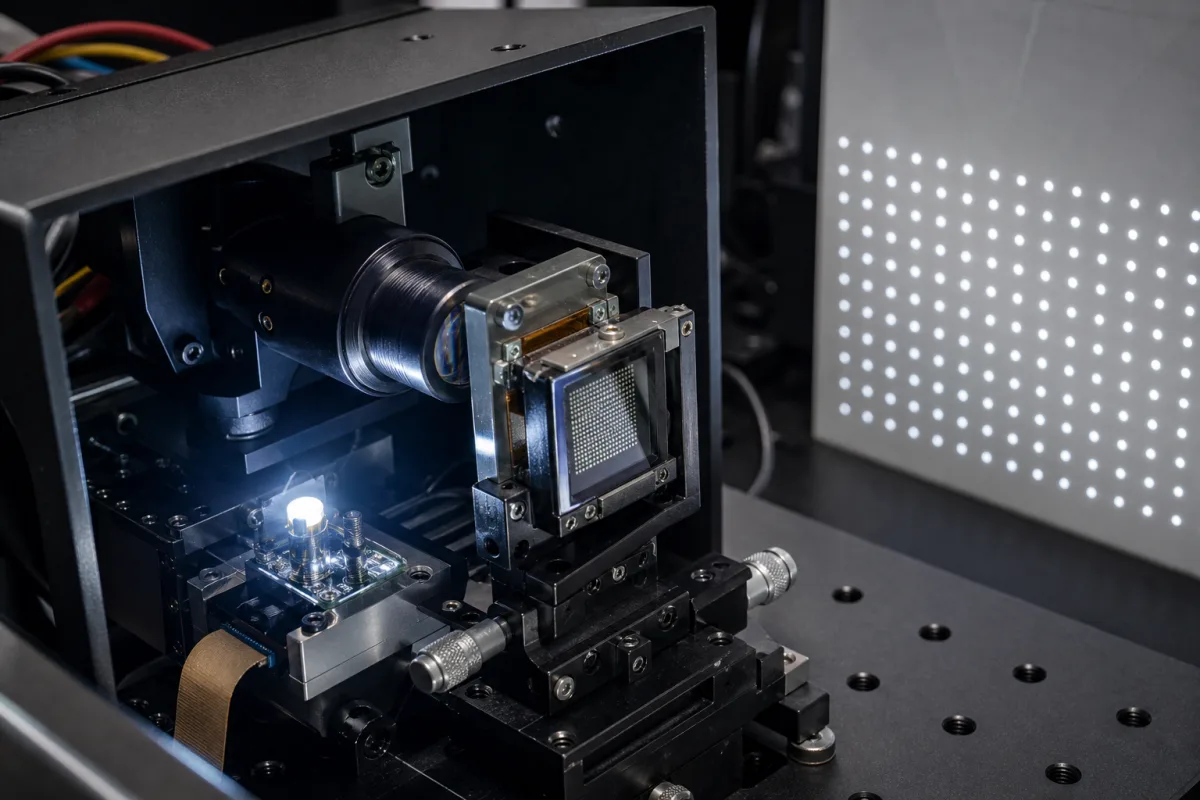
Optical component that creates structured light patterns for projection systems

Product Specifications

Technical details and manufacturing context for Pattern Generation Element

Definition
A critical optical component within structured light projectors that generates precise light patterns (such as grids, dots, or lines) used for 3D scanning, measurement, and surface analysis applications. It transforms coherent light into structured illumination patterns through diffraction, refraction, or micro-optical elements.
Working Principle
Utilizes optical principles (diffraction, refraction, or micro-optics) to modulate coherent light from a laser or LED source into specific structured patterns. Common implementations include diffractive optical elements (DOEs), micro-lens arrays, or patterned masks that shape the light beam into predetermined configurations.
Common Materials
Fused silica, Optical glass, Polymer substrates
Technical Parameters
  • Element diameter or dimensions (mm) Per Request
Components / BOM
  • Optical Substrate
    Base material that carries the pattern-generating structures
    Material: Fused silica or optical glass
  • Pattern Structure
    Microscopic features (grooves, lenses, or patterns) that shape the light
    Material: Etched/deposited materials on substrate
  • Anti-Reflective Coating
    Reduces light loss and improves transmission efficiency
    Material: Dielectric thin films
Engineering Reasoning
400-700 nm wavelength, 0.5-5 mW optical power output, 20-80°C operating temperature
Thermal damage at 85°C junction temperature, optical power density exceeding 10 W/cm² causing permanent microcracking, wavelength shift beyond ±2 nm from design specification
Design Rationale: Thermal expansion coefficient mismatch between silicon substrate (2.6×10⁻⁶/K) and deposited dielectric layers (0.5×10⁻⁶/K) causing interfacial delamination at temperature gradients exceeding 15°C/mm
Risk Mitigation (FMEA)
Trigger Laser diode current exceeding 150% of rated maximum (e.g., 150 mA for 100 mA rated device)
Mode: Catastrophic optical damage (COD) with facet melting at power densities >5 MW/cm²
Strategy: Integrated current-limiting circuit with 120 mA hard cutoff and temperature-compensated feedback loop
Trigger Condensation formation due to 85% relative humidity at 25°C ambient crossing dew point during thermal cycling
Mode: Liquid film scattering causing 30% pattern distortion and eventual electrochemical corrosion at metal contacts
Strategy: Hermetic sealing with 10⁻⁶ Torr vacuum backfill and getter material (Zr-V-Fe alloy) maintaining <100 ppm moisture content

Industry Taxonomies & Aliases

Commonly used trade names and technical identifiers for Pattern Generation Element.

Applied To / Applications

This component is essential for the following industrial systems and equipment:

Industrial Ecosystem & Supply Chain DNA

Complementary Systems
Downstream Applications
Specialized Tooling

Application Fit & Sizing Matrix

Operational Limits
pressure: 0 to 1 atm (non-pressurized)
other spec: Wavelength range: 400-700 nm, Pattern accuracy: ±0.1%
temperature: -20°C to 80°C
Media Compatibility
✓ Clean dry air ✓ Nitrogen purge environments ✓ Optical-grade inert gases
Unsuitable: High particulate or corrosive chemical environments
Sizing Data Required
  • Projection distance (working distance)
  • Required pattern resolution (pixel/mm)
  • Light source wavelength and power

Reliability & Engineering Risk Analysis

Failure Mode & Root Cause
Abrasive erosion
Cause: High-velocity particulate matter in fluid flow causing gradual material removal from surfaces
Cavitation
Cause: Rapid formation and collapse of vapor bubbles due to pressure fluctuations, leading to surface pitting and fatigue
Maintenance Indicators
  • Unusual vibration patterns or audible knocking during operation
  • Visible surface pitting, scoring, or material loss on critical flow surfaces
Engineering Tips
  • Implement proper filtration and particle control in upstream systems to reduce abrasive contaminants
  • Maintain stable operating pressures and velocities within design specifications to prevent cavitation conditions

Compliance & Manufacturing Standards

Reference Standards
ISO 9001:2015 Quality Management Systems ASTM E11-22 Standard Specification for Woven Wire Test Sieve Cloth and Test Sieves CE Marking for Machinery Directive 2006/42/EC
Manufacturing Precision
  • Pattern Pitch: +/-0.005mm
  • Surface Roughness: Ra 0.4μm
Quality Inspection
  • Optical Comparator Measurement
  • Coordinate Measuring Machine (CMM) Verification

Factories Producing Pattern Generation Element

Verified manufacturers with capability to produce this product in China

✓ 97% Supplier Capability Match Found

S Sourcing Manager from Canada Jan 04, 2026
★★★★★
"Found 26+ suppliers for Pattern Generation Element on CNFX, but this spec remains the most cost-effective."
Technical Specifications Verified
P Procurement Specialist from United States Jan 01, 2026
★★★★☆
"The technical documentation for this Pattern Generation Element is very thorough, especially regarding technical reliability. (Delivery took slightly longer than expected, but technical support was excellent.)"
Technical Specifications Verified
T Technical Director from United Arab Emirates Dec 29, 2025
★★★★★
"Reliable performance in harsh Computer, Electronic and Optical Product Manufacturing environments. No issues with the Pattern Generation Element so far."
Technical Specifications Verified
Verification Protocol

“Feedback is collected from verified sourcing managers during RFQ (Request for Quote) and factory evaluation processes on CNFX. These reports represent historical performance data and technical audit summaries from our B2B manufacturing network.”

19 sourcing managers are analyzing this specification now. Last inquiry for Pattern Generation Element from Vietnam (1h ago).

Supply Chain Compatible Machinery & Devices

Industrial Smart Camera Module

Embedded vision system for industrial automation and quality inspection.

Explore Specs →
Industrial Wireless Power Transfer Module

Wireless power transfer module for industrial equipment applications

Explore Specs →
Industrial Smart Sensor Module

Modular industrial sensor with embedded processing and wireless connectivity

Explore Specs →
Surface Mount Resistor

Passive electronic component for current limiting and voltage division in circuits

Explore Specs →

Frequently Asked Questions

What are the main applications of pattern generation elements in optical systems?

Pattern generation elements are primarily used in projection systems, 3D scanning, metrology, and machine vision applications where precise structured light patterns are required for measurement, alignment, or display purposes.

How does the choice of material affect the performance of pattern generation elements?

Fused silica offers excellent thermal stability and low thermal expansion, optical glass provides good optical clarity at lower cost, while polymer substrates enable lightweight, flexible designs with different refractive properties for specific wavelength requirements.

What maintenance is required for pattern generation elements in industrial environments?

Regular cleaning with appropriate optical-grade solvents, protection from dust and contaminants, and periodic inspection for coating degradation or substrate damage are recommended to maintain optimal performance in industrial settings.

Can I contact factories directly on CNFX?

CNFX is an open directory, not a transaction platform. Each factory profile provides direct contact information and production details to help you initiate direct inquiries with Chinese suppliers.

Get Quote for Pattern Generation Element

Request technical pricing, lead times, or customized specifications for Pattern Generation Element directly from verified manufacturing units.

Your business information is encrypted and only shared with verified Pattern Generation Element suppliers.

Thank you! Your message has been sent. We'll respond within 1–3 business days.

Need to Manufacture Pattern Generation Element?

Connect with verified factories specializing in this product category

Add Your Factory Contact Us
Previous Product
Pattern Comparator
Next Product
Pattern Matcher