Industry-Verified Manufacturing Data (2026)

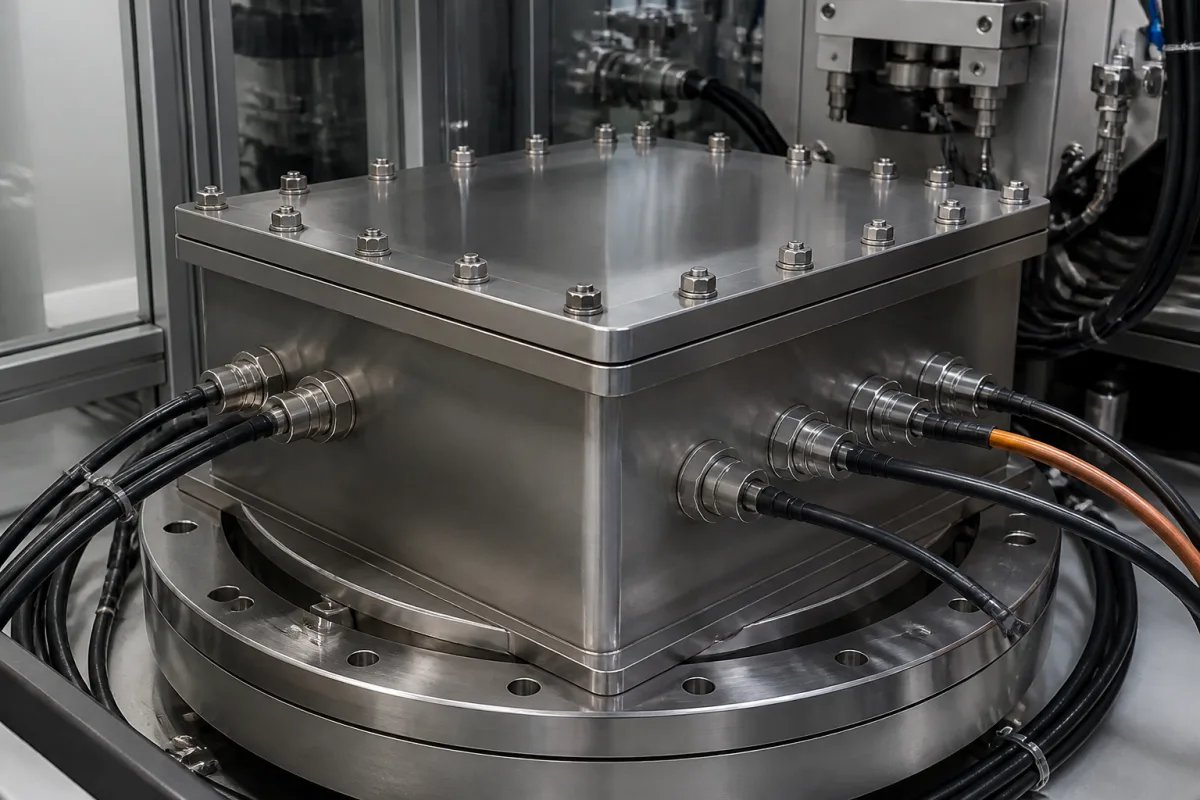
Sealed Enclosure

Based on aggregated insights from multiple verified factory profiles within the CNFX directory, the standard Sealed Enclosure used in the Computer, Electronic and Optical Product Manufacturing sector typically supports operational capacities ranging from standard industrial configurations to heavy-duty production requirements.

Technical Definition & Core Assembly

A canonical Sealed Enclosure is characterized by the integration of Main Body/Casing and Sealing Gasket/O-Ring. In industrial production environments, manufacturers listed on CNFX commonly emphasize Stainless Steel (e.g., 304, 316) construction to support stable, high-cycle operation across diverse manufacturing scenarios.

A hermetically sealed housing that provides controlled environmental isolation for sensitive calibration components.
Product Specifications

Technical details and manufacturing context for Sealed Enclosure

Definition
The Sealed Enclosure is a critical component of the Integrated Calibration Chamber, designed to create and maintain a precisely controlled internal environment. It protects sensitive calibration instruments from external contaminants, temperature fluctuations, humidity variations, and electromagnetic interference, ensuring accurate and repeatable calibration measurements.
Working Principle
The enclosure utilizes gaskets, seals, and specialized joining techniques to create an airtight and sometimes inert gas-filled barrier. It may incorporate viewports, feedthroughs for electrical connections, and access ports that maintain the seal integrity while allowing necessary functionality.
Common Materials
Stainless Steel (e.g., 304, 316), Aluminum Alloy, Specialty Polymers (e.g., PTFE, PEEK)
Technical Parameters
  • Internal dimensions (Length x Width x Height) defining the usable volume for housed components. (mm) Standard Spec
Components / BOM
  • Main Body/Casing
    Primary structural frame providing the sealed volume.
    Material: Stainless Steel or Aluminum
  • Sealing Gasket/O-Ring
    Creates the airtight seal between mating surfaces (e.g., door and frame).
    Material: Silicone, Viton, EPDM, or Metal
  • Access Door/Hatch
    Removable panel for installing, maintaining, or accessing internal components while maintaining seal when closed.
    Material: Same as Main Body
  • Electrical Feedthrough
    Hermetically sealed connector allowing power/signal cables to pass into the enclosure without breaking the seal.
    Material: Stainless Steel, Glass, or Ceramic
  • Viewport Window
    Optically transparent, sealed window for visual inspection of internal components.
    Material: Tempered Glass or Polycarbonate
Engineering Reasoning
0.1-1.5 bar absolute pressure differential, -40°C to +85°C temperature, 0-95% relative humidity non-condensing
2.0 bar pressure differential causing permanent seal deformation, 125°C causing elastomer seal degradation, 100% relative humidity leading to internal condensation
Design Rationale: Differential thermal expansion between 304 stainless steel housing (17.2 μm/m·K) and silicone elastomer seals (250 μm/m·K) causing seal compression loss at 85°C transition point
Risk Mitigation (FMEA)
Trigger Cyclic pressure fluctuation exceeding 0.5 bar amplitude at 10 Hz frequency
Mode: Metal fatigue crack propagation at weld seam initiating at 10^6 cycles
Strategy: Reinforced corner design with 3 mm radius and post-weld heat treatment at 400°C for 2 hours
Trigger Continuous UV exposure at 0.5 W/m² intensity for 5000 hours
Mode: Polymer seal hardening to 90 Shore A durometer causing compression set exceeding 25%
Strategy: Carbon-black filled EPDM seals with 2 mm UV-resistant coating meeting MIL-STD-810H Method 505.7

Industry Taxonomies & Aliases

Commonly used trade names and technical identifiers for Sealed Enclosure.

Applied To / Applications

This component is essential for the following industrial systems and equipment:

Industrial Ecosystem & Supply Chain DNA

Complementary Systems
Downstream Applications
Specialized Tooling

Application Fit & Sizing Matrix

Operational Limits
pressure: 0 to 2 bar absolute
other spec: IP68/NEMA 6P ingress protection, 0% particulate ingress
temperature: -40°C to +85°C
Media Compatibility
✓ Dry inert gases (N2, Ar) ✓ Clean calibration fluids (ISO 4406 Class 6 or cleaner) ✓ Low-humidity air (<5% RH)
Unsuitable: Abrasive slurries or corrosive chemical environments
Sizing Data Required
  • Internal component volume/space requirements
  • Required number and type of feedthrough connections
  • Maximum allowable external dimensions/installation constraints

Reliability & Engineering Risk Analysis

Failure Mode & Root Cause
Seal Degradation
Cause: Chemical attack from internal fluids or external contaminants compromising elastomer integrity, accelerated by temperature extremes and UV exposure.
Gasket Compression Set
Cause: Permanent deformation of sealing gasket due to excessive bolt torque during installation, thermal cycling, or material fatigue over time, leading to leakage paths.
Maintenance Indicators
  • Visible fluid weeping or residue around enclosure seams indicating seal failure
  • Audible hissing or pressure equalization sounds suggesting integrity loss
Engineering Tips
  • Implement torque-controlled installation procedures with calibrated tools to prevent gasket over-compression and ensure uniform sealing pressure
  • Establish environmental monitoring for temperature, humidity, and chemical exposure with scheduled seal material compatibility reviews

Compliance & Manufacturing Standards

Reference Standards
ISO 9001:2015 - Quality Management Systems ANSI/ISA 12.12.01 - Electrical Equipment for Hazardous Locations DIN EN 60529 - Degrees of Protection Provided by Enclosures (IP Code)
Manufacturing Precision
  • Flatness: +/-0.1mm per 100mm
  • Sealing Surface Roughness: Ra 3.2μm max
Quality Inspection
  • IP Rating Water Ingress Test
  • Helium Leak Test for Hermetic Seals

Factories Producing Sealed Enclosure

Verified manufacturers with capability to produce this product in China

✓ 92% Supplier Capability Match Found

P Procurement Specialist from United States Feb 16, 2026
★★★★★
"Great transparency on the Sealed Enclosure components. Essential for our Computer, Electronic and Optical Product Manufacturing supply chain."
Technical Specifications Verified
T Technical Director from United Arab Emirates Feb 13, 2026
★★★★★
"The Sealed Enclosure we sourced perfectly fits our Computer, Electronic and Optical Product Manufacturing production line requirements."
Technical Specifications Verified
P Project Engineer from Australia Feb 10, 2026
★★★★★
"Found 33+ suppliers for Sealed Enclosure on CNFX, but this spec remains the most cost-effective."
Technical Specifications Verified
Verification Protocol

“Feedback is collected from verified sourcing managers during RFQ (Request for Quote) and factory evaluation processes on CNFX. These reports represent historical performance data and technical audit summaries from our B2B manufacturing network.”

7 sourcing managers are analyzing this specification now. Last inquiry for Sealed Enclosure from UAE (1h ago).

Supply Chain Compatible Machinery & Devices

Modular Industrial Edge Computing Device

Rugged computing platform for industrial data processing at the network edge

Explore Specs →
Industrial Smart Camera Module

Embedded vision system for industrial automation and quality inspection.

Explore Specs →
Industrial Wireless Power Transfer Module

Wireless power transfer module for industrial equipment applications

Explore Specs →
Industrial Smart Sensor Module

Modular industrial sensor with embedded processing and wireless connectivity

Explore Specs →

Frequently Asked Questions

What materials are recommended for corrosive environments in sealed enclosures?

For corrosive environments, we recommend 316 stainless steel for superior corrosion resistance, or specialty polymers like PTFE and PEEK which offer excellent chemical resistance and thermal stability.

How do sealed enclosures protect sensitive calibration components?

Our sealed enclosures provide hermetic sealing that prevents moisture, dust, and contaminants from entering, maintaining a controlled environment that protects sensitive calibration components from environmental factors that could affect accuracy and performance.

What are the key components included in a standard sealed enclosure BOM?

A standard bill of materials includes: main body/casing, sealing gasket or O-ring for airtight closure, access door or hatch, electrical feedthrough for wiring, and viewport window for visual inspection without compromising the sealed environment.

Can I contact factories directly on CNFX?

CNFX is an open directory, not a transaction platform. Each factory profile provides direct contact information and production details to help you initiate direct inquiries with Chinese suppliers.

Get Quote for Sealed Enclosure

Request technical pricing, lead times, or customized specifications for Sealed Enclosure directly from verified manufacturing units.

Your business information is encrypted and only shared with verified Sealed Enclosure suppliers.

Thank you! Your message has been sent. We'll respond within 1–3 business days.

Need to Manufacture Sealed Enclosure?

Connect with verified factories specializing in this product category

Add Your Factory Contact Us
Previous Product
Score Aggregator
Next Product
Search Algorithm Core