Detection Head / Aperture
View system integration details
This page explains how Sensor Mount is classified within Computer, Electronic and Optical Product Manufacturing. Technical values and manufacturer relationships are research references; confirm the current specification and supplier evidence for each order.
A mechanical component designed to securely position and align sensors within detection systems.
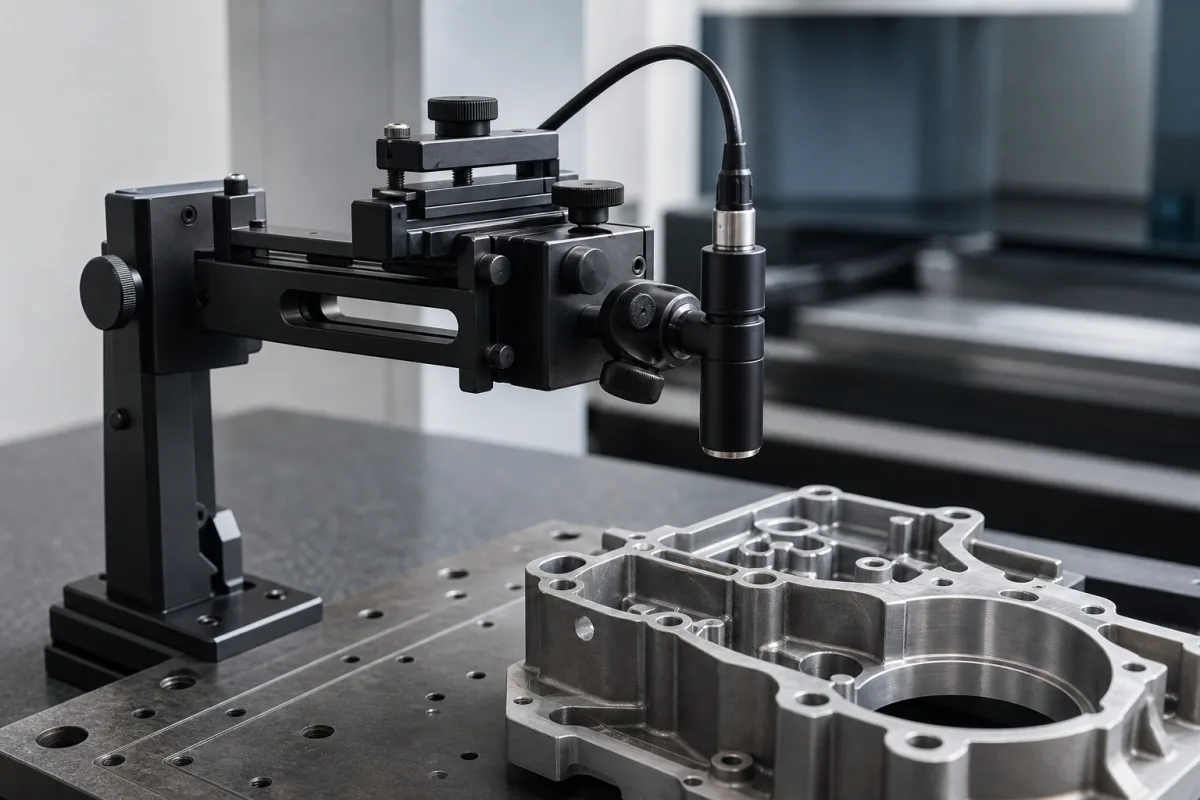
Technical details and manufacturing context for Sensor Mount
| Parameter | Typical range | Notes & selection driver |
|---|---|---|
| Mounting Hole Diameter | 4.2–12.5 mm | Matches standard sensor thread sizes M4 to M12 |
| Center Height | 20–60 mm | Determines sensor alignment relative to target |
| Adjustment Range | ±5–±15 mm | Allows fine positioning during setup |
| Material Grade | 6061-T6 / 304 | Aluminum for lightweight, stainless for corrosion resistanceASTM B211 / ASTM A276 |
| Surface Finish | Ra 0.8–1.6 μm | Critical for sealing surfaces and precision fitsISO 1302 |
| Flatness Tolerance | 0.05–0.1 mm | Ensures stable mounting and accurate alignmentISO 1101 |
| Operating Temperature | -40–85 °C | Wider range for industrial environments |
| Ingress Protection | IP54–IP67 | Higher rating for washdown or outdoor useIEC 60529 |
| Weight | 0.05–0.5 kg | Depends on material and size |
| Thread Type | M4–M12 | Metric coarse thread for sensor mountingISO 965 |
Ranges are indicative industry figures for RFQ preparation, not a supplier commitment. Confirm every value and standard with the legal manufacturer before ordering.
This component is essential for the following industrial systems and equipment:
| pressure: | 0 to 10 bar |
| temperature: | -40°C to 150°C |
| vibration resistance: | Up to 5g RMS |
| environmental sealing: | IP67 |
Indicative industry ranges for design and RFQ preparation. Confirm the exact figures and applicable standard with the manufacturer before specifying.
Quoted from the published standard.
1 company lists this product among what they make. Company figures are quoted from each company's own website; every card states where the relationship came from.
Manufacturer listings support early research and capability understanding. They are not certification, ranking, or transaction guarantees.
A practical evidence checklist for RFQ preparation and supplier evaluation.
CNFX does not score or rank suppliers. Buyers must verify all claims and documents with the legal manufacturer before ordering.
The primary function is to provide mechanical support and precise positioning for a sensor, ensuring it remains correctly aligned and stable relative to the target area. This helps maintain measurement accuracy and reliability.
Common materials include aluminum alloy (e.g., 6061-T6) for lightweight applications and stainless steel (e.g., 304) for corrosion resistance. The choice depends on the environment and weight requirements.
You should check the manufacturer's datasheet for specific parameters such as mounting hole diameter, center height, adjustment range, material grade, surface finish, flatness tolerance, operating temperature, ingress protection, and weight. Also confirm compliance with relevant standards like ISO 1302 or IEC 60529.
Periodic inspection for loosening, corrosion, or wear is recommended. Ensure that adjustment mechanisms are secure and that the sensor remains aligned. Follow the manufacturer's guidelines for cleaning and torque specifications.
Editorial classification, named public sources where available, and source-reviewed manufacturer records.
Ask for use case, specification boundaries, supplier type, and RFQ preparation information for this product.
Compare manufacturer profiles with relevant product and process capability.