Editorial Technical Reference

High-Pressure Ammonia Synthesis Loop Heat Exchanger Tube Bundle

This page explains how High-Pressure Ammonia Synthesis Loop Heat Exchanger Tube Bundle is classified within Fertilizers and Nitrogen Compounds Manufacturing. Technical values and manufacturer relationships are research references; confirm the current specification and supplier evidence for each order.

Technical Definition & Core Assembly

This tube bundle is a critical component of shell-and-tube heat exchangers used in high-pressure ammonia synthesis loops within fertilizer production facilities.
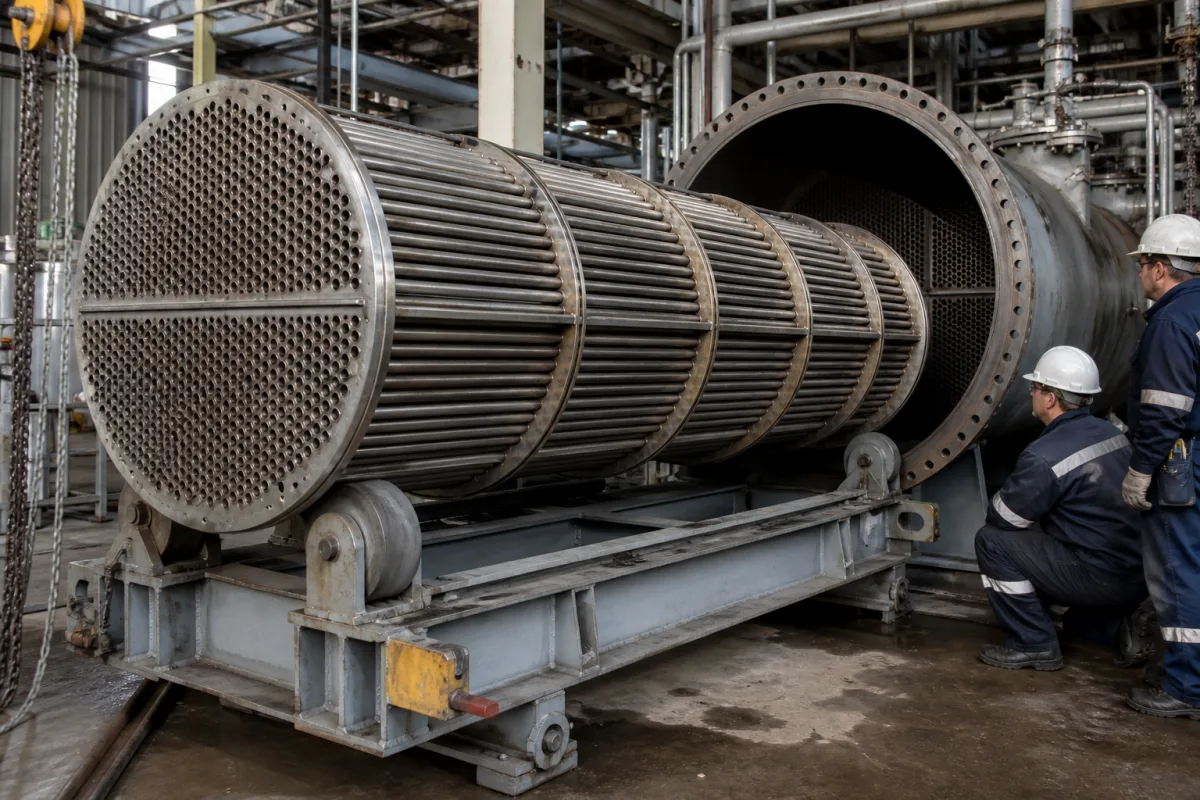
Representative product image. Confirm appearance and specifications with the manufacturer.

Product Specifications

Technical details and manufacturing context for High-Pressure Ammonia Synthesis Loop Heat Exchanger Tube Bundle

Definition
This tube bundle is a critical component of shell-and-tube heat exchangers used in high-pressure ammonia synthesis loops within fertilizer production facilities. It is designed to transfer heat between process streams while withstanding corrosive ammonia environments and significant thermal stresses. The bundle consists of multiple tubes arranged in a specific layout, with baffles to direct shell-side flow and enhance heat transfer. It enables precise temperature control in the synthesis loop, optimizing reaction kinetics and energy efficiency. The component is engineered for integration into shell-and-tube heat exchangers, with materials selected for corrosion resistance and high-temperature performance. Typical materials include Stainless Steel 316L and Nickel Alloy 625, though other grades such as SA-213 T11 and SA-312 304L may be specified. Key design parameters include design pressure (15–35 MPa), heat transfer area (50–500 m²), tube outer diameter (19–38 mm), tube wall thickness (2.0–4.0 mm), bundle length (3–12 m), maximum temperature (450–550 °C), tube pitch (25–50 mm), number of tubes (100–1000), tube layout pattern (30°, 45°, 60°, 90°), baffle spacing (200–600 mm), and bundle weight (2–20 t). These values are reference ranges and must be confirmed for the specific model and application. The bundle is subject to hydrostatic leak testing at 1.3 times the design pressure. Standards such as ISO 1127, TEMA, ASTM A213, and ASTM A312 serve as procurement and verification references. Always verify model-specific values and standards with the legal manufacturer or supplier before purchase or installation.
Working Principle
Heat transfer occurs through conduction across tube walls between high-pressure process fluids flowing through tubes and shell-side media. The temperature difference drives heat exchange, enabling precise regulation of the synthesis loop temperature. Baffles direct shell-side flow to increase turbulence and improve heat transfer coefficients. The design must accommodate thermal expansion and minimize pressure drop while ensuring mechanical integrity under high pressure and corrosive conditions.
Common Materials
Stainless Steel 316L, Nickel Alloy 625
Technical Parameters
ParameterTypical rangeNotes & selection driver
Design PressureRequired15–35 MPaMaximum operating pressure ratingISO 5208
Heat Transfer AreaRequired50–500 Total effective heat exchange surface area
Tube Outer DiameterRequired19–38 mmExternal diameter of individual tubesISO 1127
Tube Wall ThicknessRequired2.0–4.0 mmMinimum wall thickness of tubesISO 1127
Bundle LengthRequired3–12 mmOverall length of tube bundle assembly
Maximum Temperature450–550 °CHighest allowable operating temperature
Tube MaterialSA-213 T11, SA-312 304LSelect for corrosion and temperatureASTM A213, ASTM A312
Tube Pitch25–50 mmAffects heat transfer and pressure dropTEMA
Number of Tubes100–1000Determines heat transfer area
Tube Layout Pattern30°, 45°, 60°, 90°Triangular or square pitchTEMA
Baffle Spacing200–600 mmInfluences shell-side velocityTEMA
Bundle Weight2–20 tHandling and support design
Leak Test Pressure1.3 × design pressure MPaHydrostatic test per codeISO 5208

Ranges are indicative industry figures for RFQ preparation, not a supplier commitment. Confirm every value and standard with the legal manufacturer before ordering.

Components / BOM
  • Heat Exchange Tubes Part
    Primary heat transfer elements carrying process fluid
    Material: Stainless Steel 316L
  • Tube Support Plates Part
    Maintain tube alignment and prevent vibration
    Material: Carbon Steel
  • Tie Rods Part
    Secure tube bundle structural integrity
    Material: Stainless Steel
  • Spacers Optional Part
    Maintain proper tube spacing for shell-side flow
    Material: Stainless Steel
  • Baffles
    Force the shell-side flow across the tubes instead of along them, which is what makes the heat transfer work.

Industry Taxonomies & Aliases

Commonly used trade names and technical identifiers for High-Pressure Ammonia Synthesis Loop Heat Exchanger Tube Bundle.

Industrial Ecosystem & Supply Chain Structure

Complementary Systems
Downstream Applications
Specialized Tooling

Application Fit & Sizing Matrix

Operational Limits
pressure: Up to 300 bar (30 MPa)
flow rate: 50-500 m³/h per bundle
temperature: -40°C to 450°C
slurry concentration: Up to 30% solids by weight
Media Compatibility
✓ Ammonia synthesis gas (N2/H2 mixture) ✓ Process water/steam ✓ High-pressure cooling oil
Unsuitable: Chloride-containing environments (risk of stress corrosion cracking)
Sizing Data Required
  • Required heat duty (kW)
  • Tube-side and shell-side pressure drops (bar)
  • Available installation space (length/diameter constraints)

Reliability & Engineering Risk Analysis

Failure Mode & Root Cause
Stress corrosion cracking
Cause: Combination of tensile stress from high-pressure operation and corrosive environment from ammonia, water, or impurities like chlorides, leading to crack initiation and propagation in tube materials, often exacerbated by temperature fluctuations and residual stresses from manufacturing.
Thermal fatigue cracking
Cause: Repeated thermal cycling due to startup/shutdown operations or process temperature variations, causing differential expansion between tubes and tube sheets, resulting in crack formation at tube-to-tube sheet joints or along tube walls from cyclic stress.
Maintenance Indicators
  • Audible: High-frequency vibration or rattling noises from the exchanger shell, indicating loose tubes, flow-induced vibration, or imminent tube failure.
  • Visual: Ammonia odor or white vapor cloud around the exchanger, signaling tube leaks or cracks allowing ammonia escape, often accompanied by pressure drop anomalies or increased makeup gas demand.
Engineering Tips
  • Implement regular eddy current testing or ultrasonic inspection during shutdowns to detect early-stage cracks or wall thinning, focusing on critical areas like tube ends, bends, and welds, and maintain detailed inspection records for trend analysis.
  • Optimize startup and shutdown procedures to minimize thermal shocks by controlling temperature ramp rates and ensuring proper preheating, and consider installing expansion joints or flexible connections to accommodate thermal expansion stresses.

Indicative industry ranges for design and RFQ preparation. Confirm the exact figures and applicable standard with the manufacturer before specifying.

Compliance & Manufacturing Standards

Applicable Standards
ISO 9328-2:2018 - Seamless steel tubes for pressure purposes ASME BPVC Section VIII - Rules for Construction of Pressure Vessels ASTM A213/A213M - Standard Specification for Seamless Ferritic and Austenitic Alloy-Steel Boiler, Superheater, and Heat-Exchanger Tubes

Quoted from the published standard.

Manufacturing Precision
  • Tube OD: +/-0.1mm
  • Tube wall thickness: +/-10% of nominal thickness
Quality Inspection
  • Hydrostatic Pressure Test
  • Eddy Current Testing for tube integrity

Manufacturers of High-Pressure Ammonia Synthesis Loop Heat Exchanger Tube Bundle

Manufacturer profiles associated with High-Pressure Ammonia Synthesis Loop Heat Exchanger Tube Bundle.

Sourcing High-Pressure Ammonia Synthesis Loop Heat Exchanger Tube Bundle from China?
Tell us your specification and target quantity — we will match it against manufacturer records and come back with the factories that fit.
Request manufacturers We manufacture this

Manufacturer listings support early research and capability understanding. They are not certification, ranking, or transaction guarantees.

Technical documentation
Request current drawings, revision history, and a signed specification sheet.
Manufacturing capability
Verify equipment lists, process limits, capacity, and representative production evidence.
Inspection readiness
Confirm test methods, calibrated equipment, sampling plans, and traceable reports.
Supplier transparency
Check the legal entity, factory address, ownership, certifications, and direct contacts.

CNFX does not score or rank suppliers. Buyers must verify all claims and documents with the legal manufacturer before ordering.

Frequently Asked Questions

What materials are commonly used for this tube bundle?

Common materials include Stainless Steel 316L and Nickel Alloy 625. Other grades like SA-213 T11 and SA-312 304L may be specified. Material selection depends on corrosion resistance and temperature requirements.

What are the typical design pressure and temperature ranges?

Design pressure ranges from 15 to 35 MPa, and maximum temperature ranges from 450 to 550 °C. These are reference values; actual limits must be confirmed for the specific model.

Which standards apply to this component?

Relevant standards include ISO 1127 for tube dimensions, TEMA for shell-and-tube exchanger design, and ASTM A213/A312 for tube materials. These are verification references, not proof of compliance.

How is the tube bundle tested for leaks?

The bundle is subjected to a hydrostatic leak test at 1.3 times the design pressure. This test verifies the integrity of tube-to-tubesheet joints and the overall pressure boundary.

Data Basis

Editorial classification, named public sources where available, and source-reviewed manufacturer records.

Preliminary Technical Classification
This page supports structured research, RFQ preparation, and supplier evaluation. It does not replace buyer-led supplier qualification, standards review, or technical approval.
Buyer enquiry

Request manufacturing insight for High-Pressure Ammonia Synthesis Loop Heat Exchanger Tube Bundle

Ask for use case, specification boundaries, supplier type, and RFQ preparation information for this product.

Where it goes
Straight to the CNFX editorial desk, and to the manufacturer if this product is linked to a claimed profile. Nothing is broadcast to a supplier list.
Your details stay here
We do not sell or rent enquiry data, and we do not add you to a mailing list. Used only to answer this request.
No commission, no middleman
CNFX is a directory. We take no cut of any order and never negotiate on a supplier's behalf.
What we don't claim
A listing is not an endorsement. Qualify every supplier and verify every figure yourself before ordering.

Your business information is used only to process this request.

Thank you! Your message has been sent. We'll respond within 1–3 business days.
Sorry, we couldn't send your message. Please try again, or email us at contact@cnfx.com.

Need to Manufacture High-Pressure Ammonia Synthesis Loop Heat Exchanger Tube Bundle?

Compare manufacturer profiles with relevant product and process capability.

Previous Product
High-Pressure Ammonia Flow Control Valve
Next Product
High-Pressure Ammonia Synthesis Reactor
Get QuotesChat