Editorial Technical Reference

Blast Furnace Tuyere Assembly

This page explains how Blast Furnace Tuyere Assembly is classified within Iron and Steel Basic Production. Technical values and manufacturer relationships are research references; confirm the current specification and supplier evidence for each order.

Technical Definition & Core Assembly

A tuyere assembly is an essential component installed in the blast furnace hearth wall, responsible for injecting preheated air (hot blast) into the furnace to combust coke and generate the high temperatures required for iron ore reduction.

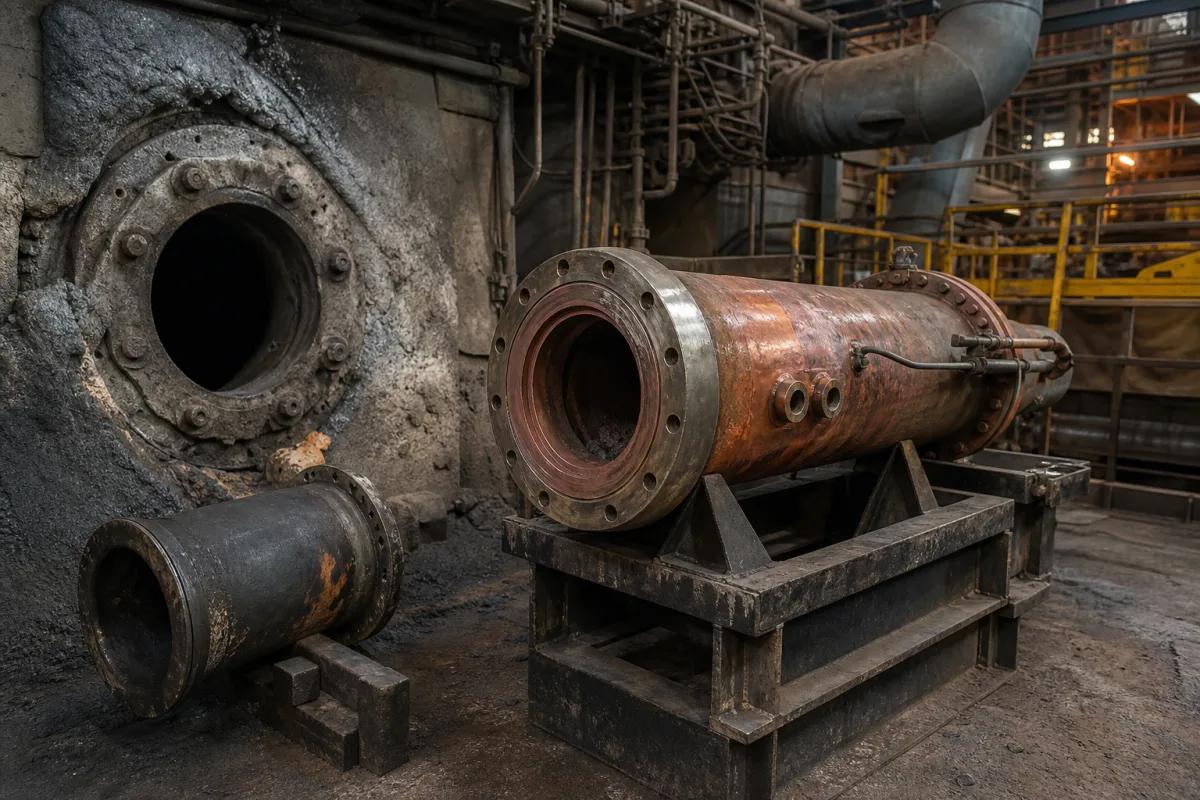
Blast Furnace Tuyere Assembly in a manufacturing environment
Representative product image. Confirm appearance and specifications with the manufacturer.

Product Specifications

Technical details and manufacturing context for Blast Furnace Tuyere Assembly

Definition
A tuyere assembly is an essential component installed in the blast furnace hearth wall, responsible for injecting preheated air (hot blast) into the furnace to combust coke and generate the high temperatures required for iron ore reduction. It maintains precise airflow control and protects furnace structure from extreme heat. The assembly ensures efficient combustion and uniform temperature distribution within the furnace, directly impacting iron production quality and furnace longevity. Constructed from copper alloy (CuCrZr) with high thermal conductivity, stainless steel, and refractory lining, it withstands severe thermal and mechanical stresses. The assembly includes a water-cooled nozzle, a flange connection (DN200–DN300 per ISO 7005), and internal passages for cooling water. Key parameters include a nozzle diameter of 100–180 mm, cooling water flow rate of 15–30 m³/h, maximum operating temperature of 1200–1300 °C, hot blast pressure rating of 0.3–0.5 bar, overall length of 500–800 mm, cooling water pressure of 0.4–0.8 MPa, weight of 80–150 kg, cooling water temperature rise of 5–10 °C, and surface roughness of Ra 3.2–6.3 μm (ISO 1302). These values are reference ranges for typical industrial tuyere assemblies; actual specifications must be confirmed with the legal manufacturer for the specific blast furnace model and operating conditions. The assembly's design ensures efficient heat transfer and erosion resistance, contributing to stable furnace operation. Proper selection requires consideration of furnace size, hot blast temperature, pressure, and cooling water quality. Installation and maintenance must follow manufacturer guidelines to ensure safe and reliable performance. Verification of material grades, standards, and performance parameters is essential before procurement. The tuyere assembly is a critical component for ironmaking, and its failure can lead to furnace downtime and safety hazards. Regular inspection of cooling water flow, temperature rise, and surface condition is necessary to detect early signs of wear or blockage. The assembly's working principle involves the injection of hot blast air through the nozzle, where it reacts with coke to produce carbon monoxide and intense heat for iron ore reduction, while cooling water circulates to prevent thermal damage. This process is fundamental to blast furnace operation, and the tuyere assembly's performance directly affects iron quality and furnace campaign life.
Working Principle
Hot blast air is forced through the tuyere nozzle into the furnace, where it reacts with coke to produce carbon monoxide and intense heat for iron ore reduction. Simultaneously, cooling water circulates through the assembly's internal passages, absorbing heat and preventing thermal damage to the copper alloy and refractory components. The precise control of airflow and cooling water flow ensures efficient combustion and uniform temperature distribution within the furnace. The assembly's design allows for thermal expansion and maintains a seal against high-pressure gases. The cooling water pressure and flow rate are critical to maintain adequate heat transfer and prevent steam formation. The nozzle diameter and hot blast pressure determine the air velocity and penetration into the furnace bed, influencing combustion efficiency and raceway depth. The assembly must withstand thermal cycling and abrasive wear from coke and ore particles. Regular monitoring of cooling water temperature rise and pressure drop can indicate potential issues such as blockage or erosion. The working principle is based on the balance between heat input from combustion and heat removal by cooling water, ensuring the tuyere remains at a safe operating temperature.
Common Materials
Copper Alloy, Stainless Steel, Refractory Lining
Technical Parameters
ParameterTypical rangeNotes & selection driver
Nozzle DiameterRequired100–180 mmInternal diameter of the air injection nozzle
Cooling Water Flow RateRequired15–30 m³/hRequired water flow for thermal management
Maximum Operating TemperatureRequired1200–1300 °CMaximum sustained temperature at nozzle tip
Hot Blast Pressure RatingRequired0.3–0.5 barMaximum air pressure the assembly can withstand
Overall LengthRequired500–800 mmTotal assembly length from flange to nozzle tip
Connection Flange SizeDN200–DN300 DNStandard flange dimension for piping connectionISO 7005
Cooling Water Pressure0.4–0.8 MPaPressure drop across tuyere must be sufficient for flow
Material GradeCuCrZrCopper alloy with high thermal conductivityASTM B187
Weight80–150 kgAffects handling and installation
Cooling Water Temperature Rise5–10 °CHigher rise indicates reduced cooling efficiency
Surface RoughnessRa 3.2–6.3 μmAffects heat transfer and erosion resistanceISO 1302

Ranges are indicative industry figures for RFQ preparation, not a supplier commitment. Confirm every value and standard with the legal manufacturer before ordering.

Components / BOM
  • Tuyere Nozzle Part
    Directs and controls hot blast airflow into furnace
    Material: Copper alloy for heat conductivity
  • Cooling Water Jacket Part
    Circulates cooling water to prevent thermal damage
    Material: Stainless steel for corrosion resistance
  • Mounting Flange Part
    Secures assembly to blast furnace shell
    Material: Carbon steel with refractory coating
  • Thermal Protection Lining Optional Part
    Insulates assembly from extreme furnace heat
    Material: Ceramic refractory material

Industry Taxonomies & Aliases

Commonly used trade names and technical identifiers for Blast Furnace Tuyere Assembly.

Industrial Ecosystem & Supply Chain Structure

Complementary Systems
Downstream Applications
Specialized Tooling

Application Fit & Sizing Matrix

Operational Limits
pressure: 3-6 bar (blast pressure)
flow rate: 1000-5000 Nm³/min per tuyere
temperature: 1200-1600°C (hot blast temperature)
slurry concentration: Not applicable - designed for hot air/gas injection only
Media Compatibility
✓ Hot blast air (1200-1600°C) ✓ Oxygen-enriched blast ✓ Natural gas/coal injection mixtures
Unsuitable: Liquid slag or molten metal direct contact (causes rapid erosion)
Sizing Data Required
  • Blast furnace inner volume/hearth diameter
  • Required total blast volume (Nm³/min)
  • Number of tuyeres in furnace design

Reliability & Engineering Risk Analysis

Failure Mode & Root Cause
Thermal fatigue cracking
Cause: Cyclic thermal stress from hot blast injection (up to 1300°C) and cooling water temperature fluctuations, leading to crack initiation and propagation in tuyere body and tip
Oxidation and erosion
Cause: High-temperature oxidation from hot blast and abrasive wear from burden materials (coke, ore) impacting the tuyere tip, accelerated by improper blast velocity or burden distribution
Maintenance Indicators
  • Visible coolant leaks or steam emission from tuyere body indicating cooling system failure or crack development
  • Abnormal blast pressure fluctuations or audible whistling/hissing sounds suggesting tuyere tip wear or partial blockage
Engineering Tips
  • Implement predictive maintenance using thermal imaging to monitor tuyere temperature profiles and detect early-stage thermal fatigue before catastrophic failure
  • Optimize cooling water chemistry and flow rates to maintain consistent heat transfer, and use refractory coatings on tuyere tips to reduce oxidation/erosion rates

Indicative industry ranges for design and RFQ preparation. Confirm the exact figures and applicable standard with the manufacturer before specifying.

Compliance & Manufacturing Standards

Applicable Standards
ISO 10855:2017 (Foundry products - Blast furnace tuyeres) ASTM A297/A297M (Standard Specification for Steel Castings, Iron-Chromium and Iron-Chromium-Nickel, Heat Resistant, for General Application) DIN 17440 (Heat-resisting cast steel; technical delivery conditions)

Quoted from the published standard.

Manufacturing Precision
  • Bore diameter: +/-0.05mm
  • Surface flatness at mounting flange: 0.15mm maximum deviation
Quality Inspection
  • Dye Penetrant Testing (PT) for surface crack detection
  • Ultrasonic Testing (UT) for internal defect detection

Manufacturers of Blast Furnace Tuyere Assembly

Manufacturer profiles associated with Blast Furnace Tuyere Assembly.

Sourcing Blast Furnace Tuyere Assembly from China?
Tell us your specification and target quantity — we will match it against manufacturer records and come back with the factories that fit.
Request manufacturers We manufacture this

Manufacturer listings support early research and capability understanding. They are not certification, ranking, or transaction guarantees.

Share this page
Technical documentation
Request current drawings, revision history, and a signed specification sheet.
Manufacturing capability
Verify equipment lists, process limits, capacity, and representative production evidence.
Inspection readiness
Confirm test methods, calibrated equipment, sampling plans, and traceable reports.
Supplier transparency
Check the legal entity, factory address, ownership, certifications, and direct contacts.

CNFX does not score or rank suppliers. Buyers must verify all claims and documents with the legal manufacturer before ordering.

Frequently Asked Questions

What is the function of a blast furnace tuyere assembly?

The tuyere assembly injects preheated air (hot blast) into the blast furnace hearth to combust coke, generating the high temperatures needed for iron ore reduction. It also protects the furnace structure from extreme heat and ensures efficient combustion and uniform temperature distribution.

What materials are used in a tuyere assembly?

Typical materials include copper alloy (CuCrZr) for high thermal conductivity, stainless steel for structural components, and refractory lining for insulation. The specific grades and standards, such as ASTM B187 for CuCrZr, should be verified with the manufacturer.

What are the key parameters to consider when selecting a tuyere assembly?

Key parameters include nozzle diameter (100–180 mm), cooling water flow rate (15–30 m³/h), maximum operating temperature (1200–1300 °C), hot blast pressure rating (0.3–0.5 bar), overall length (500–800 mm), connection flange size (DN200–DN300), cooling water pressure (0.4–0.8 MPa), weight (80–150 kg), cooling water temperature rise (5–10 °C), and surface roughness (Ra 3.2–6.3 μm). These are reference ranges; actual values must be confirmed for the specific application.

How should a tuyere assembly be maintained?

Regular inspection of cooling water flow, temperature rise, and pressure drop is essential. Monitor for signs of erosion, blockage, or thermal damage. Follow the manufacturer's maintenance guidelines and replace worn components as needed. Verify that cooling water quality meets specifications to prevent scaling or corrosion.

Data Basis

Editorial classification, named public sources where available, and source-reviewed manufacturer records.

Preliminary Technical Classification
This page supports structured research, RFQ preparation, and supplier evaluation. It does not replace buyer-led supplier qualification, standards review, or technical approval.
Buyer enquiry

Request manufacturing insight for Blast Furnace Tuyere Assembly

Ask for use case, specification boundaries, supplier type, and RFQ preparation information for this product.

Where it goes
Straight to the CNFX editorial desk, and to the manufacturer if this product is linked to a claimed profile. Nothing is broadcast to a supplier list.
Your details stay here
We do not sell or rent enquiry data, and we do not add you to a mailing list. Used only to answer this request.
No commission, no middleman
CNFX is a directory. We take no cut of any order and never negotiate on a supplier's behalf.
What we don't claim
A listing is not an endorsement. Qualify every supplier and verify every figure yourself before ordering.

Your business information is used only to process this request.

Thank you! Your message has been sent. We'll respond within 1–3 business days.
Sorry, we couldn't send your message. Please try again, or email us at [email protected].

Need to Manufacture Blast Furnace Tuyere Assembly?

Compare manufacturer profiles with relevant product and process capability.

Previous Product
Blast Furnace Gas Burner Nozzle
Next Product
Continuous Casting Mold Flux
Get QuotesChat