Industry-Verified Manufacturing Data (2026)

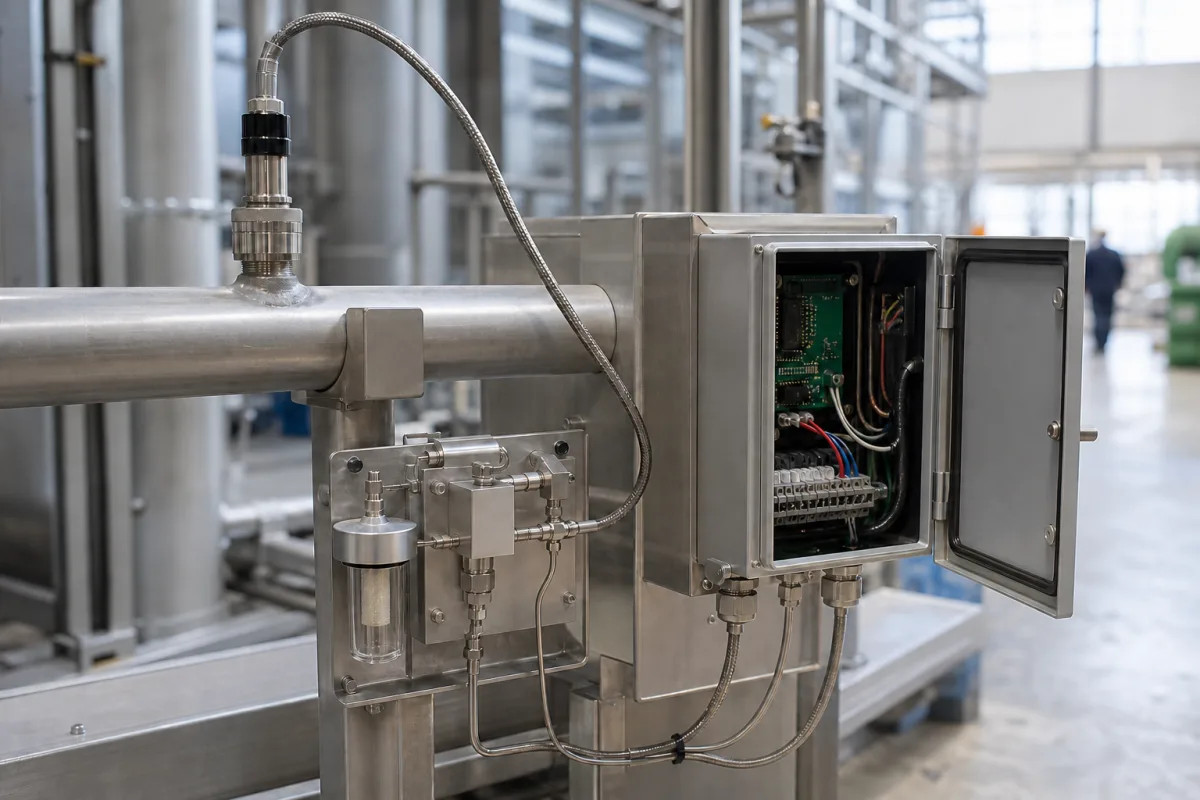
Oxygen Sensor/ Analyzer

Based on aggregated insights from multiple verified factory profiles within the CNFX directory, the standard Oxygen Sensor/ Analyzer used in the Machinery and Equipment Manufacturing sector typically supports operational capacities ranging from standard industrial configurations to heavy-duty production requirements.

Technical Definition & Core Assembly

A canonical Oxygen Sensor/ Analyzer is characterized by the integration of Sensor Cell and Signal Transmitter/Amplifier. In industrial production environments, manufacturers listed on CNFX commonly emphasize Zirconia ceramic construction to support stable, high-cycle operation across diverse manufacturing scenarios.

A device that measures and analyzes oxygen concentration levels within a gas stream.
Product Specifications

Technical details and manufacturing context for Oxygen Sensor/ Analyzer

Definition
A critical component of a Gas Purging Station that continuously monitors and reports the oxygen content in the gas mixture being purged, ensuring the environment meets specific safety or process purity requirements.
Working Principle
Typically operates on principles such as electrochemical sensing (galvanic or polarographic cells), paramagnetic susceptibility, or zirconia oxide sensing, where the presence of oxygen generates a measurable electrical signal proportional to its concentration.
Common Materials
Zirconia ceramic, Platinum electrodes, Stainless steel housing
Technical Parameters
  • Measurement range, typically from 0-25% or trace levels (ppm), with a specified accuracy (e.g., ±0.1% O2). (% O2) Customizable
Components / BOM
  • Sensor Cell
    The core element that reacts electrochemically or physically with oxygen to produce a measurable signal.
    Material: Zirconia ceramic with platinum electrodes
  • Signal Transmitter/Amplifier
    Converts the weak sensor signal into a standardized output (e.g., 4-20 mA, 0-10 V) for monitoring systems.
    Material: Electronic components on PCB
  • Protective Housing/Probe
    Encases the sensor cell, providing mechanical protection, thermal stability, and sometimes gas sampling features.
    Material: Stainless steel
Engineering Reasoning
0-25% O₂ concentration, -40°C to 85°C ambient temperature, 0.5-2.0 bar absolute pressure
Zirconia electrolyte cracking at 0.1 mm fracture depth, platinum electrode delamination at 5% surface area loss, thermal shock exceeding 100°C/min gradient
Design Rationale: Zirconia phase transformation stress (tetragonal to monoclinic) at 1173°C, oxygen ion conductivity degradation below 400°C, Nernst equation voltage deviation beyond ±5 mV from theoretical value
Risk Mitigation (FMEA)
Trigger Condensation formation on sensing element at dew point temperature
Mode: Electrochemical short circuit through liquid electrolyte bridge
Strategy: Integrated Peltier heater maintaining element at 120°C above process gas temperature
Trigger Carbon deposition from hydrocarbon pyrolysis at 650°C
Mode: Platinum catalyst poisoning reducing oxygen dissociation rate by 90%
Strategy: Periodic air purge cycle at 800°C for 30 minutes every 24 hours

Industry Taxonomies & Aliases

Commonly used trade names and technical identifiers for Oxygen Sensor/ Analyzer.

Applied To / Applications

This component is essential for the following industrial systems and equipment:

Industrial Ecosystem & Supply Chain DNA

Complementary Systems
Downstream Applications
Specialized Tooling

Application Fit & Sizing Matrix

Operational Limits
pressure: 0-10 bar (standard), up to 40 bar with high-pressure models
flow rate: 0.1-10 L/min (typical), adjustable for process integration
temperature: -20°C to 60°C (standard), up to 200°C with high-temp variants
slurry concentration: Not suitable for direct slurry contact; requires gas extraction or filtration for slurry applications
Media Compatibility
✓ Combustion flue gases (e.g., boilers, furnaces) ✓ Inert gas streams (e.g., nitrogen blanketing) ✓ Biogas/anaerobic digester gas
Unsuitable: Chlorine or fluorine-containing atmospheres (causes sensor degradation)
Sizing Data Required
  • Required oxygen measurement range (e.g., 0-25% O2)
  • Process gas composition and potential interferents
  • Required response time and accuracy specifications

Reliability & Engineering Risk Analysis

Failure Mode & Root Cause
Sensor Drift
Cause: Contamination of sensing element by process gases, moisture, or particulates leading to inaccurate oxygen concentration readings.
Electrode Degradation
Cause: Chemical attack or thermal stress on electrodes, reducing sensitivity and response time, often due to harsh operating environments or improper calibration.
Maintenance Indicators
  • Erratic or unstable oxygen readings on the analyzer display, indicating potential sensor failure or calibration issues.
  • Audible alarms or warning lights from the analyzer control unit signaling out-of-range oxygen levels or sensor fault conditions.
Engineering Tips
  • Implement regular calibration schedules using certified calibration gases to maintain accuracy and detect early drift.
  • Ensure proper filtration and conditioning of sample gases to remove moisture, particulates, and corrosive elements before reaching the sensor.

Compliance & Manufacturing Standards

Reference Standards
ISO 6141:2015 (Gas analysis - Contents of certificates for calibration gas mixtures) ASTM D6522-20 (Standard Test Method for Determination of Nitrogen Oxides, Carbon Monoxide, and Oxygen Concentrations in Emissions from Natural Gas-Fired Reciprocating Engines, Combustion Turbines, Boilers, and Process Heaters Using Portable Analyzers) CE marking (EU Directive 2014/35/EU for electrical equipment safety and 2014/30/EU for electromagnetic compatibility)
Manufacturing Precision
  • Measurement accuracy: +/- 1% of reading or +/- 0.1% O₂, whichever is greater
  • Response time: T90 < 10 seconds for 90% of full-scale reading
Quality Inspection
  • Calibration verification against certified reference gases (span/zero check)
  • Environmental testing (temperature, humidity, vibration per IEC 60068-2 series)

Factories Producing Oxygen Sensor/ Analyzer

Verified manufacturers with capability to produce this product in China

✓ 94% Supplier Capability Match Found

S Sourcing Manager from United Arab Emirates Mar 01, 2026
★★★★★
"The Oxygen Sensor/ Analyzer we sourced perfectly fits our Machinery and Equipment Manufacturing production line requirements."
Technical Specifications Verified
P Procurement Specialist from Australia Feb 26, 2026
★★★★☆
"Found 20+ suppliers for Oxygen Sensor/ Analyzer on CNFX, but this spec remains the most cost-effective. (Delivery took slightly longer than expected, but technical support was excellent.)"
Technical Specifications Verified
T Technical Director from Singapore Feb 23, 2026
★★★★★
"The technical documentation for this Oxygen Sensor/ Analyzer is very thorough, especially regarding technical reliability."
Technical Specifications Verified
Verification Protocol

“Feedback is collected from verified sourcing managers during RFQ (Request for Quote) and factory evaluation processes on CNFX. These reports represent historical performance data and technical audit summaries from our B2B manufacturing network.”

9 sourcing managers are analyzing this specification now. Last inquiry for Oxygen Sensor/ Analyzer from Poland (1h ago).

Supply Chain Compatible Machinery & Devices

Hydraulic Press

Industrial machine using hydraulic pressure to compress, form, or assemble materials

Explore Specs →
Heavy-Duty CNC Plasma Cutting Machine

Industrial machine for precision metal cutting using plasma arc technology

Explore Specs →
Automated Assembly Line System

Integrated production system for sequential component assembly operations

Explore Specs →
Automated Powder Coating System

Integrated industrial system for applying dry powder coatings to metal substrates.

Explore Specs →

Frequently Asked Questions

How does the zirconia ceramic sensor cell measure oxygen concentration?

The zirconia ceramic cell operates as a solid electrolyte that generates a voltage proportional to the oxygen partial difference between the sample gas and a reference gas, enabling precise O2 measurement.

What is the typical lifespan of this oxygen sensor in industrial environments?

With proper maintenance and calibration, the sensor typically lasts 2-5 years in continuous industrial use, depending on gas stream conditions and operating temperatures.

Can this analyzer be integrated with existing machinery control systems?

Yes, the signal transmitter/amplifier provides standard 4-20mA or 0-10V outputs compatible with most PLCs and industrial control systems for seamless integration.

Can I contact factories directly on CNFX?

CNFX is an open directory, not a transaction platform. Each factory profile provides direct contact information and production details to help you initiate direct inquiries with Chinese suppliers.

Get Quote for Oxygen Sensor/ Analyzer

Request technical pricing, lead times, or customized specifications for Oxygen Sensor/ Analyzer directly from verified manufacturing units.

Your business information is encrypted and only shared with verified Oxygen Sensor/ Analyzer suppliers.

Thank you! Your message has been sent. We'll respond within 1–3 business days.

Need to Manufacture Oxygen Sensor/ Analyzer?

Connect with verified factories specializing in this product category

Add Your Factory Contact Us
Previous Product
Overload Sensors
Next Product
Packaging Material Dispenser