Industry-Verified Manufacturing Data (2026)

Gas Purging Station

Based on aggregated insights from multiple verified factory profiles within the CNFX directory, the standard Gas Purging Station used in the Beverage Manufacturing sector typically supports operational capacities ranging from standard industrial configurations to heavy-duty production requirements.

Technical Definition & Core Assembly

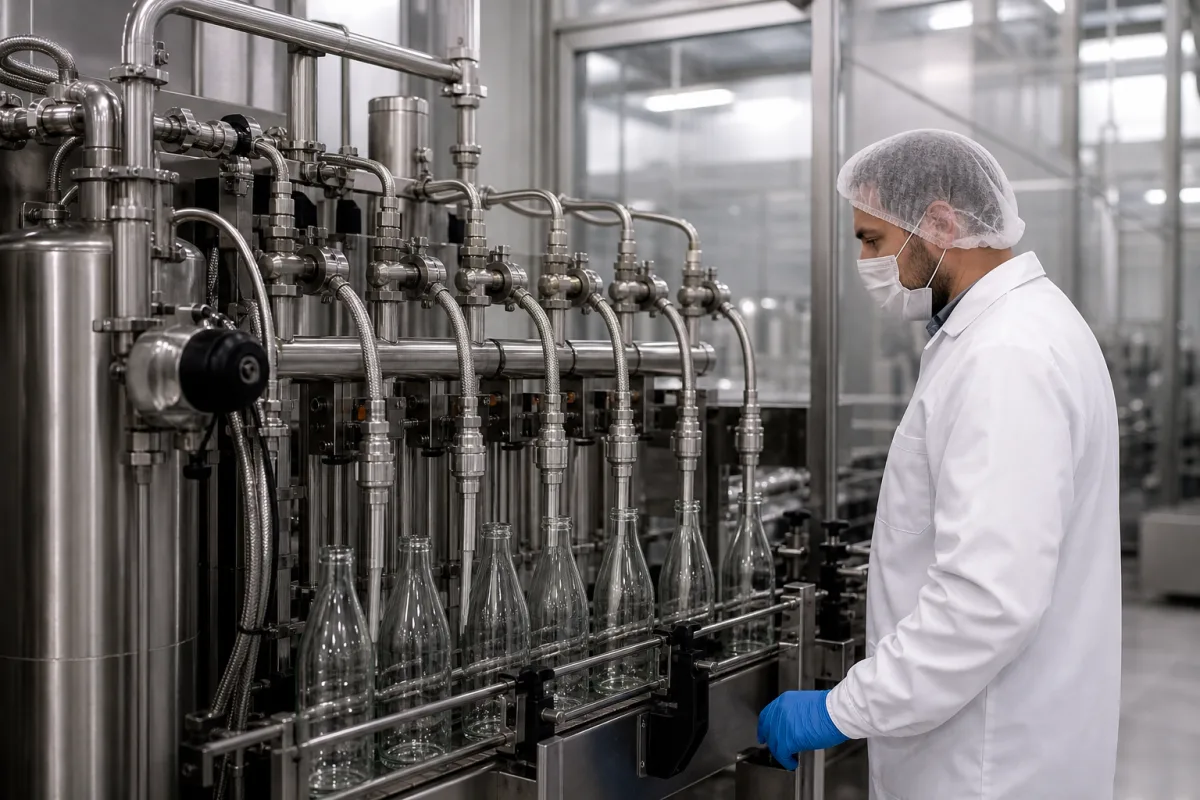
A canonical Gas Purging Station is characterized by the integration of Gas Inlet Manifold and Purge Head/Nozzle. In industrial production environments, manufacturers listed on CNFX commonly emphasize Stainless Steel (AISI 304/316L) construction to support stable, high-cycle operation across diverse manufacturing scenarios.

A specialized component within an automated kegging and barrel filling system that removes oxygen and other contaminants from containers using an inert gas before filling.
Product Specifications

Technical details and manufacturing context for Gas Purging Station

Definition
The Gas Purging Station is a critical subsystem within Automated Kegging and Barrel Filling Systems, specifically designed to prepare containers (kegs, barrels) for liquid filling by displacing ambient air, moisture, and oxygen with an inert gas (typically nitrogen or carbon dioxide). This process creates a controlled, oxygen-free environment inside the container, which is essential for preserving product quality, preventing oxidation, and extending shelf-life in beverage manufacturing.
Working Principle
The station operates by first evacuating or venting the container, then introducing a controlled flow of inert gas under pressure to displace the remaining atmosphere. This purge cycle may be repeated multiple times to achieve the desired low oxygen concentration. The process is typically automated and controlled by sensors (e.g., oxygen analyzers) and programmable logic controllers (PLCs) to ensure consistency and meet specific purity standards before the container proceeds to the filling stage.
Common Materials
Stainless Steel (AISI 304/316L), Food-grade elastomers (seals, gaskets), Anodized aluminum (structural frames)
Technical Parameters
  • Residual Oxygen Level - The maximum allowable oxygen concentration in the container after purging, typically measured in parts per million (ppm). Critical for product preservation. (ppm) Per Request
Components / BOM
  • Gas Inlet Manifold
    Distributes and regulates the flow of inert gas from the supply to the purge heads.
    Material: Stainless Steel
  • Purge Head/Nozzle
    Seals against the container opening and directs the gas flow into the container during the purge cycle.
    Material: Stainless Steel with food-grade seal
  • Oxygen Sensor/ Analyzer
    Monitors the oxygen concentration in the gas stream or container headspace to verify purge effectiveness.
    Material: Sensor housing: Stainless Steel; Sensing element: Zirconia/Electrochemical cell
  • Control Valve Bank
    Solenoid or pneumatic valves that control the sequence of gas flow, venting, and pressure during the purge cycle.
    Material: Stainless Steel body, PTFE seals
Engineering Reasoning
2.5-6.0 bar (36-87 psi) at 20°C with 99.95% purity nitrogen
Pressure drop below 1.8 bar (26 psi) or exceeding 7.5 bar (109 psi) at gas inlet
Design Rationale: Insufficient pressure causes incomplete oxygen displacement (Fick's Law diffusion limitation), while excessive pressure risks container deformation exceeding yield strength of 304 stainless steel (205 MPa)
Risk Mitigation (FMEA)
Trigger Particulate contamination exceeding 5 μm in gas supply
Mode: Nozzle orifice clogging reducing flow rate below 15 L/min
Strategy: Install 3 μm absolute filter with differential pressure monitoring (0.5 bar alarm threshold)
Trigger Solenoid valve coil insulation breakdown at 85°C ambient temperature
Mode: Valve seizure in open position causing continuous gas flow
Strategy: Class H insulation (180°C rating) with thermal cutoff at 75°C

Industry Taxonomies & Aliases

Commonly used trade names and technical identifiers for Gas Purging Station.

Industrial Ecosystem & Supply Chain DNA

Complementary Systems
Downstream Applications
Specialized Tooling

Application Fit & Sizing Matrix

Operational Limits
pressure: 0.5 to 6 bar (operating), 10 bar (max burst)
flow rate: 10 to 100 L/min (adjustable)
temperature: 5°C to 40°C (operating), -10°C to 60°C (storage)
oxygen reduction: < 0.5% residual O₂ (typical)
purge cycle time: 30 to 180 seconds (configurable)
Media Compatibility
✓ Food-grade CO₂/N₂ gas ✓ Stainless steel kegs/barrels ✓ CIP/SIP cleaning fluids
Unsuitable: Corrosive or abrasive slurry environments
Sizing Data Required
  • Container volume (L)
  • Required purge cycles per hour
  • Inlet gas pressure/availability

Reliability & Engineering Risk Analysis

Failure Mode & Root Cause
Corrosion-induced leakage
Cause: Exposure to corrosive gases (e.g., H2S, CO2) or moisture ingress leading to pitting, crevice corrosion, or stress corrosion cracking in piping, valves, or seals, especially at welds or threaded connections.
Valve failure (sticking or incomplete closure)
Cause: Contaminant buildup (e.g., particulates, scale) or polymerization of process gases on valve seats and stems, compounded by inadequate purging cycles or infrequent maintenance, causing operational delays or unsafe gas mixing.
Maintenance Indicators
  • Audible hissing or whistling from fittings, indicating gas leaks due to seal degradation or loose connections.
  • Visible discoloration, rust, or weeping at pipe joints, flanges, or valve bodies, suggesting active corrosion or seal failure.
Engineering Tips
  • Implement a routine corrosion monitoring program using ultrasonic thickness testing and coupon samples at critical points, and apply protective coatings or upgrade to corrosion-resistant alloys (e.g., 316L stainless steel) for high-risk components.
  • Optimize purging sequences with automated controls to ensure complete gas evacuation between cycles, reducing contaminant accumulation, and schedule regular valve exercising and seal inspections to prevent sticking and maintain integrity.

Compliance & Manufacturing Standards

Reference Standards
ISO 14175:2008 (Welding consumables - Gases and gas mixtures for fusion welding and related processes) ANSI Z49.1:2021 (Safety in Welding, Cutting, and Allied Processes) DIN EN 1011-2:2001 (Welding - Recommendations for welding of metallic materials - Part 2: Arc welding of ferritic steels)
Manufacturing Precision
  • Pressure Rating: +/- 5% of specified working pressure
  • Flow Meter Accuracy: +/- 2% of full scale
Quality Inspection
  • Hydrostatic Pressure Test (to 1.5x working pressure)
  • Leak Test (using inert gas and pressure decay method)

Factories Producing Gas Purging Station

Verified manufacturers with capability to produce this product in China

✓ 97% Supplier Capability Match Found

T Technical Director from Canada Feb 27, 2026
★★★★★
"Testing the Gas Purging Station now; the technical reliability results are within 1% of the laboratory datasheet."
Technical Specifications Verified
P Project Engineer from United States Feb 24, 2026
★★★★☆
"Impressive build quality. Especially the technical reliability is very stable during long-term operation. (Delivery took slightly longer than expected, but technical support was excellent.)"
Technical Specifications Verified
S Sourcing Manager from United Arab Emirates Feb 21, 2026
★★★★★
"As a professional in the Beverage Manufacturing sector, I confirm this Gas Purging Station meets all ISO standards."
Technical Specifications Verified
Verification Protocol

“Feedback is collected from verified sourcing managers during RFQ (Request for Quote) and factory evaluation processes on CNFX. These reports represent historical performance data and technical audit summaries from our B2B manufacturing network.”

10 sourcing managers are analyzing this specification now. Last inquiry for Gas Purging Station from Germany (20m ago).

Supply Chain Compatible Machinery & Devices

Automated Beverage Container Sterilization System

Automated system for sterilizing beverage containers before filling.

Explore Specs →
Automated Beverage Labeling and Coding System

Integrated system for applying labels and printing codes on beverage containers.

Explore Specs →
Automated Beverage Ingredient Dispensing System

Automated system for precise dispensing of beverage ingredients into production lines.

Explore Specs →
Automated Beverage Container Deoxygenation System

Automated system for removing oxygen from beverage containers before filling.

Explore Specs →

Frequently Asked Questions

How does a gas purging station improve beverage quality?

By removing oxygen and contaminants from containers before filling, it prevents oxidation and spoilage, extending shelf life and maintaining flavor integrity in beverages like beer, wine, and soft drinks.

What maintenance is required for a gas purging station?

Regular calibration of oxygen sensors, inspection of seals and gaskets for wear, cleaning of stainless steel components with food-safe cleaners, and verification of gas flow rates to ensure optimal performance.

Can this system integrate with existing kegging lines?

Yes, gas purging stations are designed to integrate seamlessly with automated kegging and barrel filling systems, with modular components that can be adapted to various production line configurations.

Can I contact factories directly on CNFX?

CNFX is an open directory, not a transaction platform. Each factory profile provides direct contact information and production details to help you initiate direct inquiries with Chinese suppliers.

Get Quote for Gas Purging Station

Request technical pricing, lead times, or customized specifications for Gas Purging Station directly from verified manufacturing units.

Your business information is encrypted and only shared with verified Gas Purging Station suppliers.

Thank you! Your message has been sent. We'll respond within 1–3 business days.

Need to Manufacture Gas Purging Station?

Connect with verified factories specializing in this product category

Add Your Factory Contact Us
Previous Product
Gas Flushing Unit / Vacuum Pump
Next Product
Heating Jacket/Element