Industry-Verified Manufacturing Data (2026)

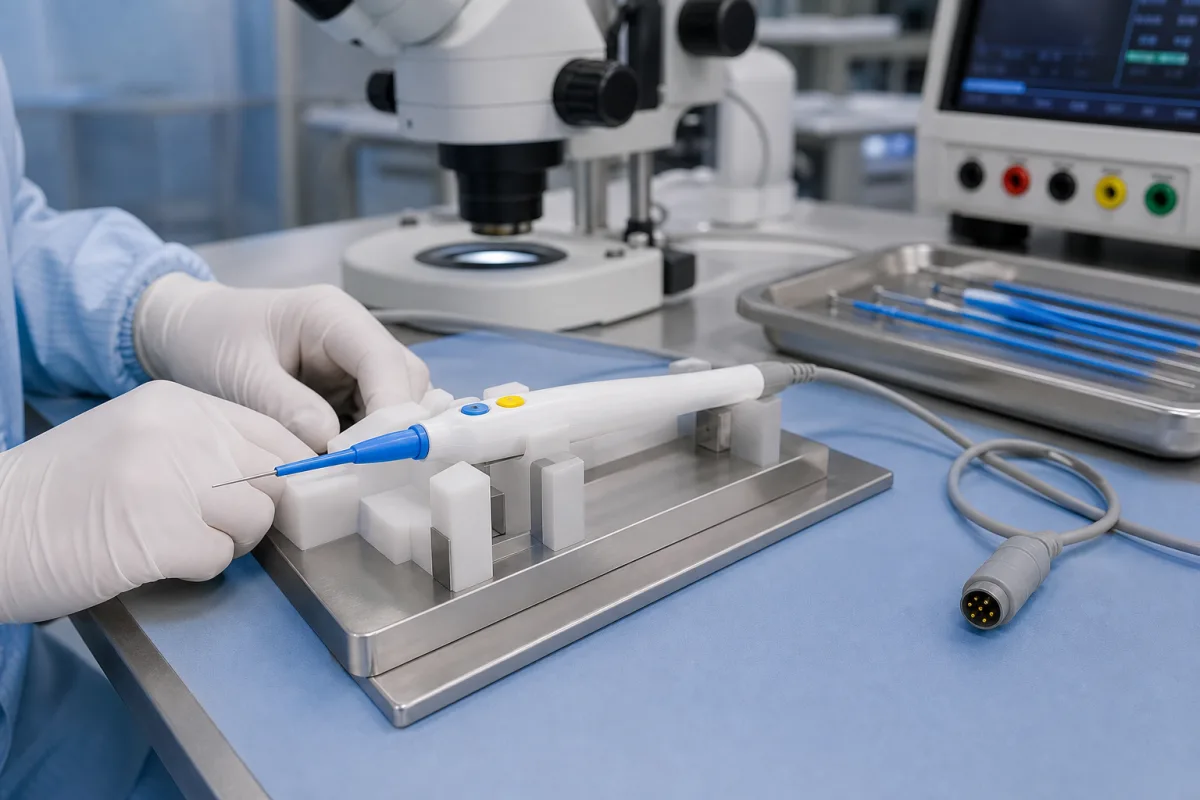
High-Frequency Electrosurgical Electrode

Based on aggregated insights from multiple verified factory profiles within the CNFX directory, the standard High-Frequency Electrosurgical Electrode used in the Manufacture of Irradiation, Electromedical and Electrotherapeutic Equipment sector typically supports operational capacities ranging from standard industrial configurations to heavy-duty production requirements.

Technical Definition & Core Assembly

A canonical High-Frequency Electrosurgical Electrode is characterized by the integration of Active Electrode Tip and Insulated Shaft. In industrial production environments, manufacturers listed on CNFX commonly emphasize Stainless Steel 316L construction to support stable, high-cycle operation across diverse manufacturing scenarios.

Disposable or reusable conductive tip for precise tissue cutting and coagulation in electrosurgery.

Product Specifications

Technical details and manufacturing context for High-Frequency Electrosurgical Electrode

Definition
A high-frequency electrosurgical electrode is a critical consumable component in electrosurgical generators, designed to deliver controlled radiofrequency energy to biological tissue. It serves as the interface between the electrosurgical unit and the patient, enabling precise cutting, coagulation, and desiccation during surgical procedures. In B2B medical device supply chains, these electrodes are manufactured to strict specifications for compatibility with specific generator models and surgical applications, ensuring reliable performance and patient safety. They are essential for procedures in general surgery, dermatology, gynecology, and orthopedics.
Working Principle
The electrode conducts high-frequency alternating current from the electrosurgical generator to the tissue. When the tip contacts the tissue, the concentrated current density causes rapid resistive heating, vaporizing cellular water for cutting or denaturing proteins for coagulation, depending on the waveform and power setting.
Common Materials
Stainless Steel 316L, Tungsten, Insulative Ceramic Coating
Technical Parameters
  • Operating frequency range compatible with electrosurgical generators (MHz) Customizable
  • Tip diameter determining cutting precision and coagulation area (mm) Customizable
Components / BOM
  • Active Electrode Tip
    Delivers concentrated RF energy to tissue for cutting/coagulation
    Material: Stainless Steel or Tungsten
  • Insulated Shaft
    Provides electrical insulation and mechanical support between handle and tip
    Material: PTFE or Ceramic-Coated Metal
  • Handle Connector
    Standardized electrical and mechanical interface to electrosurgical pencil or cable
    Material: Medical-Grade Plastic with Metal Contacts
  • Tip Guard/Cap Optional
    Protective cover for sterile storage and handling safety
    Material: Medical-Grade Plastic
Engineering Reasoning
200-500 kHz at 100-500 W output power
Electrode tip temperature exceeding 1200°C (melting point of tungsten) or insulation breakdown at >3000 V/mm
Design Rationale: Joule heating (P=I²R) causing thermal runaway and material phase change, or dielectric breakdown exceeding 30 kV/cm for PTFE insulation
Risk Mitigation (FMEA)
Trigger Impedance mismatch between generator (50 Ω) and tissue interface (>200 Ω)
Mode: Arcing and capacitive discharge causing tissue carbonization
Strategy: Active impedance monitoring with automatic power adjustment (0.1 ms response)
Trigger Electrode coating delamination due to cyclic thermal stress (ΔT=800°C)
Mode: Non-uniform current density causing focal overheating
Strategy: Plasma-sprayed iridium oxide coating with 50 μm thickness and 99.5% adhesion strength

Industry Taxonomies & Aliases

Commonly used trade names and technical identifiers for High-Frequency Electrosurgical Electrode.

Industrial Ecosystem & Supply Chain DNA

Complementary Systems
Downstream Applications
Specialized Tooling

Application Fit & Sizing Matrix

Operational Limits
pressure: Atmospheric to 1.5 bar
other spec: Frequency: 300 kHz - 3 MHz, Power: 10-300 W, Voltage: 100-5000 V peak-to-peak
temperature: 20-40°C (operating), 0-50°C (storage)
Media Compatibility
✓ Human tissue (soft/hard) ✓ Surgical saline irrigation ✓ Sterile surgical drapes
Unsuitable: Flammable/explosive atmospheres (oxygen-rich environments)
Sizing Data Required
  • Target tissue type and thickness
  • Required cutting/coagulation power setting
  • Surgical procedure type and access geometry

Reliability & Engineering Risk Analysis

Failure Mode & Root Cause
Insulation breakdown
Cause: Thermal degradation from repeated high-frequency current cycling, leading to carbonization and dielectric failure of insulating materials.
Electrode tip erosion
Cause: Arcing and localized overheating during tissue contact, causing material vaporization and pitting that reduces cutting precision.
Maintenance Indicators
  • Visible carbon tracking or discoloration on insulation surfaces
  • Audible arcing or erratic power delivery during activation
Engineering Tips
  • Implement regular impedance testing to detect early insulation degradation before catastrophic failure
  • Establish strict electrode cleaning protocols using manufacturer-approved solutions to prevent biofilm buildup that accelerates erosion

Compliance & Manufacturing Standards

Reference Standards
ISO 15223-1:2021 Medical devices - Symbols to be used with medical device labels, labelling and information to be supplied ANSI/AAMI ES60601-1:2005 Medical electrical equipment - Part 1: General requirements for basic safety and essential performance DIN EN 60601-2-2:2017 Medical electrical equipment - Part 2-2: Particular requirements for the basic safety and essential performance of high frequency surgical equipment
Manufacturing Precision
  • Electrode tip diameter: +/-0.05mm
  • Insulation thickness uniformity: +/-0.1mm
Quality Inspection
  • High-voltage dielectric withstand test
  • Biocompatibility testing per ISO 10993-1

Factories Producing High-Frequency Electrosurgical Electrode

Verified manufacturers with capability to produce this product in China

✓ 93% Supplier Capability Match Found

P Procurement Specialist from Germany Feb 20, 2026
★★★★★
"As a professional in the Manufacture of Irradiation, Electromedical and Electrotherapeutic Equipment sector, I confirm this High-Frequency Electrosurgical Electrode meets all ISO standards."
Technical Specifications Verified
T Technical Director from Brazil Feb 17, 2026
★★★★★
"Standard OEM quality for Manufacture of Irradiation, Electromedical and Electrotherapeutic Equipment applications. The High-Frequency Electrosurgical Electrode arrived with full certification."
Technical Specifications Verified
P Project Engineer from Canada Feb 14, 2026
★★★★★
"Great transparency on the High-Frequency Electrosurgical Electrode components. Essential for our Manufacture of Irradiation, Electromedical and Electrotherapeutic Equipment supply chain."
Technical Specifications Verified
Verification Protocol

“Feedback is collected from verified sourcing managers during RFQ (Request for Quote) and factory evaluation processes on CNFX. These reports represent historical performance data and technical audit summaries from our B2B manufacturing network.”

17 sourcing managers are analyzing this specification now. Last inquiry for High-Frequency Electrosurgical Electrode from Thailand (1h ago).

Frequently Asked Questions

What are the main applications of this high-frequency electrosurgical electrode?

This electrode is designed for precise tissue cutting and coagulation in various electrosurgical procedures, commonly used in dermatology, gynecology, ENT, and general surgery where controlled thermal effects are required.

What are the advantages of the stainless steel 316L and tungsten construction?

Stainless steel 316L provides excellent corrosion resistance and durability, while tungsten offers superior electrical conductivity and heat resistance, ensuring consistent performance and extended electrode life during high-frequency surgical applications.

How does the insulative ceramic coating enhance safety during procedures?

The ceramic coating provides superior electrical insulation along the shaft, preventing unintended tissue contact and current leakage. This reduces the risk of thermal injury to surrounding tissues and improves surgical precision during high-frequency electrosurgery.

Can I contact factories directly on CNFX?

CNFX is an open directory, not a transaction platform. Each factory profile provides direct contact information and production details to help you initiate direct inquiries with Chinese suppliers.

Get Quote for High-Frequency Electrosurgical Electrode

Request technical pricing, lead times, or customized specifications for High-Frequency Electrosurgical Electrode directly from verified manufacturing units.

Your business information is encrypted and only shared with verified High-Frequency Electrosurgical Electrode suppliers.

Thank you! Your message has been sent. We'll respond within 1–3 business days.

Need to Manufacture High-Frequency Electrosurgical Electrode?

Connect with verified factories specializing in this product category

Add Your Factory Contact Us
Previous Product
Automated Gamma Sterilization Processing Line
Next Product
Integrated Medical Imaging System Production Line