Editorial Technical Reference

High-Strength Low-Alloy Steel Plate

This page explains how High-Strength Low-Alloy Steel Plate is classified within Manufacture of Tanks, Reservoirs and Containers of Metal. Technical values and manufacturer relationships are research references; confirm the current specification and supplier evidence for each order.

Technical Definition & Core Assembly

Structural steel plate with enhanced strength and weldability for industrial containers.
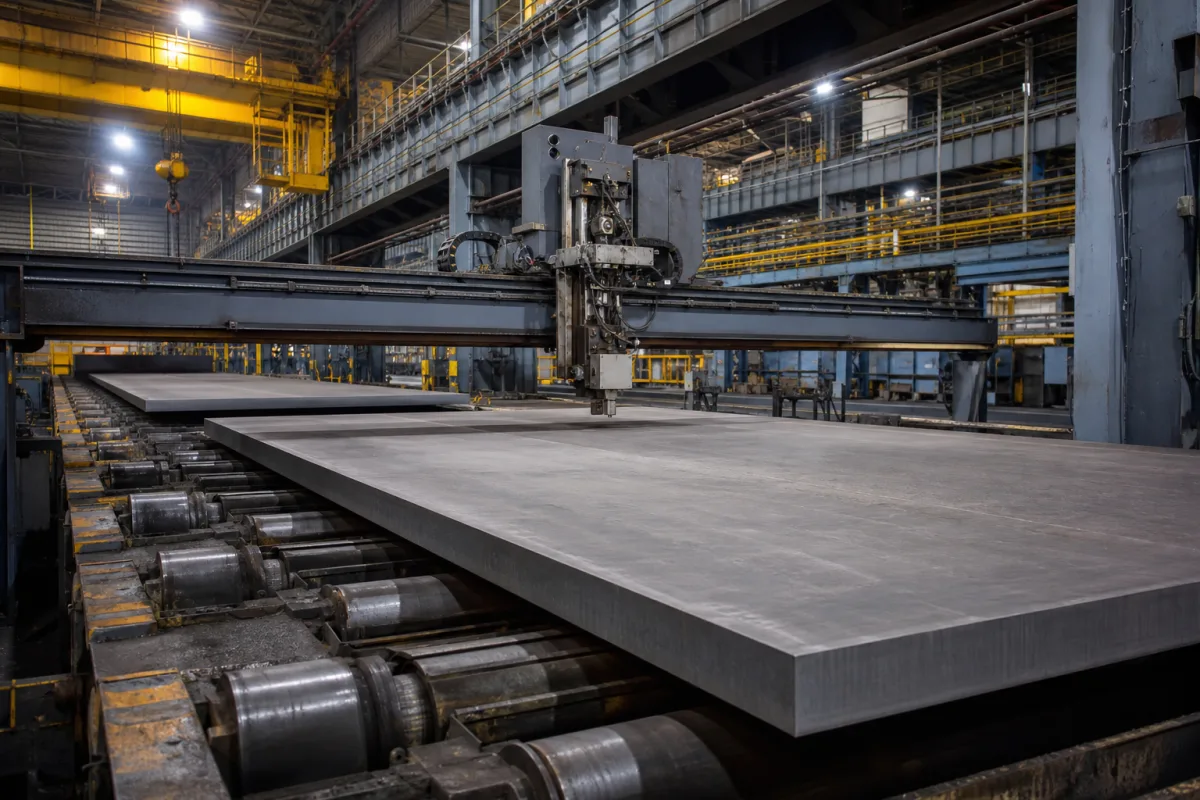
Representative product image. Confirm appearance and specifications with the manufacturer.

Product Specifications

Technical details and manufacturing context for High-Strength Low-Alloy Steel Plate

Definition
High-strength low-alloy (HSLA) steel plate is a semi-finished industrial material specifically engineered for manufacturing metal tanks, reservoirs, and pressure vessels. It provides superior mechanical properties compared to conventional carbon steels while maintaining excellent formability and weldability. This material is essential in B2B supply chains for fabricators who produce storage containers for chemicals, petroleum, water, and industrial gases. Its balanced composition reduces weight while increasing structural integrity, making it cost-effective for large-scale container production. The plate is available in thicknesses from 5 to 150 mm and widths from 1500 to 4000 mm, with yield strength ranging from 345 to 690 MPa and tensile strength from 485 to 760 MPa. Elongation is typically 18–25%, and Charpy impact values range from 27 to 100 J, indicating good toughness. The material is suitable for operating temperatures from -40°C to 80°C and has a density of 7.85 g/cm³. Surface treatment is shot blasted and primed to Sa 2.5 per ISO 8501-1, with thickness tolerance of ±0.5 mm. Weldability is rated as excellent due to low carbon equivalent, while corrosion resistance is moderate and requires protective coating. These parameters are reference ranges based on standards such as ASTM A572, A6, A370, and E23; actual values must be confirmed for the specific grade and application. Buyers should verify compliance with relevant standards and ensure the material meets their design and fabrication requirements.
Working Principle
The enhanced mechanical properties of HSLA steel plate are achieved through precise alloying elements such as niobium, vanadium, or titanium in small quantities. These elements refine the grain structure during controlled rolling processes and create precipitation hardening effects. This results in higher strength without significantly increasing weight, while maintaining good formability and weldability. The controlled thermomechanical processing optimizes the microstructure, providing a balance of strength, toughness, and ductility suitable for demanding container applications.
Common Materials
Iron, Carbon, Manganese, Micro-alloying elements (Nb, V, Ti)
Technical Parameters
ParameterTypical rangeNotes & selection driver
Yield StrengthRequired345–690 MPaMinimum yield point for structural design calculationsASTM A572
Tensile StrengthRequired485–760 MPaUltimate tensile strength for safety factor determinationASTM A572
ThicknessRequired5–150 mmPlate thickness for container wall constructionASTM A6
WidthRequired1500–4000 mmPlate width for efficient material utilizationASTM A6
ElongationRequired18–25 %Percentage elongation indicating formability characteristicsASTM A370
Charpy Impact Value27–100 JImpact toughness at specified temperature for fracture resistanceASTM E23
Operating Temperature-40–80 °CSuitable for low-temperature service
Density7.85 g/cm³Typical for carbon steel
Surface TreatmentShot blasted & primedSa 2.5 blast cleaningISO 8501-1
Tolerance±0.5 mmThickness tolerance for platesASTM A6
WeldabilityExcellentLow carbon equivalentISO 15614
Corrosion ResistanceModerateRequires protective coating

Ranges are indicative industry figures for RFQ preparation, not a supplier commitment. Confirm every value and standard with the legal manufacturer before ordering.

Components / BOM
  • Base Iron Matrix Part
    Primary structural framework providing bulk material properties
    Material: Iron with controlled carbon content
  • Strengthening Alloy Elements Part
    Precipitation hardening and grain refinement for enhanced strength
    Material: Niobium, Vanadium, or Titanium additions

Industry Taxonomies & Aliases

Commonly used trade names and technical identifiers for High-Strength Low-Alloy Steel Plate.

Industrial Ecosystem & Supply Chain Structure

Complementary Systems
Downstream Applications
Specialized Tooling

Application Fit & Sizing Matrix

Operational Limits
pressure: Up to 100 MPa (depending on thickness and design)
other spec: Slurry concentration: Up to 60% solids by weight (depending on abrasiveness)
temperature: -40°C to 400°C
Media Compatibility
✓ Industrial water and wastewater ✓ Petroleum products (crude oil, diesel) ✓ Dry bulk solids (grains, minerals)
Unsuitable: Concentrated acids (e.g., hydrochloric acid, sulfuric acid) due to corrosion risk
Sizing Data Required
  • Required plate thickness (based on structural load calculations)
  • Container dimensions (length, width, height)
  • Design pressure and temperature conditions

Reliability & Engineering Risk Analysis

Failure Mode & Root Cause
Hydrogen-induced cracking (HIC)
Cause: Absorption of atomic hydrogen from corrosive environments (e.g., wet H2S service), leading to internal cracking and blistering due to high-strength microstructure susceptibility.
Stress corrosion cracking (SCC)
Cause: Combination of tensile stress (residual or applied) and corrosive environments (e.g., chlorides, caustics), exploiting microstructural inhomogeneities in the alloy.
Maintenance Indicators
  • Visible surface blistering or bulging indicating internal hydrogen damage
  • Sudden appearance of crack networks or audible 'crackling' sounds during thermal cycling
Engineering Tips
  • Implement strict control of environmental exposure (e.g., pH monitoring, H2S partial pressure limits) and use hydrogen diffusion barriers like coatings.
  • Apply post-weld heat treatment (PWHT) to relieve residual stresses and optimize microstructure, particularly in welded joints.

Indicative industry ranges for design and RFQ preparation. Confirm the exact figures and applicable standard with the manufacturer before specifying.

Compliance & Manufacturing Standards

Applicable Standards
ASTM A572/A572M - Standard Specification for High-Strength Low-Alloy Columbium-Vanadium Structural Steel EN 10025-4 - Hot rolled products of structural steels - Part 4: Technical delivery conditions for thermomechanical rolled weldable fine grain structural steels ISO 630-2 - Structural steels - Part 2: Technical delivery conditions for structural steels for general purposes

Quoted from the published standard.

Manufacturing Precision
  • Thickness: +/- 0.25mm for plates up to 10mm thick
  • Flatness: 5mm per meter of length
Quality Inspection
  • Ultrasonic Testing (UT) for internal defects
  • Tensile Testing for yield strength and ultimate tensile strength

Manufacturers of High-Strength Low-Alloy Steel Plate

Manufacturer profiles associated with High-Strength Low-Alloy Steel Plate.

Sourcing High-Strength Low-Alloy Steel Plate from China?
Tell us your specification and target quantity — we will match it against manufacturer records and come back with the factories that fit.
Request manufacturers We manufacture this

Manufacturer listings support early research and capability understanding. They are not certification, ranking, or transaction guarantees.

Technical documentation
Request current drawings, revision history, and a signed specification sheet.
Manufacturing capability
Verify equipment lists, process limits, capacity, and representative production evidence.
Inspection readiness
Confirm test methods, calibrated equipment, sampling plans, and traceable reports.
Supplier transparency
Check the legal entity, factory address, ownership, certifications, and direct contacts.

CNFX does not score or rank suppliers. Buyers must verify all claims and documents with the legal manufacturer before ordering.

Frequently Asked Questions

What standards apply to HSLA steel plate?

Common standards include ASTM A572 for mechanical properties, ASTM A6 for dimensions and tolerances, ASTM A370 for mechanical testing, and ASTM E23 for Charpy impact testing. Always verify the specific grade and compliance with the manufacturer.

What thicknesses are available?

The plate thickness ranges from 5 to 150 mm, with widths from 1500 to 4000 mm. Confirm exact dimensions with the supplier as per project requirements.

Is this steel suitable for low-temperature service?

The operating temperature range is -40°C to 80°C. For lower temperatures, consult the manufacturer for appropriate grades and impact testing.

How is the surface prepared?

The plate is shot blasted and primed to Sa 2.5 per ISO 8501-1. This prepares the surface for further coating or fabrication. Verify the surface treatment with the supplier.

Data Basis

Editorial classification, named public sources where available, and source-reviewed manufacturer records.

Preliminary Technical Classification
This page supports structured research, RFQ preparation, and supplier evaluation. It does not replace buyer-led supplier qualification, standards review, or technical approval.
Buyer enquiry

Request manufacturing insight for High-Strength Low-Alloy Steel Plate

Ask for use case, specification boundaries, supplier type, and RFQ preparation information for this product.

Where it goes
Straight to the CNFX editorial desk, and to the manufacturer if this product is linked to a claimed profile. Nothing is broadcast to a supplier list.
Your details stay here
We do not sell or rent enquiry data, and we do not add you to a mailing list. Used only to answer this request.
No commission, no middleman
CNFX is a directory. We take no cut of any order and never negotiate on a supplier's behalf.
What we don't claim
A listing is not an endorsement. Qualify every supplier and verify every figure yourself before ordering.

Your business information is used only to process this request.

Thank you! Your message has been sent. We'll respond within 1–3 business days.
Sorry, we couldn't send your message. Please try again, or email us at contact@cnfx.com.

Need to Manufacture High-Strength Low-Alloy Steel Plate?

Compare manufacturer profiles with relevant product and process capability.

Previous Product
Corrosion-Resistant Aluminum Alloy Sheet
Next Product
Hot-Rolled Carbon Steel Plate
Get QuotesChat