The short answer
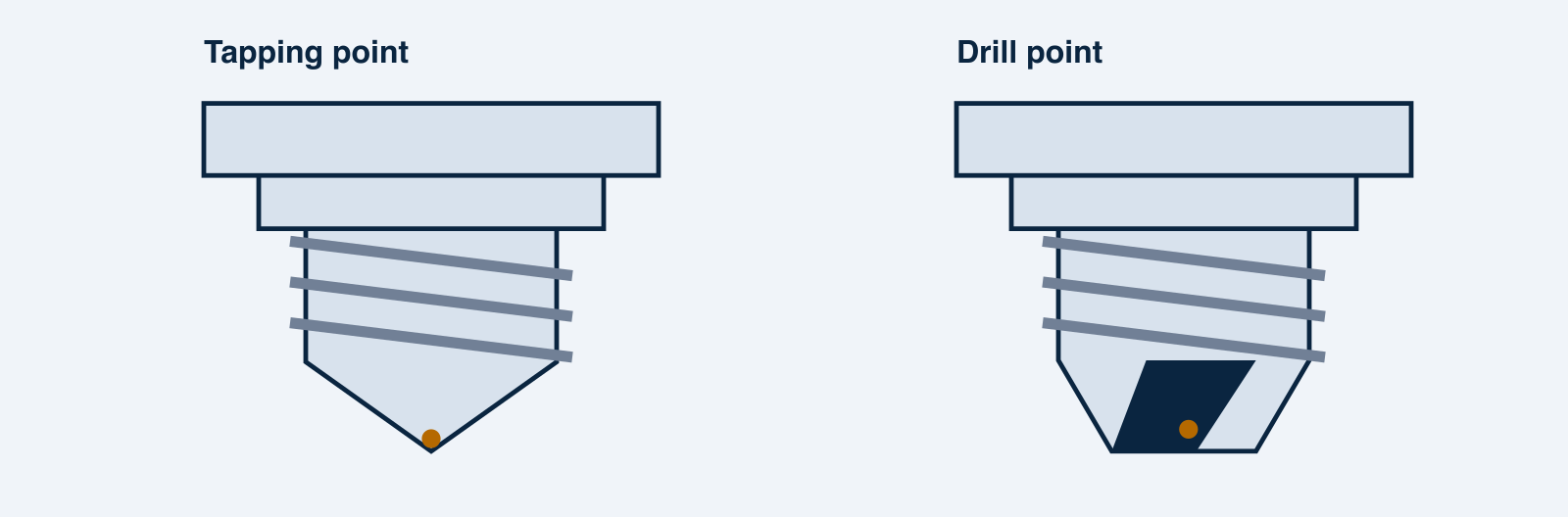
For metal fastening, a conventional non-drilling self-tapping screw makes its mating thread in a prepared hole. A self-drilling screw adds a drill-shaped point that makes the hole before the thread engages. Both make threads; only the specified drilling type is intended to do the drilling step.
Do not treat the names as a complete specification. Confirm the exact part, the substrate and the manufacturer’s installation instructions. This comparison concerns sheet-metal procurement, not a universal rule for wood, plastic, masonry or structural connections. Source: Birmingham Fastener.
Compare functions, not just labels
| Question | Non-drilling self-tapping | Self-drilling |
|---|---|---|
| What prepares the hole? | A separate drilling or punching operation for the intended metal application. | The screw’s specified drill point. |
| What makes the thread? | The screw, by the appropriate forming or cutting action. | The screw after the drilling step. |
| What should I ask for? | The recommended pilot-hole specification for this part and substrate. | The permitted drilling range and installation instructions for this exact part. |
| Does the name prove suitability? | No. | No. |
A pointed tip alone does not establish drilling capability. There are sharp and blunt tapping-point designs, and specialist screws can behave differently in thin or soft substrates. Check the drawing instead of inferring the function from a product photograph. SendCutSend explains the different point styles.
What to verify before placing an order
The following is a proposed buyer’s document check. It is not a product test or a substitute for engineering approval.
- Define the connection. Give the supplier a drawing or description of what is being attached to what. Record each material and thickness separately; avoid a request that says only “screws for metal.”
- Identify the offered part. Ask for a part number and drawing revision. Keep the quotation, drawing and sample label together. Resolve any difference between the part you requested and the one offered before approval.
- Request the matching instructions. For a tapping part, ask how its pilot hole is specified. For a drilling part, ask what substrates and thickness range the manufacturer permits. Leave torque, speed and hole dimensions unresolved until the actual documentation supports them.
- Separate geometry from performance. A matching head, diameter or overall length is not a load rating. Ask the responsible technical reviewer which performance evidence is needed for the application.
- Agree how samples will be assessed. Have the responsible person record the application conditions, acceptance criteria and any limitations. A successful installation of one sample is not proof of every production lot.
- Close the open questions in writing. Attach the agreed specification revision to the order. Record any approved substitutions explicitly rather than leaving them inside an email conversation.
If the pilot hole is inappropriate, a tapping screw can be difficult to install or leave inadequate engagement. Do not turn a generic article into a hole-size chart: the part and material matter. SendCutSend discusses pilot-hole errors and installation limitations.
A supplier brief you can reuse
Copy this structure into your enquiry. “To be confirmed” is more useful than an invented value.
| Field | What to provide or request |
|---|---|
| Application | Connection description; drawing reference; target market. |
| Substrates | Each material, thickness and existing hole condition. |
| Part identity | Requested screw family, dimensions, head and drive; supplier part number. |
| Environment | Describe exposure and ask for a justified material/coating proposal. Do not equate appearance with corrosion suitability. |
| Installation evidence | Relevant instructions and the limits that apply to the offered part. |
| Samples and acceptance | Who reviews suitability; required evidence; how changes will be approved. |
| Commercial details | Requested quantity, packaging, destination and quotation basis; ask the supplier to confirm availability and lead time. |
For a wider purchasing brief, continue to the existing fastener sourcing guide. For individual reference records, see the self-tapping screw and self-drilling screw. For product-family research, browse the hardware directory. CNFX records are references, not offers of stock or proof that a supplier can meet your specification.
Common ordering mistakes
- Ordering “self-tappers” when drilling is required. State the required function and obtain a part drawing.
- Assuming all drilling points have the same capacity. Request limits for the offered part; do not transplant another manufacturer’s table.
- Using a sample photograph as the whole brief. Add the application, drawing revision and documentary requirements.
- Accepting an unexplained substitution. Ask what changed and have the responsible reviewer decide whether it is acceptable.
Questions buyers ask
Do I need to drill before using self-tapping screws?
For a conventional non-drilling tapping screw in metal, use the prepared hole specified for the part. Some specialised screws pierce particular thin or soft materials; this is not permission to omit a pilot hole for every self-tapping screw. Follow the specific manufacturer’s instructions. See SendCutSend’s point-style guidance.
What are self-drilling screws used for?
Suitable products are used for applications such as metal-building and sheet-metal connections where the screw performs the drilling step. The application name alone is insufficient: verify the substrate and the limits of the actual part. See Birmingham Fastener’s application overview.
Is one type always stronger?
The label does not answer that question. Ask for performance evidence applicable to the specified screw and connection. This guide provides no load capacity or universal strength ranking.
Sources, scope and limitations
Source material was consulted on 11 September 2026. This guide is based on published technical explanations; it reports no CNFX laboratory testing, site inspection or engineering certification.
- Birmingham Fastener: Self-Drilling vs. Self-Tapping — function and metal-fastening terminology.
- SendCutSend: Self-Drilling vs Self-Tapping Screws — pilot-hole and installation considerations.
For safety-critical, load-bearing, roofing or regulated work, have the responsible qualified professional approve the connection and applicable requirements. This purchasing checklist cannot establish compliance or replace a product-specific design.