Industry-Verified Manufacturing Data (2026)

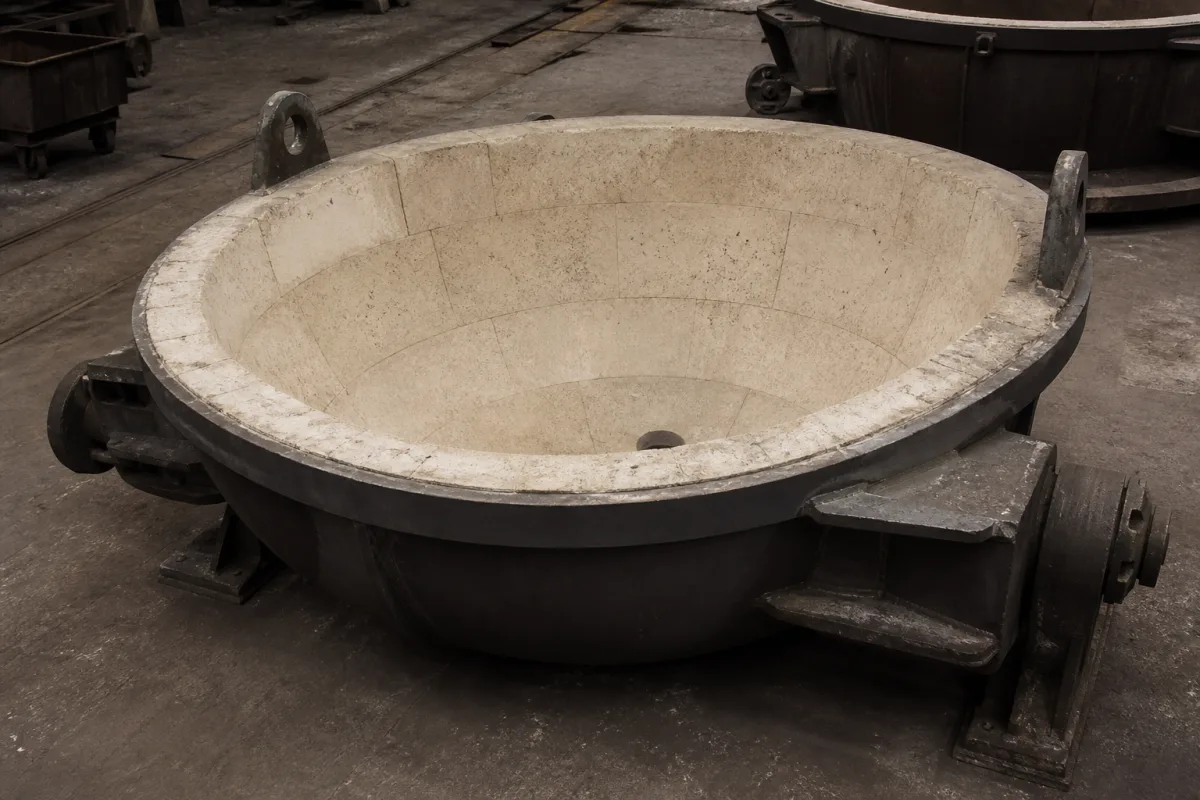
Refractory Bowl

Based on aggregated insights from multiple verified factory profiles within the CNFX directory, the standard Refractory Bowl used in the Basic Metal Manufacturing sector typically supports operational capacities ranging from standard industrial configurations to heavy-duty production requirements.

Technical Definition & Core Assembly

A canonical Refractory Bowl is characterized by the integration of Refractory Lining and Bowl Structure. In industrial production environments, manufacturers listed on CNFX commonly emphasize Alumina-silica refractory construction to support stable, high-cycle operation across diverse manufacturing scenarios.

The heat-resistant receptacle component of a molten metal sampling spoon designed to temporarily hold and contain high-temperature metal samples.

Product Specifications

Technical details and manufacturing context for Refractory Bowl

Definition
A refractory bowl is the critical containment component of a molten metal sampling spoon, specifically engineered to withstand extreme temperatures (typically 1300-1600°C) during the collection of liquid metal samples from furnaces, ladles, or other metallurgical vessels. It serves as the primary interface with the molten metal, providing thermal insulation and chemical resistance to prevent contamination of the sample while maintaining structural integrity during the brief sampling period.
Working Principle
The refractory bowl functions by utilizing specialized refractory materials with high melting points and low thermal conductivity to create a temporary container for molten metal. When the sampling spoon is dipped into molten metal, the bowl fills with the liquid sample. The refractory material's properties prevent rapid heat transfer to the spoon's handle, minimize chemical reactions with the metal, and maintain the sample's composition until it can be poured into a mold or testing apparatus for analysis.
Common Materials
Alumina-silica refractory, Zirconia-based refractory, Magnesia refractory
Technical Parameters
  • Bowl diameter and depth dimensions critical for sample volume and spoon functionality (mm) Standard Spec
Components / BOM
  • Refractory Lining
    Primary heat-resistant layer that contacts molten metal directly
    Material: Alumina-silica refractory
  • Bowl Structure
    Supporting framework that maintains bowl shape and attaches to spoon handle
    Material: Steel or ceramic composite
  • Thermal Barrier
    Intermediate layer reducing heat transfer to the spoon handle
    Material: Insulating refractory material
Engineering Reasoning
1200-1600°C, 0.1-0.5 MPa internal pressure
1650°C thermal limit, 0.8 MPa burst pressure, 0.5 mm/min erosion rate
Design Rationale: Silicon carbide decomposition at 1650°C (SiC → Si + C), thermal stress exceeding 150 MPa yield strength, alumina-silicate dissolution in molten iron at 1600°C
Risk Mitigation (FMEA)
Trigger Thermal shock from 800°C temperature differential in <5 seconds
Mode: Radial cracking propagation from 2 mm surface defects
Strategy: Zirconia-graded thermal barrier coating with 0.3 W/m·K conductivity
Trigger Molten aluminum penetration at 750°C through 50 μm pore defects
Mode: Intergranular corrosion reducing wall thickness by 1.5 mm per cycle
Strategy: Hot isostatic pressing at 1700°C, 100 MPa to achieve <5 μm porosity

Industry Taxonomies & Aliases

Commonly used trade names and technical identifiers for Refractory Bowl.

Industrial Ecosystem & Supply Chain DNA

Complementary Systems
Downstream Applications
Specialized Tooling

Application Fit & Sizing Matrix

Operational Limits
pressure: Atmospheric only (not pressure-rated)
other spec: Max sample volume: 0.5-2.0 liters depending on model, Thermal shock resistance: ΔT ≤ 300°C/min
temperature: Up to 1600°C (2912°F) continuous, 1800°C (3272°F) peak short-term
Media Compatibility
✓ Molten steel (carbon/alloy grades) ✓ Molten aluminum alloys ✓ Molten copper/brass alloys
Unsuitable: Molten reactive metals (titanium, magnesium) or halogen-containing slags
Sizing Data Required
  • Required sample volume (ml or kg)
  • Target metal temperature (°C)
  • Spoon handle attachment interface type

Reliability & Engineering Risk Analysis

Failure Mode & Root Cause
Thermal spalling
Cause: Rapid temperature changes causing differential expansion and contraction, leading to cracking and material loss
Chemical corrosion
Cause: Reaction with molten materials, slag, or process chemicals degrading refractory composition and structural integrity
Maintenance Indicators
  • Visible cracks or material loss on refractory surface
  • Abnormal temperature readings or hot spots on external bowl surface
Engineering Tips
  • Implement controlled heating and cooling cycles to minimize thermal shock
  • Regularly monitor and maintain proper chemical composition of process materials to reduce corrosive attack

Compliance & Manufacturing Standards

Reference Standards
ISO 2245:2016 - Refractory products for monolithic linings ASTM C71-23 - Standard Terminology Relating to Refractories EN 1402-1:2003 - Unshaped refractory products - Part 1: Introduction and classification
Manufacturing Precision
  • Bowl diameter: +/- 0.5% of nominal dimension
  • Wall thickness: +/- 1.0mm
Quality Inspection
  • Thermal shock resistance test (ASTM C1171)
  • Chemical composition analysis via X-ray fluorescence (XRF)

Factories Producing Refractory Bowl

Verified manufacturers with capability to produce this product in China

✓ 95% Supplier Capability Match Found

S Sourcing Manager from Brazil Jan 08, 2026
★★★★★
"Impressive build quality. Especially the technical reliability is very stable during long-term operation."
Technical Specifications Verified
P Procurement Specialist from Canada Jan 05, 2026
★★★★☆
"As a professional in the Basic Metal Manufacturing sector, I confirm this Refractory Bowl meets all ISO standards. (Delivery took slightly longer than expected, but technical support was excellent.)"
Technical Specifications Verified
T Technical Director from United States Jan 02, 2026
★★★★★
"Standard OEM quality for Basic Metal Manufacturing applications. The Refractory Bowl arrived with full certification."
Technical Specifications Verified
Verification Protocol

“Feedback is collected from verified sourcing managers during RFQ (Request for Quote) and factory evaluation processes on CNFX. These reports represent historical performance data and technical audit summaries from our B2B manufacturing network.”

15 sourcing managers are analyzing this specification now. Last inquiry for Refractory Bowl from Germany (18m ago).

Supply Chain Compatible Machinery & Devices

Electromagnetic Induction Heater

Industrial heating device using electromagnetic induction for metal processing

Explore Specs →
Vacuum Induction Melting Furnace

Industrial furnace for melting metals under vacuum using electromagnetic induction

Explore Specs →
Electroslag Remelting Furnace

Secondary refining furnace for high-quality metal ingots

Explore Specs →
Molten Metal Flow Control Valve

Precision valve for regulating molten metal flow in casting and pouring operations.

Explore Specs →

Frequently Asked Questions

What materials are used in refractory bowls for molten metal sampling?

Refractory bowls are typically made from alumina-silica, zirconia-based, or magnesia refractory materials, chosen for their exceptional heat resistance and ability to withstand extreme temperatures during molten metal sampling.

How does the refractory lining in these bowls protect against thermal shock?

The refractory lining acts as a thermal barrier, minimizing heat transfer to the bowl structure and preventing thermal shock that could cause cracking or failure when exposed to rapid temperature changes from molten metal samples.

What are the key components of a refractory bowl assembly?

The main components include the bowl structure for mechanical support, the refractory lining for direct contact with molten metal, and the thermal barrier layer that protects the overall assembly from extreme heat during sampling operations.

Can I contact factories directly on CNFX?

CNFX is an open directory, not a transaction platform. Each factory profile provides direct contact information and production details to help you initiate direct inquiries with Chinese suppliers.

Get Quote for Refractory Bowl

Request technical pricing, lead times, or customized specifications for Refractory Bowl directly from verified manufacturing units.

Your business information is encrypted and only shared with verified Refractory Bowl suppliers.

Thank you! Your message has been sent. We'll respond within 1–3 business days.

Need to Manufacture Refractory Bowl?

Connect with verified factories specializing in this product category

Add Your Factory Contact Us
Previous Product
Refining Vessel
Next Product
Refractory Crucible