Structured Manufacturing Data (2026)

Barcode/QR Scanner

Based on aggregated insights from structured factory profiles within the CNFX directory, the standard Barcode/QR Scanner used in the Chemical Manufacturing sector typically supports operational capacities ranging from standard industrial configurations to heavy-duty production requirements.

Technical Definition & Core Assembly

A canonical Barcode/QR Scanner is characterized by the integration of Optical Lens and Image Sensor. In industrial production environments, manufacturers listed on CNFX commonly emphasize Optical lens construction to support stable, high-cycle operation across diverse manufacturing scenarios.

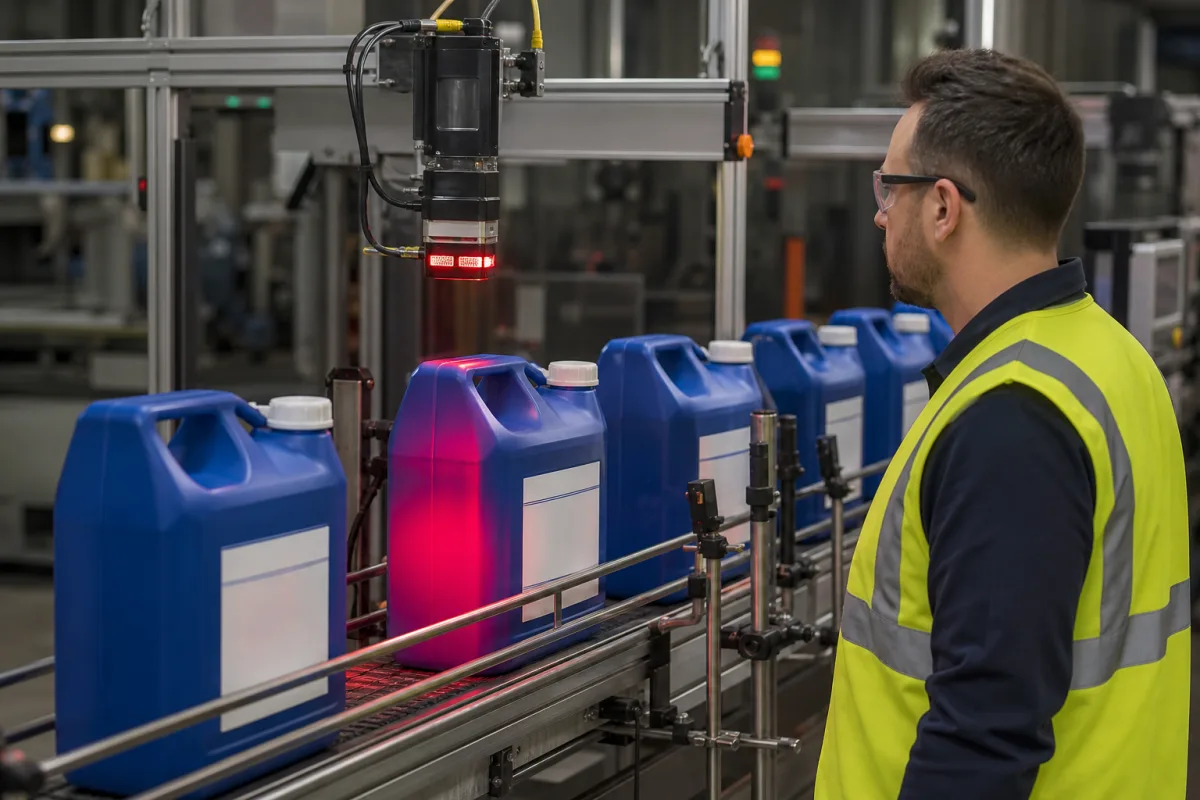
An optical device that reads barcode and QR code labels on chemical drums to capture identification and tracking data.
Product Specifications

Technical details and manufacturing context for Barcode/QR Scanner

Definition
A critical component within the Automated Chemical Drum Labeling and Tracking System that uses laser or image-based technology to scan and decode barcode and QR code labels affixed to chemical drums. It enables automated data capture for inventory management, tracking drum contents, monitoring movement through facilities, and ensuring compliance with safety and regulatory requirements by linking physical drums to digital records.
Working Principle
The scanner emits a light source (laser or LED) onto the barcode/QR code label. The reflected light pattern is captured by a photosensitive sensor (like a CCD or CMOS in image-based scanners). The scanner's decoder analyzes the pattern of dark bars and light spaces (for barcodes) or the matrix pattern (for QR codes), converts it into digital data, and transmits this information (such as drum ID, chemical type, batch number) to the system's central database or control software for processing and tracking.
Common Materials
Optical lens, Image sensor (CCD/CMOS), LED/Laser diode, Plastic/Polycarbonate housing, Electronic circuit board
Technical Parameters
  • Scanning resolution and minimum readable element size (e.g., bar width for barcodes, module size for QR codes) (mm) Customizable
Components / BOM
  • Optical Lens Part
    Focuses light onto the barcode/QR code and collects reflected light
  • Image Sensor
    Captures the light pattern reflected from the code and converts it into an electrical signal
  • Light Source
    Illuminates the barcode/QR code for scanning (laser diode or LED array)
  • Decoder Circuit
    Processes the sensor signal, decodes the barcode/QR pattern into digital data

Industry Taxonomies & Aliases

Commonly used trade names and technical identifiers for Barcode/QR Scanner.

Applied To / Applications

This component is essential for the following industrial systems and equipment:

Industrial Ecosystem & Supply Chain Structure

Complementary Systems
Downstream Applications
Specialized Tooling

Application Fit & Sizing Matrix

Operational Limits
pressure: Atmospheric (non-pressurized)
other spec: Reading distance: 5-100 cm, Scan rate: 100 scans/sec
temperature: -10°C to 50°C
Media Compatibility
✓ Plastic drum labels ✓ Metal drum labels ✓ Paper-based labels
Unsuitable: High-vibration environments (e.g., near heavy machinery)
Sizing Data Required
  • Required reading distance
  • Barcode/QR code size
  • Scanning speed requirement

Reliability & Engineering Risk Analysis

Failure Mode & Root Cause
Lens Contamination and Degradation
Cause: Accumulation of dust, dirt, or oils on the scanner lens from industrial environments, leading to reduced light transmission and misreads.
Laser Diode or LED Failure
Cause: Thermal stress from continuous operation, power surges, or aging components causing the light source to dim or fail, resulting in inability to read codes.
Maintenance Indicators
  • Inconsistent or failed reads despite proper barcode quality and alignment
  • Unusual audible beeping patterns (e.g., continuous beeps, error tones) or no sound at all during scanning
Engineering Tips
  • Implement regular cleaning schedules for the scanner lens using approved, lint-free wipes and isopropyl alcohol to prevent buildup and maintain optical clarity.
  • Ensure proper power management by using surge protectors, avoiding overvoltage, and implementing scheduled downtime to reduce thermal cycling on electronic components.

Compliance & Manufacturing Standards

Reference Standards
ISO/IEC 15416:2016 (Barcode print quality) ANSI MH10.8.2-2016 (Data Matrix symbology) CE EN 55032:2015 (Electromagnetic compatibility)
Manufacturing Precision
  • Scanning angle tolerance: +/- 30 degrees from perpendicular
  • Minimum element size tolerance: +/- 10% of nominal dimension
Quality Inspection
  • Decode performance test (ISO/IEC 15416 verification)
  • Environmental stress testing (temperature, humidity, vibration)

Factories Producing Barcode/QR Scanner

Manufacturer profiles with relevant production capability in China

Manufacturer listings support early research and capability understanding. They are not certification, ranking, or transaction guarantees.

Technical documentation
4/5
Manufacturing capability
4/5
Inspection readiness
5/5
Supplier transparency
3/5

These scores are example evaluation dimensions, not real customer ratings, country-specific buyer feedback, or live inquiry activity.

Supply Chain Compatible Machinery & Devices

Continuous Flow Reactor System

Automated chemical synthesis system for continuous production.

Explore Specs →
Modular Distillation Column System

Pre-engineered modular system for continuous separation of chemical mixtures via distillation.

Explore Specs →
Automated Batch Crystallization System

Automated system for controlled crystallization of chemical compounds in batch processes.

Explore Specs →
Automated pH Monitoring and Dosing System

Automated system for continuous pH monitoring and chemical dosing in process streams.

Explore Specs →

Frequently Asked Questions

Is this barcode scanner suitable for hazardous chemical environments?

Yes, it features a durable plastic/polycarbonate housing resistant to chemical exposure and harsh industrial conditions.

What types of barcodes can this scanner read on chemical drums?

It reads standard 1D barcodes and 2D QR codes commonly used for chemical identification, tracking, and safety data.

How does the scanner perform in low-light chemical storage areas?

The integrated LED/laser diode and high-sensitivity image sensor ensure reliable scanning even in poorly lit storage facilities.

Can I contact factories directly on CNFX?

CNFX is an open directory, not a transaction platform. Each factory profile provides direct contact information and production details to help you initiate direct inquiries with Chinese suppliers.

Data Basis

CNFX manufacturer profiles, technical classification, publicly available product information, and ongoing plausibility checks.

Preliminary Technical Classification
This page supports structured research, RFQ preparation, and supplier evaluation. It does not replace buyer-led supplier qualification, standards review, or technical approval.

Request Manufacturing Insight for Barcode/QR Scanner

Ask for use case, specification boundaries, supplier type, and RFQ preparation information for Barcode/QR Scanner.

Your business information is used only to process this request.

Thank you! Your message has been sent. We'll respond within 1–3 business days.

Need to Manufacture Barcode/QR Scanner?

Compare manufacturer profiles with relevant product and process capability.

Create Manufacturer Profile Contact Us
Previous Product
Backwash System
Next Product
Barrier Enclosure