Editorial Technical Reference

Light Source

This page explains how Light Source is classified within Computer, Electronic and Optical Product Manufacturing. Technical values and manufacturer relationships are research references; confirm the current specification and supplier evidence for each order.

Technical Definition & Core Assembly

The illumination component within a barcode/QR scanner that emits light onto the code for optical detection.
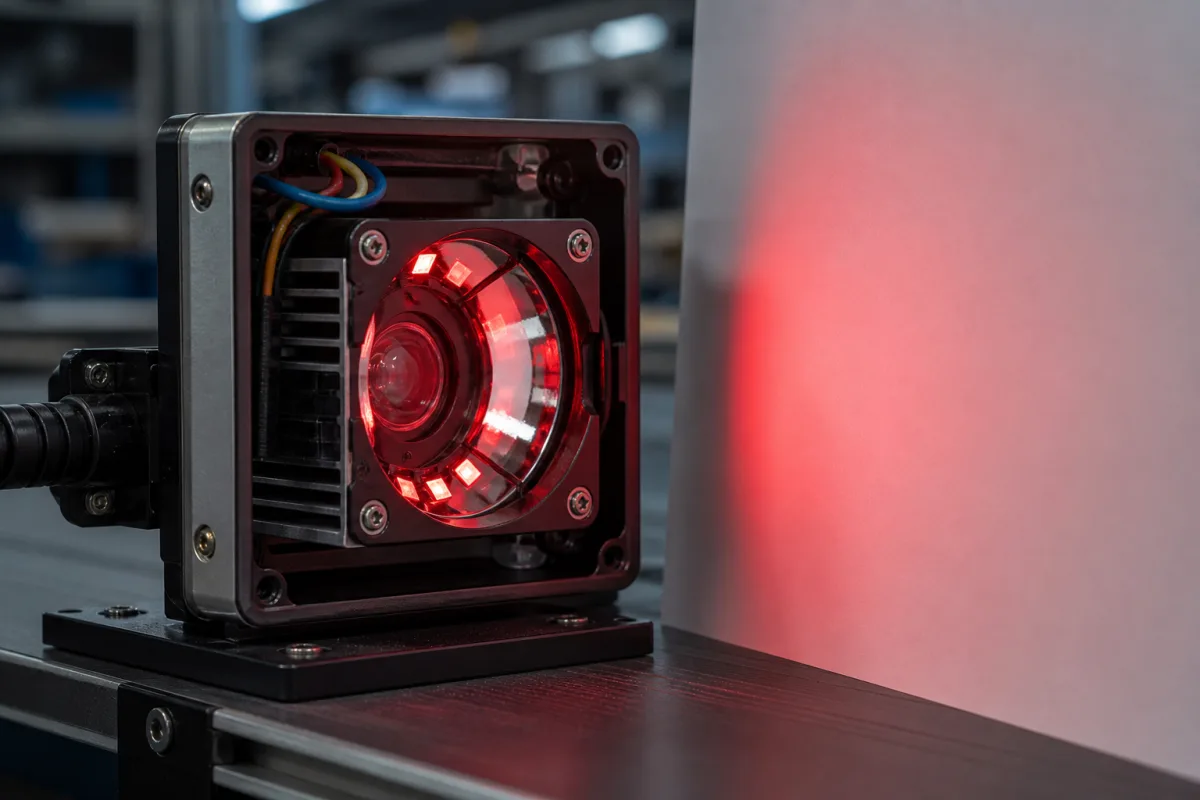
Representative product image. Confirm appearance and specifications with the manufacturer.

Product Specifications

Technical details and manufacturing context for Light Source

Definition
A light source is a critical component in barcode and QR code scanners that provides the necessary illumination to make the code's pattern visible to the scanner's optical sensor. It ensures consistent lighting conditions for accurate reading across various surfaces and environmental conditions. The light source is typically an LED semiconductor material that emits electromagnetic radiation, usually in the visible or infrared spectrum. In many barcode scanners, the wavelength is in the range of 630-680 nm, which corresponds to red light. This specific wavelength is chosen because it contrasts well with the dark bars and light spaces of typical barcode labels, enhancing the readability of the code. The light source is positioned within the scanner to illuminate the code area evenly, minimizing shadows and glare that could interfere with the optical sensor's ability to capture the reflected light. The performance of the light source directly affects the scanner's reading speed and accuracy, especially in low-light conditions or on reflective surfaces. When selecting a light source for a scanner, factors such as wavelength, intensity, and beam pattern must be considered to match the application requirements. The wavelength is a key parameter, often specified in nanometers (nm), and the typical range for red LED scanners is 630-680 nm. It is important to verify the exact wavelength and other specifications with the legal manufacturer or supplier for the specific model and application. The light source is a component that may require replacement over time due to degradation or failure. Signs of a failing light source include dimming, flickering, or a complete loss of illumination, which would result in the scanner being unable to read codes. In such cases, the light source should be inspected and replaced if necessary. The light source is not a standalone product but a part of the scanner system, and its operation is dependent on the scanner's power supply and control circuitry. The light source does not include the optical sensor or the decoding electronics; it is solely responsible for providing illumination. The light source's performance can be affected by environmental factors such as temperature and humidity, and it should be operated within the specified conditions. For procurement, it is essential to confirm the compatibility of the light source with the scanner model and to verify that it meets the required specifications and any applicable standards. The directory provides reference information, but the actual product must be validated by the manufacturer or supplier.
Working Principle
The light source emits electromagnetic radiation, typically in the visible or infrared spectrum, which illuminates the barcode or QR code. The light reflects off the code's surface, and the contrasting dark and light areas create a pattern of reflected light. This pattern is captured by the scanner's optical sensor and converted into an electrical signal for decoding. The wavelength of the emitted light is a critical factor, as it must be suitable for the sensor and the code's contrast. For red LED scanners, the wavelength is typically 630-680 nm.
Common Materials
LED semiconductor material
Technical Parameters

What to specify in your RFQ

  • Wavelength of emitted light, typically 630-680nm for red LED barcode scanners in nm

These are the quantities to specify to the manufacturer when sizing or requesting a quote. The manufacturer's own documentation governs the exact figures and applicable standard.

Components / BOM
  • LED Chip Part
    Generates light through electroluminescence
    Material: Gallium arsenide phosphide (GaAsP) or similar semiconductor
  • Lens Part
    Focuses and directs the emitted light
    Material: Optical-grade plastic or glass
  • Heat Sink Part
    Dissipates heat generated by the LED
    Material: Aluminum or copper

Applied To / Applications

This component is essential for the following industrial systems and equipment:

Industrial Ecosystem & Supply Chain Structure

Complementary Systems
Downstream Applications
Specialized Tooling

Application Fit & Sizing Matrix

Operational Limits
pressure: Atmospheric (non-pressurized)
other spec: Wavelength: 650-670nm (visible red), Power: 5-20mW, Beam divergence: 15-30 degrees
temperature: -10°C to 50°C
Media Compatibility
✓ Indoor office environments ✓ Retail checkout stations ✓ Warehouse scanning stations
Unsuitable: Outdoor direct sunlight or high UV environments
Sizing Data Required
  • Required scanning distance (working range)
  • Target barcode/QR code size and resolution
  • Ambient light conditions in application environment

Reliability & Engineering Risk Analysis

Failure Mode & Root Cause
Thermal Degradation
Cause: Excessive heat buildup from poor thermal management or overdriving the light source beyond its rated specifications, leading to accelerated phosphor decay, LED chip failure, or filament burnout in incandescent/halogen types.
Electrical Overstress
Cause: Voltage spikes, current surges, or improper power supply regulation causing semiconductor junction damage in LEDs, arc tube failure in HID lamps, or filament rupture in traditional bulbs.
Maintenance Indicators
  • Flickering or intermittent operation indicating unstable electrical connections or driver/ballast failure
  • Unusual audible buzzing or humming from the fixture, suggesting transformer/ballast issues or loose components
Engineering Tips
  • Implement proper thermal management with heatsinks, ventilation, or active cooling to maintain operating temperatures within manufacturer specifications
  • Use surge protection devices and regulated power supplies to prevent electrical overstress, and ensure all electrical connections are secure and corrosion-free

Indicative industry ranges for design and RFQ preparation. Confirm the exact figures and applicable standard with the manufacturer before specifying.

Compliance & Manufacturing Standards

Applicable Standards
ISO 8995-1:2021 (Lighting of work places - Part 1: Indoor) ANSI C78.377-2017 (Specifications for the Chromaticity of Solid State Lighting Products) DIN EN 60598-1:2021 (Luminaires - Part 1: General requirements and tests)

Quoted from the published standard.

Manufacturing Precision
  • Color Temperature: +/- 200K
  • Luminous Flux: +/- 10% of rated output
Quality Inspection
  • Photometric Testing (Goniophotometer)
  • Electrical Safety Testing (Dielectric Strength)

Manufacturers of Light Source

Manufacturer profiles associated with Light Source.

Sourcing Light Source from China?
Tell us your specification and target quantity — we will match it against manufacturer records and come back with the factories that fit.
Request manufacturers We manufacture this

Manufacturer listings support early research and capability understanding. They are not certification, ranking, or transaction guarantees.

Technical documentation
Request current drawings, revision history, and a signed specification sheet.
Manufacturing capability
Verify equipment lists, process limits, capacity, and representative production evidence.
Inspection readiness
Confirm test methods, calibrated equipment, sampling plans, and traceable reports.
Supplier transparency
Check the legal entity, factory address, ownership, certifications, and direct contacts.

CNFX does not score or rank suppliers. Buyers must verify all claims and documents with the legal manufacturer before ordering.

Supply Chain Compatible Machinery & Devices

Industrial Smart Camera Module

The Industrial Smart Camera Module is a compact, self-contained vision processing unit designed for integration into industrial machinery and production lines.

Explore Specs →
Surface Mount Resistor

Passive electronic component for current limiting and voltage division in circuits

Explore Specs →
Surface Mount Capacitor

A surface mount capacitor is a fundamental electronic component used for energy storage, filtering, coupling, and decoupling in electronic circuits.

Explore Specs →
Surface Mount Technology (SMT) Pick-and-Place Machine

Automated machine that precisely places electronic components onto printed circuit boards.

Explore Specs →

Frequently Asked Questions

What is the typical wavelength of a light source in a barcode scanner?

The typical wavelength for a red LED barcode scanner is 630-680 nm. However, the exact wavelength depends on the specific model and application. Always verify with the manufacturer or supplier.

Can the light source be replaced if it fails?

Yes, the light source is a component that can be replaced. Signs of failure include dimming, flickering, or no illumination. Replacement should be done by qualified personnel and the new component must match the scanner's specifications.

Does the light source affect the scanner's reading accuracy?

Yes, the light source provides the illumination necessary for the sensor to capture the code. Inconsistent or insufficient light can lead to reading errors. Proper functioning is essential for accurate decoding.

Are there any standards that apply to the light source?

The source facts do not list any specific standards for this component. It is important to check with the manufacturer or supplier for any applicable standards or certifications for your specific application.

Data Basis

Editorial classification, named public sources where available, and source-reviewed manufacturer records.

Preliminary Technical Classification
This page supports structured research, RFQ preparation, and supplier evaluation. It does not replace buyer-led supplier qualification, standards review, or technical approval.
Buyer enquiry

Request manufacturing insight for Light Source

Ask for use case, specification boundaries, supplier type, and RFQ preparation information for this product.

Where it goes
Straight to the CNFX editorial desk, and to the manufacturer if this product is linked to a claimed profile. Nothing is broadcast to a supplier list.
Your details stay here
We do not sell or rent enquiry data, and we do not add you to a mailing list. Used only to answer this request.
No commission, no middleman
CNFX is a directory. We take no cut of any order and never negotiate on a supplier's behalf.
What we don't claim
A listing is not an endorsement. Qualify every supplier and verify every figure yourself before ordering.

Your business information is used only to process this request.

Thank you! Your message has been sent. We'll respond within 1–3 business days.
Sorry, we couldn't send your message. Please try again, or email us at contact@cnfx.com.

Need to Manufacture Light Source?

Compare manufacturer profiles with relevant product and process capability.

Previous Product
XY Positioning Stage
Last Product
Get QuotesChat